

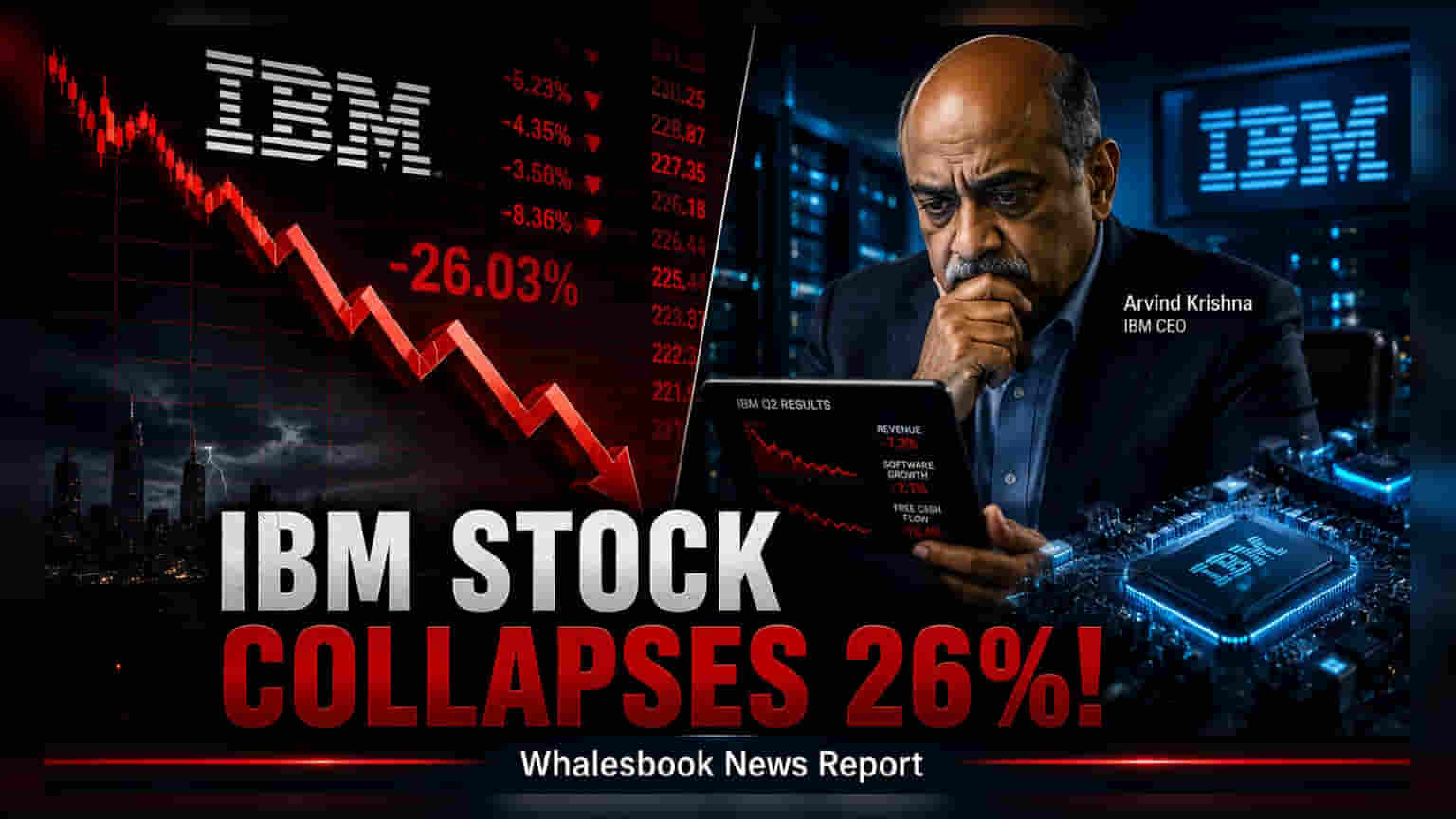
IBM stock fell 26% as the company warned that corporate spending is shifting from software to data-center infrastructure. The tech giant also lowered its second-quarter earnings forecast, missing analyst expectations. Investors are now concerned about how this rapid change in tech budgets may impact long-term profitability.
International Business Machines (IBM) shares fell 26% on Tuesday following a warning from the tech company about a shift in how businesses are spending their technology budgets. The company reported that many clients are choosing to spend more on data-center infrastructure rather than software, a change that the firm did not fully anticipate.
Impact of Corporate Spending Shifts
This shift in spending has directly hit IBM’s performance, leading the company to forecast second-quarter revenue of $17.2 billion, which is below the $17.86 billion estimated by analysts. The company also expects adjusted earnings per share of $2.93, falling short of the $3.02 forecast. CEO Arvind Krishna noted that corporate clients accelerated their spending on hardware, including servers and networking equipment, in late June. This decision was largely driven by a desire to secure supply before expected price increases, which ultimately caused several software deals to fall through.
Weakness in Mainframes and Cybersecurity Pressures
The company’s mainframe business, which is essential for high-volume transaction processing in industries like banking and airlines, has shown signs of weakness. Additionally, businesses are increasingly prioritizing cybersecurity spending, partly because new AI tools have shown the ability to identify vulnerabilities in existing encryption and software. While IBM has worked to grow its software division—most notably its Red Hat unit—to move away from its traditional, cyclical mainframe business, these efforts are being tested by the current market conditions.
Future Investments and Long-Term Outlook
IBM continues to invest heavily in long-term technology, specifically committing $10 billion toward building a large-scale quantum computer by 2029. This effort has received support from U.S. government initiatives focused on supply chain resilience. The company is also building partnerships with organizations like OpenAI. However, these projects are still in the early stages and are not yet large enough to offset the current slowdown in core operations. Investors will likely monitor future quarterly reports for signs of whether this shift toward infrastructure spending is a short-term trend or a prolonged change that may require a re-evaluation of valuation for companies across the software sector.