

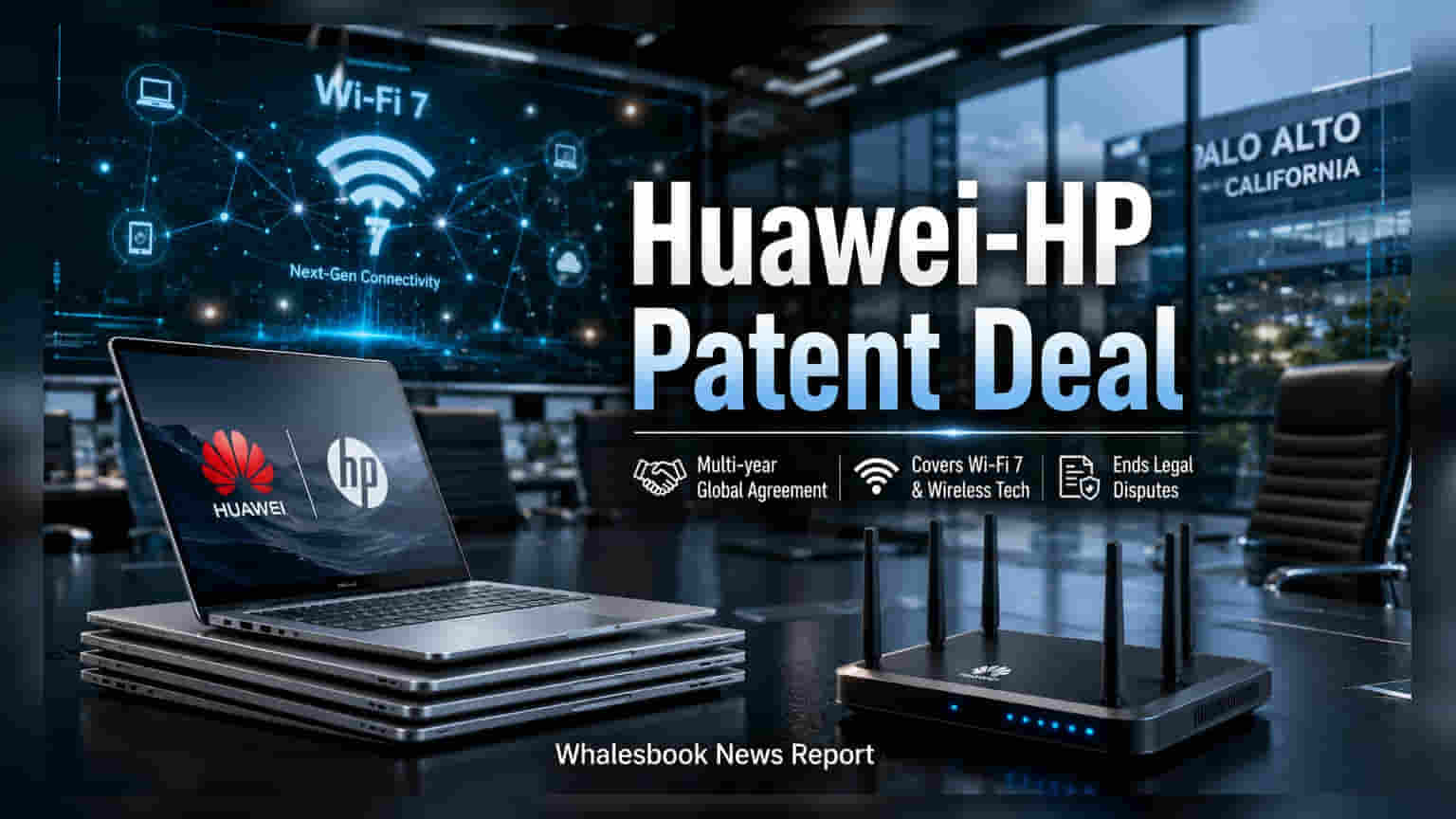
Huawei and HP Inc. have entered a global cross-licensing agreement covering wireless networking technology, including Wi-Fi 7. The deal resolves a 2025 patent lawsuit and allows HP to access essential wireless patents. While this highlights Huawei's growing focus on intellectual property monetization despite global trade restrictions, it also ensures legal clarity for HP's future hardware products.
Huawei Technologies and HP Inc. have officially announced a multi-year global patent cross-licensing agreement on August 26, 2026. This partnership covers a broad range of wireless networking technologies, including the advanced Wi-Fi 7 standard. For HP, a leading player in the global personal computer market, the deal secures necessary access to key wireless patents, while Huawei gains reciprocal rights to HP’s own patent portfolio.
The agreement effectively puts an end to ongoing legal friction between the two companies. In 2025, Huawei had initiated a lawsuit at the Unified Patent Court in Europe, alleging that HP had utilized its Wi-Fi 6 technology without proper authorization. By reaching this settlement, both firms have avoided further litigation costs and market uncertainty. The resolution marks a cooling of tensions, with both entities describing the arrangement as a standard industry licensing maneuver rather than a broader strategic or commercial alliance.
From a financial perspective, specific monetary terms of the deal were not publicly disclosed. However, Huawei has been actively standardizing its licensing revenue model, recently setting a royalty rate of $0.50 per unit for its Wi-Fi 7 patent program. The company has emphasized that it follows a transparent, fair, reasonable, and non-discriminatory approach to licensing, commonly referred to as FRAND commitments. These commitments are essential for holders of standard-essential patents to avoid antitrust scrutiny.
This development is notable given the complex geopolitical environment in which Huawei operates. Since 2019, the company has faced significant U.S. trade restrictions that limit its ability to access advanced American hardware and software components. Despite these barriers, intellectual property licensing remains distinct from trade-restricted hardware sales, allowing Huawei to continue monetizing its extensive patent portfolio globally. For HP, which is listed on the New York Stock Exchange and not on Indian exchanges, the deal mitigates the risk of legal disruptions to its supply chain.
Investors and industry observers will continue to track how Huawei navigates international patent standards. While the company has successfully secured similar agreements with other major global corporations, the ongoing geopolitical constraints remain a persistent backdrop. The key monitorable for the future will be how both companies maintain compliance with international intellectual property standards and whether this licensing model helps Huawei maintain its influence in global telecommunications despite the exclusion from certain hardware markets.