

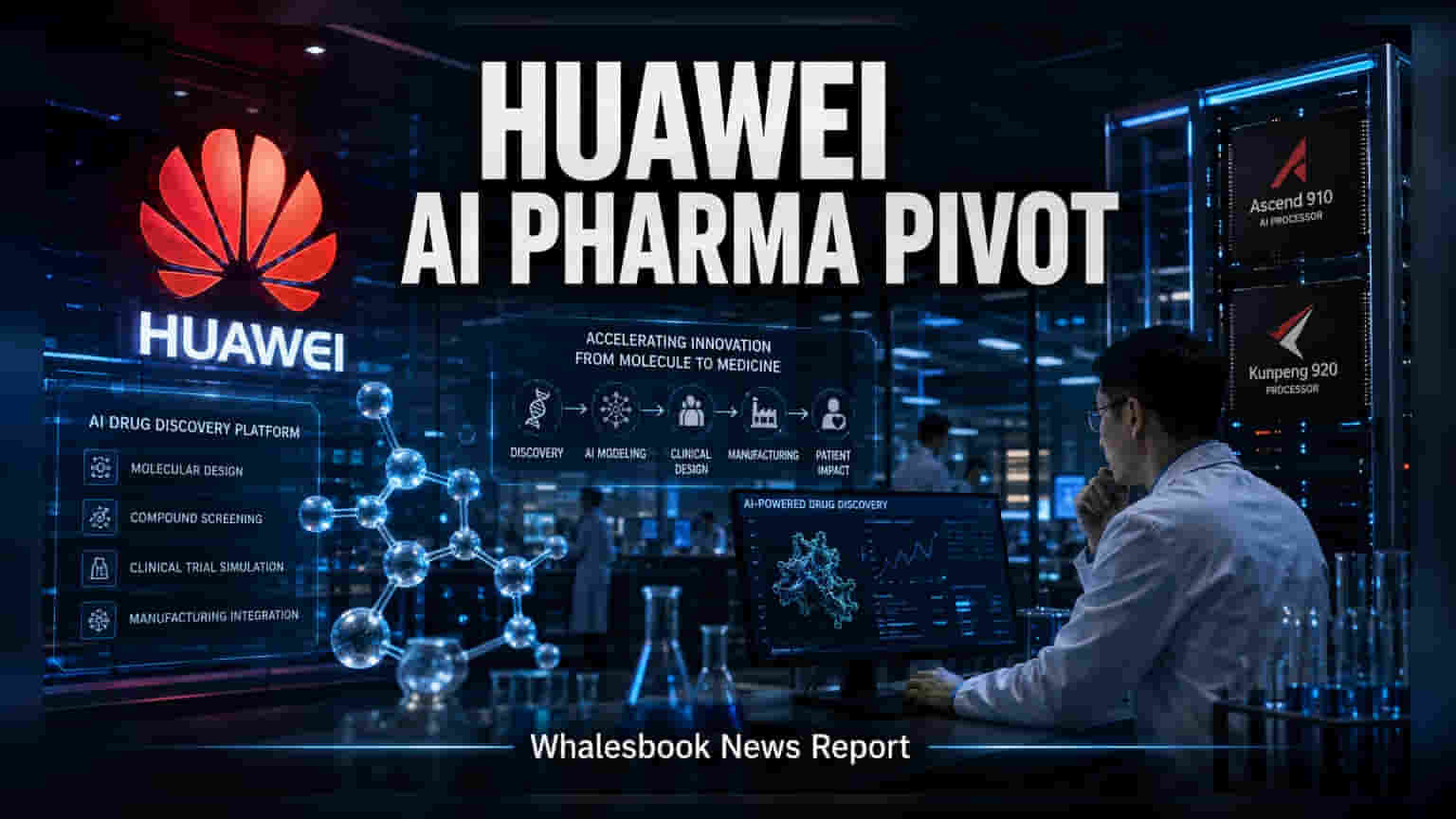
Huawei is deepening its push into AI-driven drug discovery by partnering with pharmaceutical firms to use its proprietary Ascend and Kunpeng hardware. The company aims to speed up drug development and clinical trials using advanced AI modeling. This move highlights the growing trend of integrating technology into healthcare to reduce research timelines and costs.
Huawei is stepping up its efforts to capture a larger portion of the artificial intelligence (AI) drug discovery market by deepening collaborations with pharmaceutical companies. The technology giant is moving beyond basic research, with plans to support full-scale drug manufacturing and clinical implementation. By deploying its proprietary Ascend and Kunpeng chipsets, the company aims to provide an end-to-end infrastructure that helps pharmaceutical firms streamline molecular design and plan clinical trials more efficiently.
The strategy, confirmed by William Zhang, president of Huawei's healthcare unit, focuses on creating an integrated system where hardware and software work together. This approach is designed to assist in screening viable drug compounds and optimizing machine learning models for research. A key example of this progress includes a project with Guangzhou Pharmaceutical Holdings, where the company demonstrated the use of its AI models on home-grown hardware to support production-grade applications.
For the broader pharmaceutical industry, this shift toward AI-based tools is significant because it aims to reduce early-stage drug development timelines and costs. Experts suggest that such computational tools could significantly shorten the path from laboratory research to patient treatment over the next three to five years.
While Huawei looks to gain a foothold in this sector, it faces intense competition from global technology leaders. Major rivals like Nvidia have already secured significant partnerships with pharmaceutical giants such as Eli Lilly and Novo Nordisk. Huawei’s current approach is heavily focused on the domestic market in China, where it seeks to leverage its existing technology ecosystem.
Investors and industry observers should be aware of several risks associated with this expansion. Geopolitical trade restrictions remain a primary concern, as they could impact access to essential global supply chains and international markets. Additionally, the transition from successful pilot projects to full-scale pharmaceutical manufacturing and clinical adoption carries significant execution risk, especially in a highly regulated industry where precision and safety are paramount.
The long-term success of this initiative will depend on how effectively the company can scale these collaborations and whether pharmaceutical firms find enough value in the AI-driven workflow to adopt it for mainstream drug production. The next important monitorables will be the speed at which these AI tools are integrated into clinical practice, the success rate of drug discovery projects using this hardware, and any further domestic or international partnerships.