

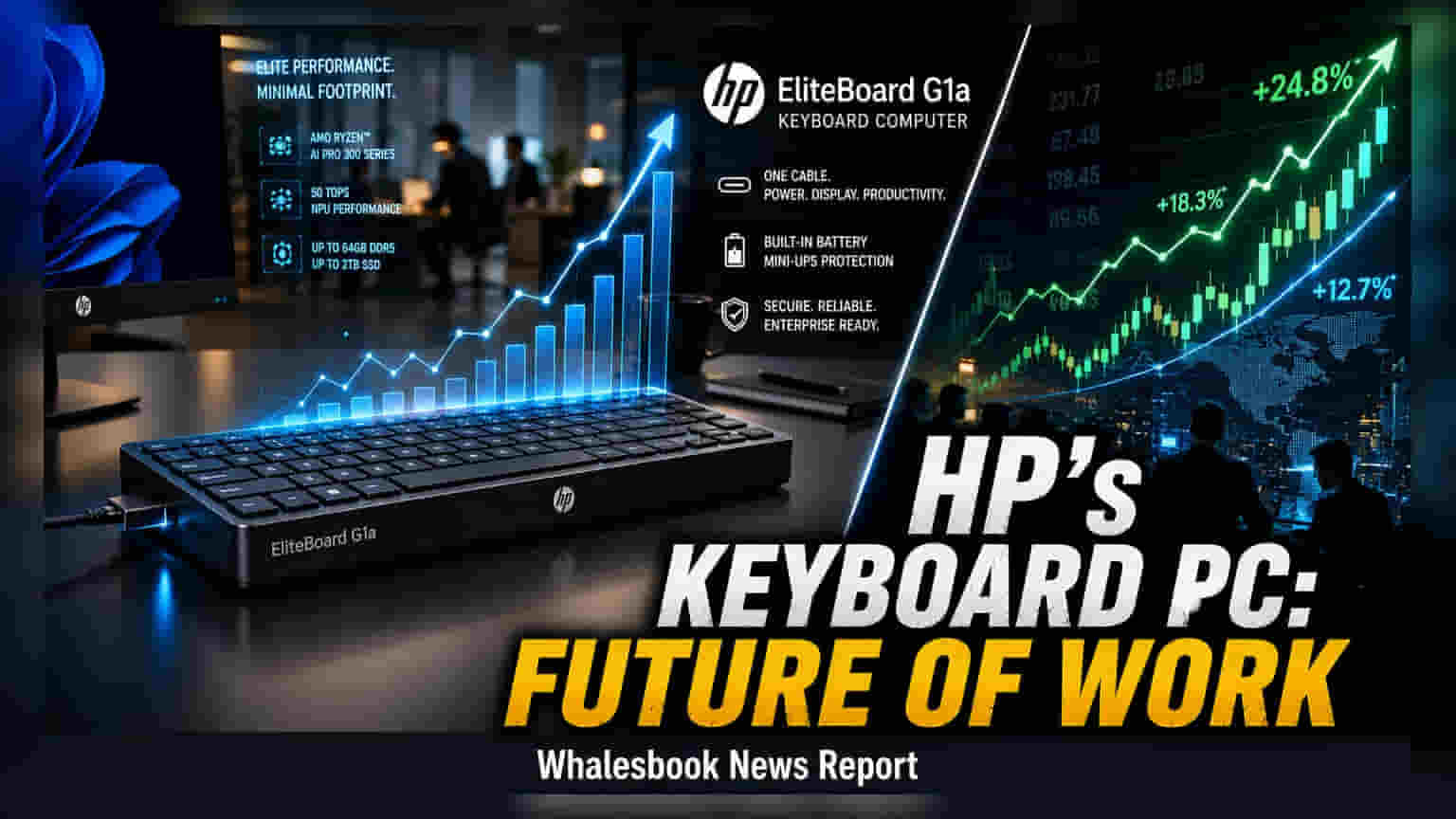
HP has unveiled the EliteBoard G1a, a unique computing device that packs full PC hardware into a keyboard chassis. Designed for enterprise office spaces and hybrid work, it aims to reduce clutter in hot-desking environments. While innovative, its success will depend on corporate adoption and its ability to handle high-performance tasks within a compact frame.
HP Inc. has expanded its enterprise computing portfolio with the EliteBoard G1a, a new device that integrates the entire internal hardware of a computer into a keyboard. Unlike a traditional laptop or desktop, this form factor requires an external monitor to function, utilizing USB-C for both power and display connections.
The device is clearly targeted at businesses rather than home consumers. By consolidating the motherboard, processor, and memory into a single unit, HP is catering to the ongoing enterprise trend of "hot-desking," where employees rotate through shared desk spaces. The company aims to solve workspace clutter issues, allowing professionals to plug a single cable into a compatible monitor and begin working immediately.
Technical Capability and Strategic Focus
HP has packed the device with high-end specifications, including AMD Ryzen AI PRO 300 series processors. The device boasts 50 TOPS (trillion operations per second) of NPU performance, aligning with industry trends toward on-device artificial intelligence processing. It supports up to 64GB of DDR5 RAM and 2TB of SSD storage. A notable addition for enterprise environments is a built-in battery, which serves as a mini-UPS, designed to protect unsaved work during sudden power fluctuations.
For investors observing HP’s hardware strategy, the EliteBoard G1a represents a niche move to differentiate its product lineup in a saturated market. By focusing on premium enterprise hardware, HP is attempting to secure long-term B2B contracts where security and space efficiency are top priorities. This strategy shifts the focus away from commodity PC sales toward specialized office infrastructure.
Potential Risks and Market Challenges
While the innovation is clear, the EliteBoard G1a faces specific risks. The compact chassis creates significant thermal management challenges; if the device cannot dissipate heat effectively, the processor may throttle, leading to reduced performance during intensive tasks.
Furthermore, the reliance on an external monitor limits the device’s mobility compared to a standard laptop. If the enterprise market does not embrace this form factor as a viable replacement for traditional towers or small-form-factor PCs, the product may remain a high-cost, low-volume niche.
The long-term impact on HP’s revenue will depend on bulk corporate orders rather than individual consumer sales. Investors should monitor how corporate IT departments receive the device and whether it gains traction as a standard tool in office infrastructure or remains a specialized, limited-use product.