 Whalesbook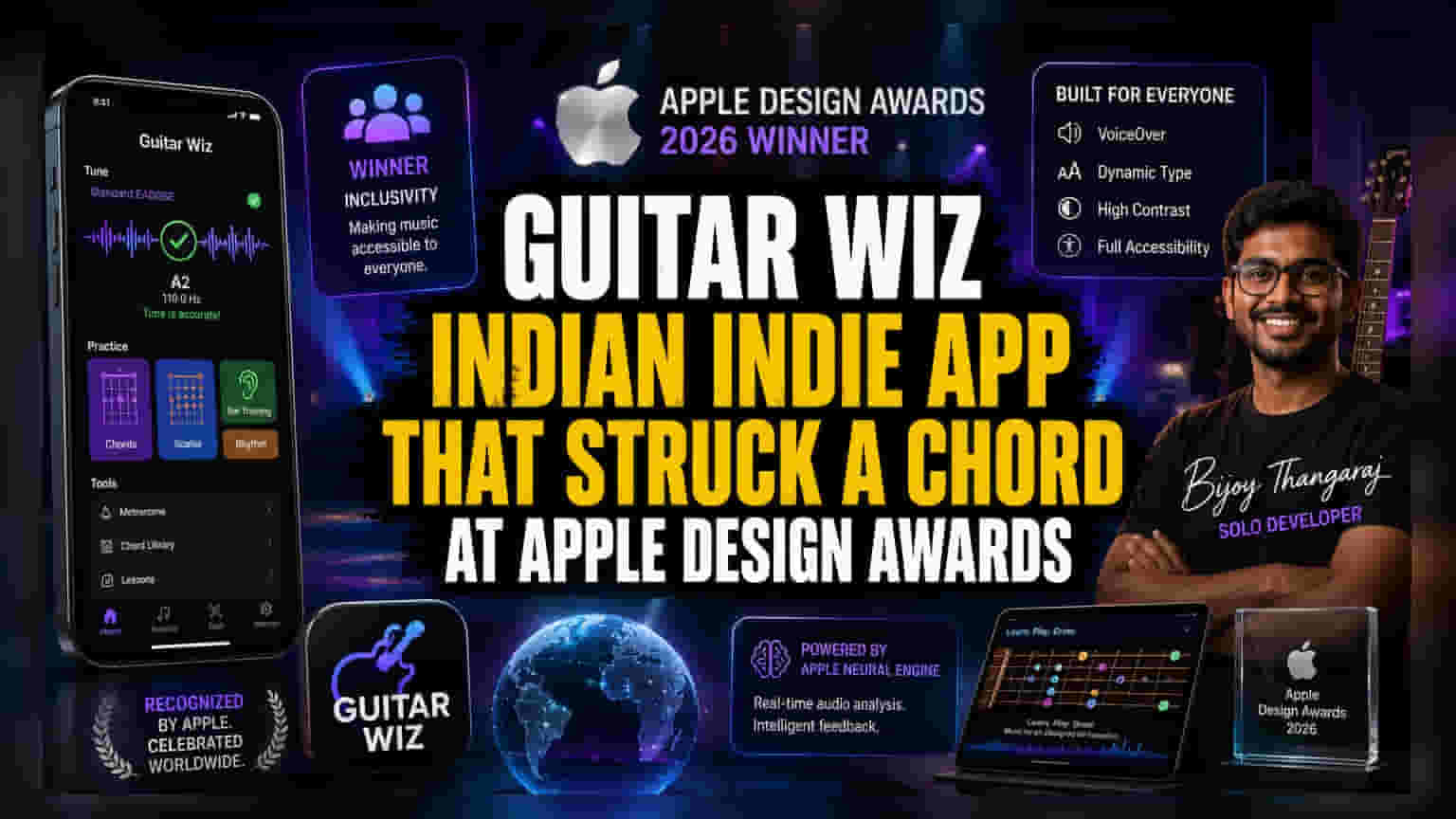


The Design-Led Disruption
Apple’s recognition of Guitar Wiz as a winner in the 2026 Apple Design Awards (ADA) marks a significant moment for independent developers in the Indian ecosystem. Unlike traditional music-learning applications that rely heavily on visual cues, this toolkit, crafted by solo developer Bijoy Thangaraj, prioritizes non-visual engagement. The application’s victory in the Inclusivity category stems from its seamless integration of Apple-native accessibility frameworks, including VoiceOver, Dynamic Type, and high-contrast visuals, allowing musicians across the spectrum of ability to access music theory, tuning, and chord practice with autonomy.
Scaling the Independent Hurdle
While the market for music-education apps is heavily saturated with studio-backed products—often featuring extensive marketing budgets and broad feature sets—Guitar Wiz differentiates itself through architectural precision. Thangaraj, who has spent over a decade building music-focused software, successfully leveraged the Apple Neural Engine to provide real-time audio analysis and feedback. This technological choice allows the app to serve as an intelligent, reactive partner rather than a passive repository of video tutorials. Comparing this to market competitors, the app’s success highlights a shift toward 'Product-Led Growth' (PLG) where the utility of the tool becomes its primary marketing engine, rather than conventional paid advertising campaigns.
The Risk of Niche Concentration
While accolades from Cupertino provide immediate credibility and a massive boost in App Store visibility, the sustainability of a single-developer, niche-focused entity remains a classic challenge. Unlike diversified music-tech platforms or games like Pine Hearts or Cyberpunk 2077—which benefit from established studio resources and cross-category appeal—Guitar Wiz faces the inherent volatility of the independent developer lifecycle. The reliance on a single founder creates 'key person risk,' where the product roadmap, maintenance, and future iterations are tethered to the bandwidth of one individual. Furthermore, as music education apps increasingly pivot toward subscription-based, AI-heavy models, the challenge will be to scale the app's infrastructure without compromising the accessibility features that earned it this award.
Future Outlook
The upcoming Worldwide Developers Conference (WWDC26) will likely spotlight how Guitar Wiz utilizes its new status to capture a wider share of the global music-education market. The recognition aligns with Apple’s broader strategic emphasis on accessibility, potentially positioning the app as a permanent fixture in the 'Inclusivity' section of the App Store. Future success for the platform will likely depend on its ability to maintain its lean, high-fidelity experience while navigating the competitive pressures of larger, better-capitalized entrants in the music-tech sector.