

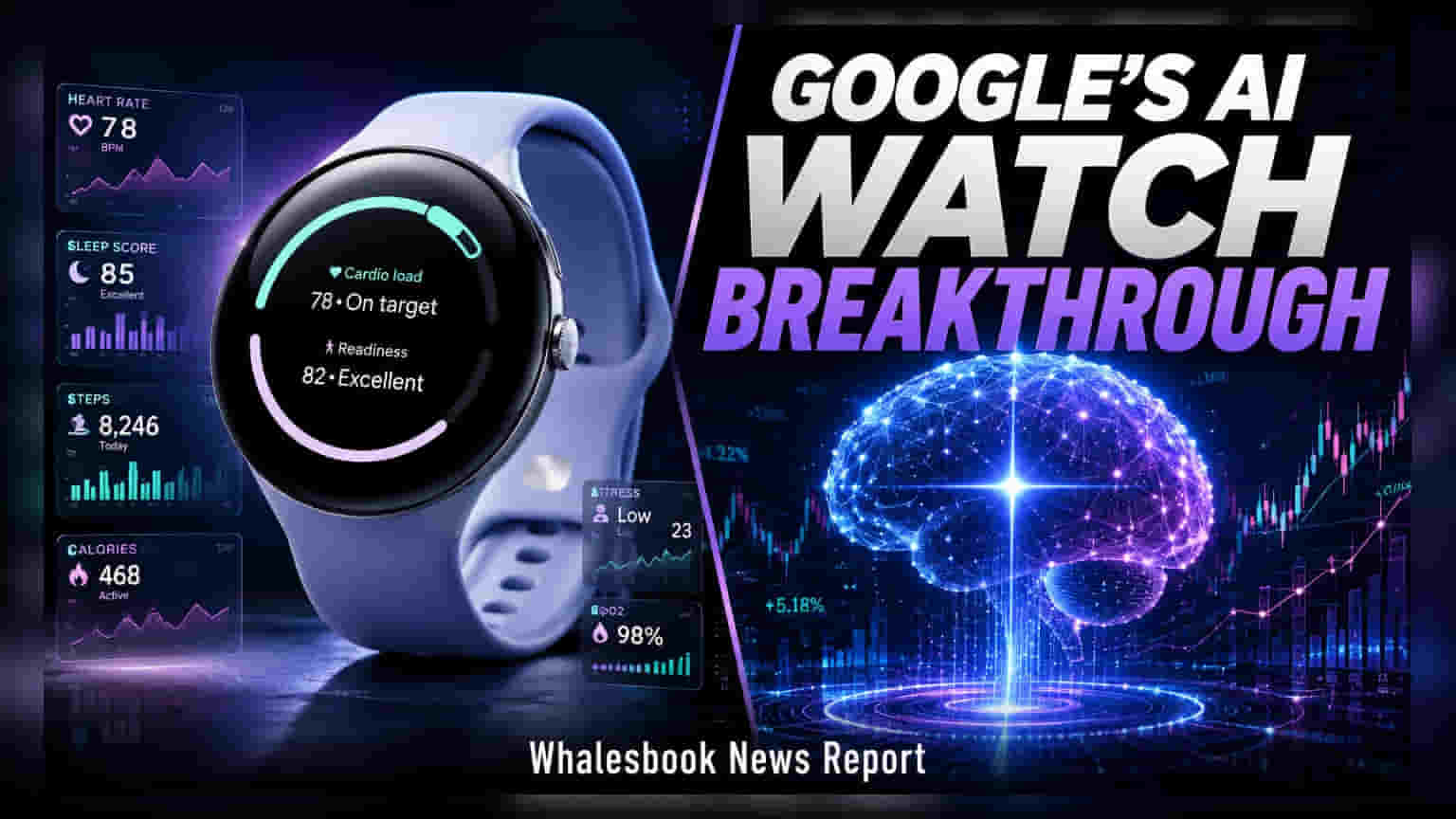
Google unveiled the Pixel Watch 5, featuring Gemini AI and advanced health tracking, starting at $399. While the launch expands the company's ecosystem, investors are focused on Alphabet's high capital spending on AI infrastructure and increasing competitive pressures in the wearables market.
Google has officially unveiled its latest smartwatch, the Pixel Watch 5, at the 'Made by Google' event. Starting at a price of $399, the device introduces deeper integration with the company's Gemini AI, allowing for proactive assistance and voice-command tasks that process offline. The watch also features hardware upgrades, including the Qualcomm Snapdragon W5 Gen 2 chip, aimed at improving speed and battery efficiency to reach up to 40 hours of use.
From a product perspective, Google is positioning the watch as a health-focused wearable. It includes new tracking capabilities for blood pressure patterns and insulin resistance trends. However, investors and potential users should note that these specific health features are currently pending regulatory approvals, such as FDA clearance, and are expected to roll out via software updates later in the year.
For shareholders, the launch occurs against a backdrop of broader market caution. Alphabet’s (GOOG) shares saw a decline of approximately 3.17% on August 11, 2026, as investors weigh the company's massive capital spending on AI infrastructure against its revenue growth. The wearable hardware business represents a small portion of the company’s total revenue, but it acts as a critical testing ground for integrating Google’s AI models into everyday consumer devices. The challenge for the company is to prove that its high R&D and infrastructure costs are translating into meaningful product differentiation that consumers will pay for, especially as competition in the smartwatch market remains intense from established players like Apple and Samsung.
Several risks persist that investors typically monitor. The smartwatch market is highly saturated, and consumer demand can be sensitive to pricing changes, particularly given the $50 price increase for the new model. There are also concerns regarding the support lifecycle for wearable devices, which often lags behind that of smartphones, potentially impacting long-term customer retention. Additionally, Google faces ongoing regulatory scrutiny in the European Union regarding its AI features and data practices, which could impact future feature rollouts or profitability.
The key monitorable for investors moving forward will be how the market receives the new health and AI features, and whether these enhancements can drive higher adoption rates compared to previous versions. Furthermore, updates in upcoming quarterly financial results regarding the balance between high capital spending on AI and the actual return on investment in its hardware ecosystem will remain a primary focus for shareholders.