

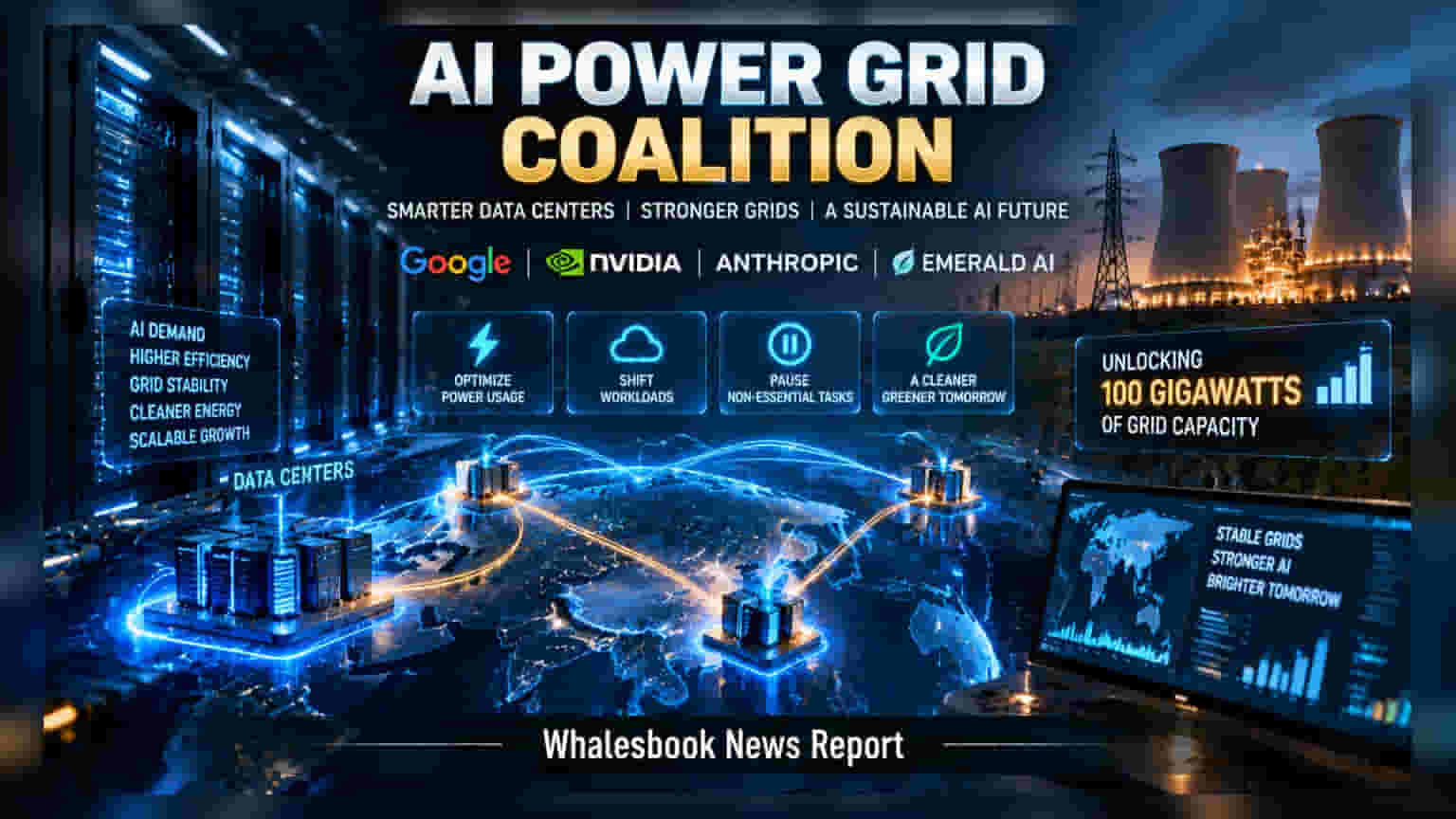
Google, Nvidia, and Anthropic have formed the AI Energy Management Alliance (AEMA) with Emerald AI to optimize data center power consumption. The group aims to unlock 100 gigawatts of grid capacity by using smart software instead of diesel generators. For investors, this initiative highlights the severe power bottlenecks facing the AI industry and the urgent need for efficient energy solutions.
Google, Nvidia, and Anthropic have teamed up with Emerald AI to launch the AI Energy Management Alliance (AEMA). The initiative aims to tackle a major challenge for the artificial intelligence industry: the massive amount of electricity required to run modern data centers, which is currently putting significant strain on power grids worldwide.
Traditionally, when power grids face high demand, industrial users often rely on diesel generators to keep running. This is expensive and faces pushback from regulators and companies focused on sustainability. The new alliance aims to replace this with software-driven management. The platform can automatically pause non-essential background tasks or shift computer workloads to different regions where power is more easily available. This turns data centers from passive users of electricity into active partners that help maintain grid stability.
Emerald AI recently secured $150 million in Series A funding, which provides the capital needed to expand this technology beyond pilot projects. The alliance is supported by major utility providers including AES, Constellation, National Grid, and NRG Energy, providing the necessary operational framework to roll out these tools. The group has set an ambitious target of unlocking 100 gigawatts of grid capacity by standardizing how data center hardware communicates with utility grids.
While this initiative is a positive step for efficiency, investors should look at the broader picture. This software optimizes existing power usage, but it does not replace the need for building new power generation sources. Even with smart management, the relentless growth of AI training and data processing means the fundamental demand for electricity remains very high. The alliance offers a way to manage current limits more effectively, but it is not a complete solution to the global energy deficit driven by AI expansion.
For investors in India, this development is relevant as the country sees a massive increase in data center construction from companies like Nxtra, AdaniConneX, and STT GDC. Power availability and the cost of energy are critical factors for these operators. Technologies that can optimize power consumption or help data centers integrate more smoothly with the grid will be important to watch, as they directly impact long-term operational efficiency and profit margins.
The next step for investors is to track how quickly these utility partnerships can scale. The key monitorable will be whether this software can significantly reduce the need for expensive backup power and how it handles the rapidly increasing energy demands as AI models become more complex.