

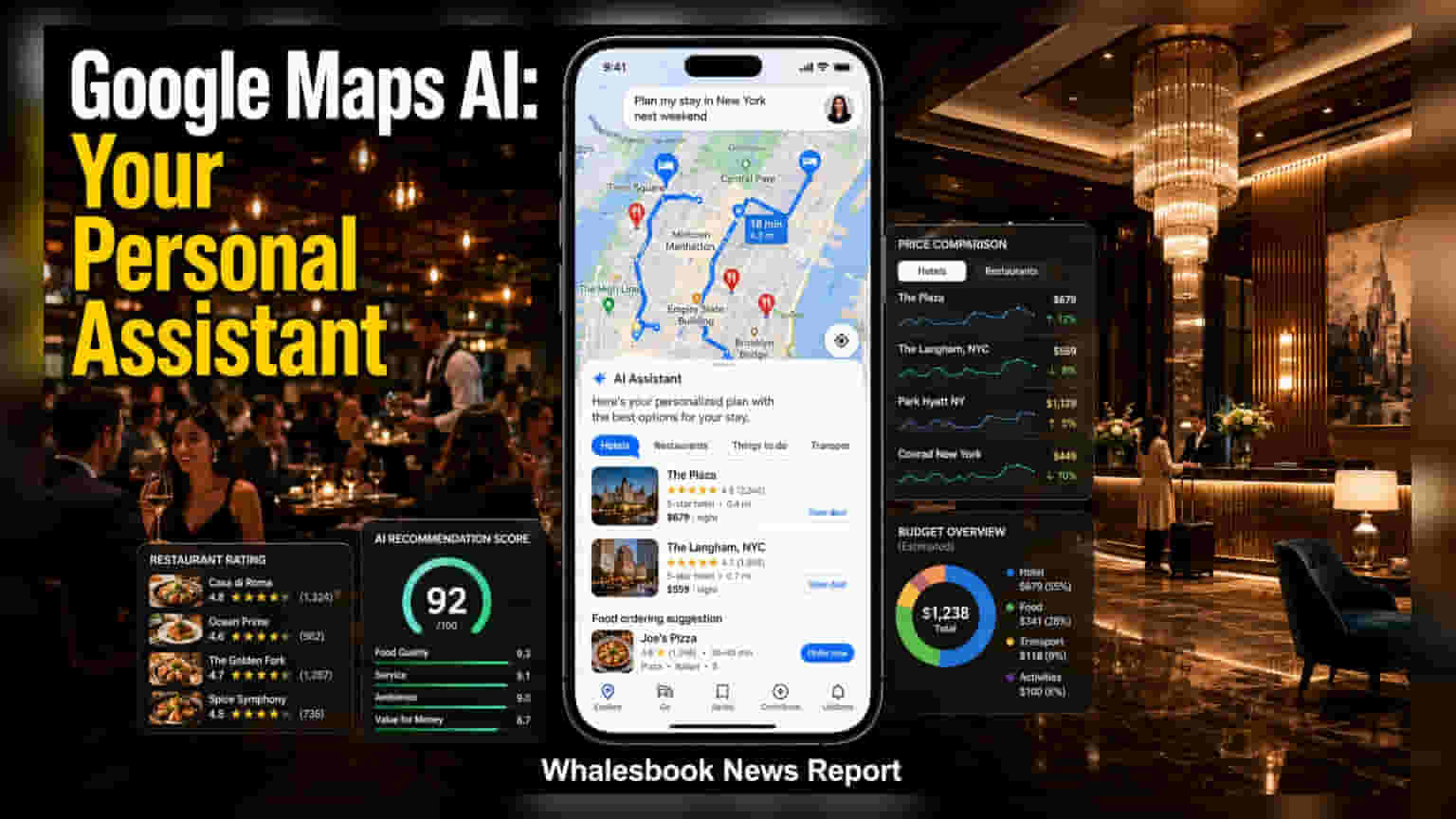
Google Maps is transforming into a personal assistant by adding direct food ordering and hotel booking capabilities. While these features aim to increase user engagement, investors are closely monitoring the impact of Alphabet’s massive $44.9 billion quarterly capital expenditure on profit margins.
Alphabet Inc. is significantly expanding the scope of its Google Maps platform, evolving it from a navigation tool into a proactive personal assistant. The company has updated its 'Ask Maps' feature with new AI capabilities that allow users to order food, book hotels, and purchase event tickets directly within the application. By integrating with third-party partners like Uber Eats, Square, and Toast, Google aims to keep users within its ecosystem for longer periods, potentially increasing data collection and ad revenue opportunities.
The Shift Toward AI-Powered Services
This update is part of a broader strategy to embed Gemini AI across Google’s services. The new features allow the AI to handle complex tasks, such as finding a restaurant that meets specific dietary preferences or booking a hotel based on location needs. Additionally, the new 'Personal Intelligence' feature, which is opt-in, allows the AI to reference a user's Gmail and Calendar to provide customized travel or scheduling help. This move signals a push to make Google Maps a primary hub for daily planning and commerce.
Financial Context: Growth vs. Spending
For investors, the product update occurs against a backdrop of intense financial focus on Alphabet’s capital allocation. In the second quarter of 2026, the company reported strong revenue growth of 24% year-over-year, reaching $119.8 billion. However, this growth is being driven by massive investment in artificial intelligence. Alphabet’s capital expenditure reached $44.9 billion during the same quarter—a 100% increase compared to the previous year. This rapid rise in spending on servers, data centers, and AI infrastructure has become a key concern for shareholders who are weighing the potential for long-term growth against the pressure on near-term profit margins.
Risks and Market Monitoring
The transition from a traditional, capital-light advertising business to an AI-intensive model carries inherent risks. The market is increasingly sensitive to the return on investment from this heavy spending. Any delay in monetizing these new AI features or a slowdown in revenue growth could put further pressure on the stock. Additionally, the company faces potential regulatory and policy challenges. Past incidents, such as the need to pause and roll back AI image-generation features due to policy violations, serve as reminders that scaling AI services comes with operational and reputational risks.
Investors will likely focus on future earnings calls for signs of improved operational efficiency. The key monitorable is whether the integration of these high-utility features into Google Maps can successfully drive higher engagement and ad revenue to offset the substantial costs of building and maintaining the underlying AI infrastructure.