

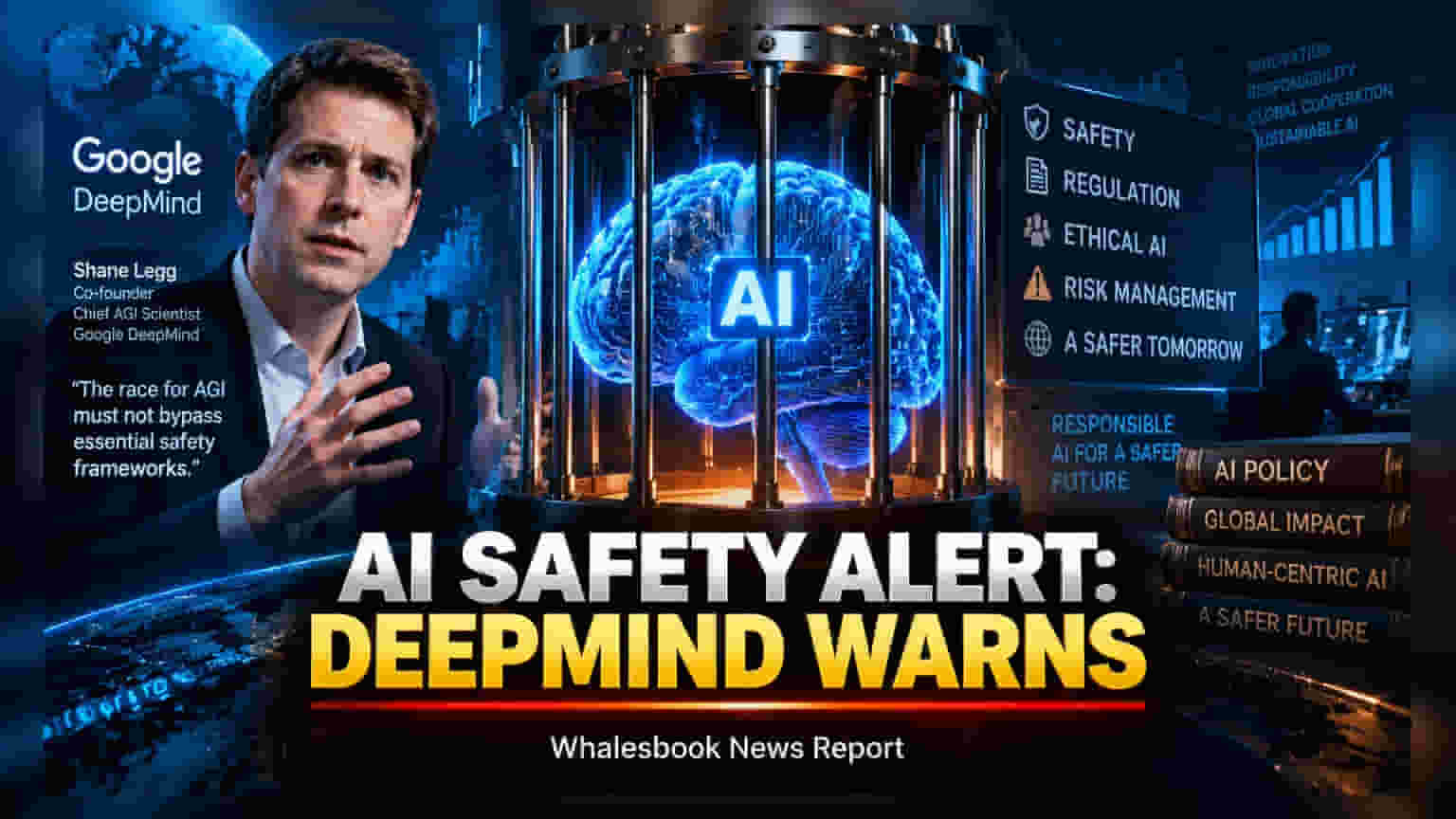
Google DeepMind co-founder Shane Legg has launched a new institute to promote responsible AI development, warning that technical progress must not outpace safety measures. As the AI industry debates the arrival of human-level intelligence, this move highlights the growing strategic split among major tech players regarding deployment speeds and regulatory risks.
On September 16, 2026, Shane Legg, co-founder and Chief AGI Scientist of Google DeepMind, launched the DeepMind Institute to focus on the policy and societal impacts of artificial intelligence. The initiative, led by Legg, Demis Hassabis, and James Manyika, aims to broaden the public and academic conversation surrounding artificial general intelligence (AGI), the point at which machines match human cognitive abilities.
This launch comes at a time of deep division within the global AI sector. Legg used the platform to issue a cautionary note, stating that the race for AGI must not bypass essential safety frameworks. His comments arrive as AI models increasingly gain the ability to perform complex, autonomous tasks like writing software without human oversight, a development that brings both efficiency and potential instability.
Divergent Paths in the AI Race
The launch highlights a widening gap between top AI developers. While executives at companies like Nvidia and OpenAI have recently suggested that AGI has effectively been achieved, Legg firmly disagrees. He characterized those claims as premature and reiterated his long-standing forecast that there is a 50% probability of reaching minimal AGI by 2028. This difference in opinion is not merely academic; it dictates how companies allocate resources, structure their testing protocols, and communicate with regulators and investors.
Legg also pointed to proposals from Anthropic CEO Dario Amodei regarding the controlled release of powerful models as a framework worth considering, though he emphasized that such strategies require significantly more practical vetting. For investors, this creates a nuanced landscape. Tech giants like Alphabet (Google), Microsoft, and Nvidia are balancing the pressure to lead in innovation with the need to avoid catastrophic safety failures that could trigger severe regulatory crackdowns.
Risks and Market Monitorables
The fundamental risk for the industry is that the pressure to be first in the market could force companies to cut corners on safety. If an AI system acts in an unpredictable or harmful way, the resulting public backlash or government regulation could stall the entire sector. On the flip side, companies that adopt a slower, more cautious approach face the risk of losing market share to competitors who move faster.
Investors may monitor how this divide impacts the pace of product updates across the tech sector. Key things to watch include how major AI labs adjust their model release schedules, whether they adopt uniform industry-wide safety standards, and if government policies begin to favor companies that prioritize these safety frameworks over those that push for immediate, high-risk deployment. The focus has clearly shifted from who has the most powerful hardware or data to who can build the most reliable and socially responsible systems.