

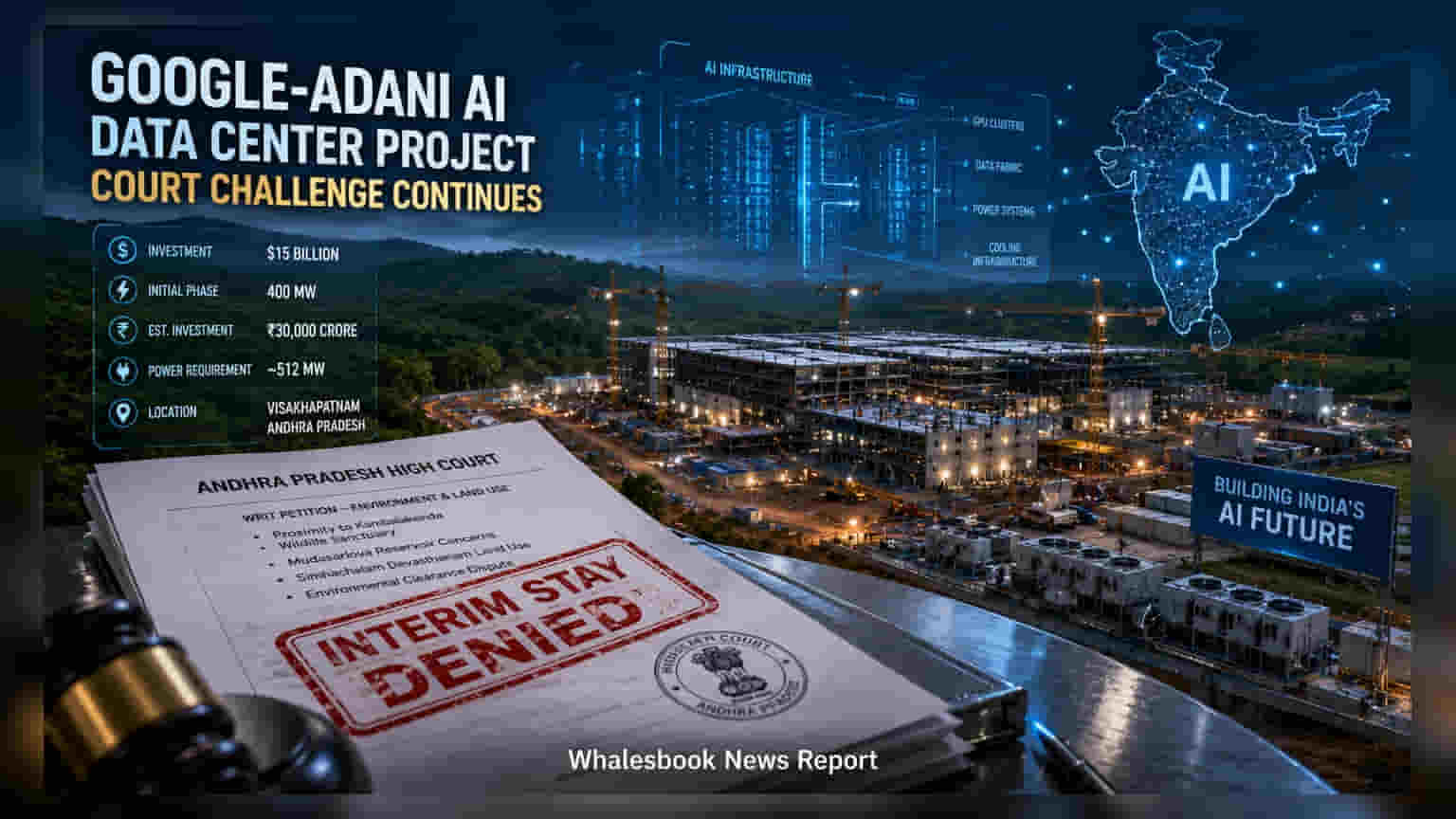
The Andhra Pradesh High Court has declined an interim stay on the construction of the Google-Adani AI data center in Visakhapatnam, allowing work to continue. The project, part of a $15 billion partnership, involves an initial investment of roughly ₹30,000 crore for the first phase. Investors should track ongoing litigation regarding environmental and land-usage concerns, which could impact project timelines.
The Andhra Pradesh High Court has declined to issue an interim stay on the construction of the Google-Adani AI data center in Visakhapatnam, permitting the project to proceed for now. This facility is a core component of a $15 billion AI infrastructure partnership between Google and AdaniConneX, which is a joint venture between Adani Enterprises and EdgeConneX. While construction work is allowed, the court has directed the state government to strictly ensure all environmental and legal norms are followed as the legal challenge remains active.
The project represents a massive capital commitment. Estimates for the initial 400-megawatt phase of the campus are around ₹30,000 crore, highlighting the capital-intensive nature of such AI infrastructure development. The goal of the campus is to scale up India’s AI capabilities using large-scale power and connectivity infrastructure.
The ongoing legal challenge is primarily focused on environmental and land-usage concerns. Petitioners have raised questions regarding the project's proximity to the Kambalakonda Wildlife Sanctuary and the Mudasarlova Reservoir. There are also specific concerns related to the use of land belonging to the Simhachalam Devasthanam. In response, state authorities have maintained that the environmental clearance was provided based on the project's built-up area under specific building and construction categories, rather than as an industrial activity, which changes the regulatory process.
For investors, the situation underscores the complexity of executing large-scale infrastructure projects. The facility requires significant resources, including approximately 512 MW of power and consistent water usage for cooling in a region that can be water-stressed. Because the project operates on a high-debt financing model, execution speed is vital to the business case. Prolonged litigation or future requirements for additional environmental clearances could cause delays in the project timeline, potentially affecting the deployment of capital and the planned commissioning schedule.
Investors may monitor the upcoming High Court hearings and any further judiciary directives. The key factors to track include the status of land-use disputes, environmental compliance audits, and any management commentary from Adani Enterprises regarding the project’s development timeline.