

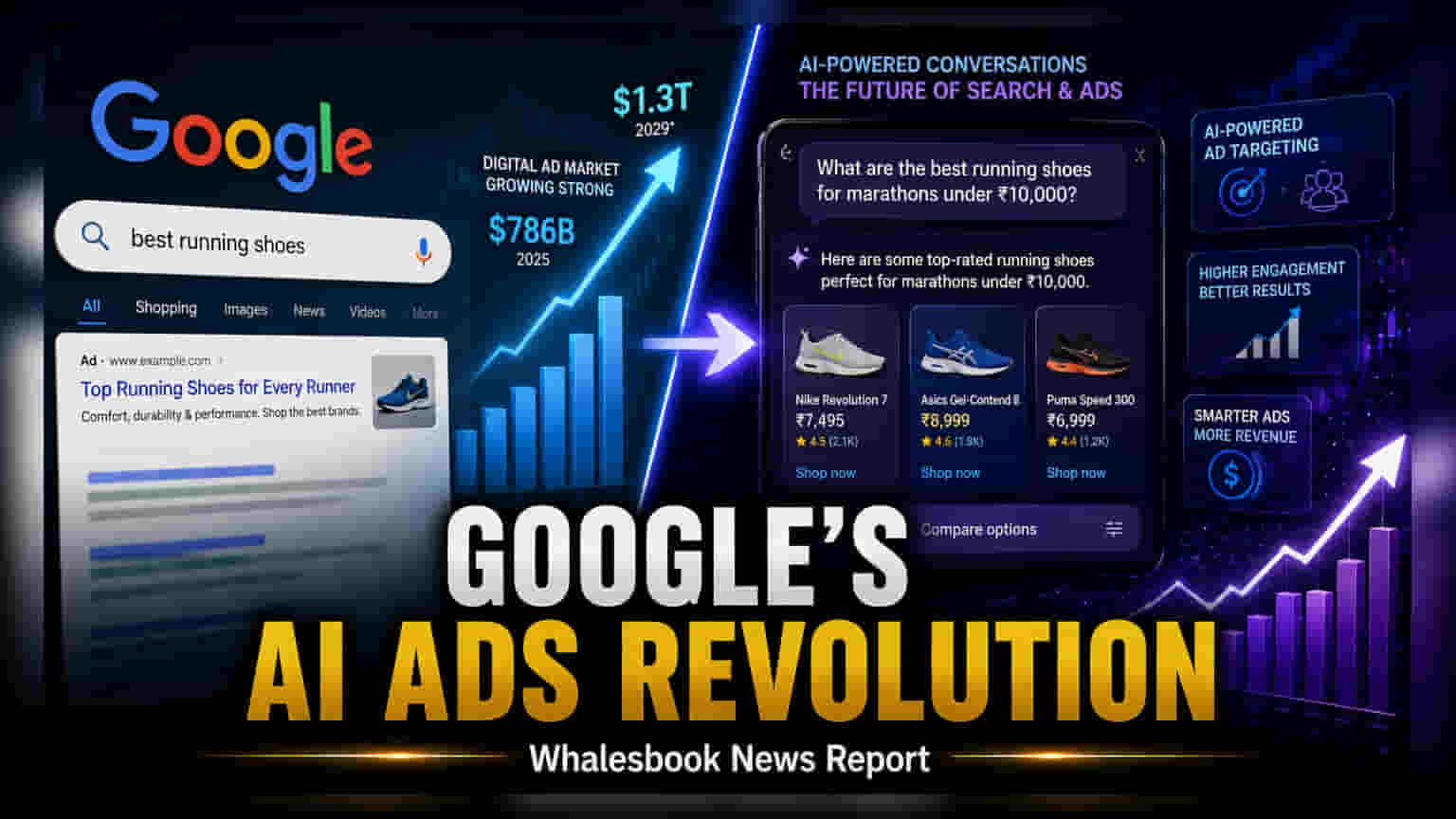
Google is moving from keyword searches to conversational AI queries, enabling businesses to engage customers earlier. This shift aims to speed up consumer decision-making and is particularly prominent in India through voice and multi-language adoption. Investors should track how this evolution impacts digital ad revenues and the competitive positioning of local retail and travel firms.
Google is fundamentally changing how users interact with its search engine by prioritizing long-form, conversational, and visual queries over traditional keyword-based searches. This transition is powered by advancements in generative artificial intelligence, allowing users to ask complex, open-ended questions. According to company data, approximately 15% of daily searches are new, reflecting a rapid shift in user behavior. This evolution is designed to help consumers move from initial product discovery to final purchase decisions more efficiently, providing advertisers with a chance to connect with potential customers at an earlier stage in their journey.
India at the Center of Search Evolution
India is emerging as a critical region for this transformation. The country's unique digital landscape, characterized by high adoption rates for voice commands and searches conducted in regional or mixed languages, aligns with the capabilities of Google's Gemini AI model. These models are now better equipped to understand local linguistic nuances, leading to more accurate results. Sectors such as retail, travel, and lead generation are currently the primary adopters of these AI-driven advertising tools in India. For businesses in these sectors, the ability to automate campaign creation through AI is becoming a standard operational requirement.
Investor Implications and Market Context
While the broader paid search market is forecasted by PwC to grow at a compound annual rate of 6.1% through 2030, reaching $402.7 billion, the traditional paid search segment is expected to see a more tempered growth of 3.8%. This discrepancy highlights a potential transition period for digital advertising platforms. As AI-generated summaries like Google’s AI Overviews reach over two billion monthly users globally, the reliance on first-party data—information collected directly by businesses from their customers—will likely become a major competitive advantage.
Investors may note that the shift toward conversational and visual search tools, such as Google Lens which sees over 25 billion monthly uses, changes the traditional advertising funnel. Companies that can effectively integrate these AI tools to reduce consumer friction may see better conversion rates. However, a key monitorable remains: how quickly traditional advertising agencies and digital-first businesses adapt to these new AI-driven models without compromising their existing profit margins. As AI automates more aspects of campaign execution, the effectiveness of these tools in translating engagement into tangible revenue growth in the Indian market will be the primary metric to watch in the coming quarters.