

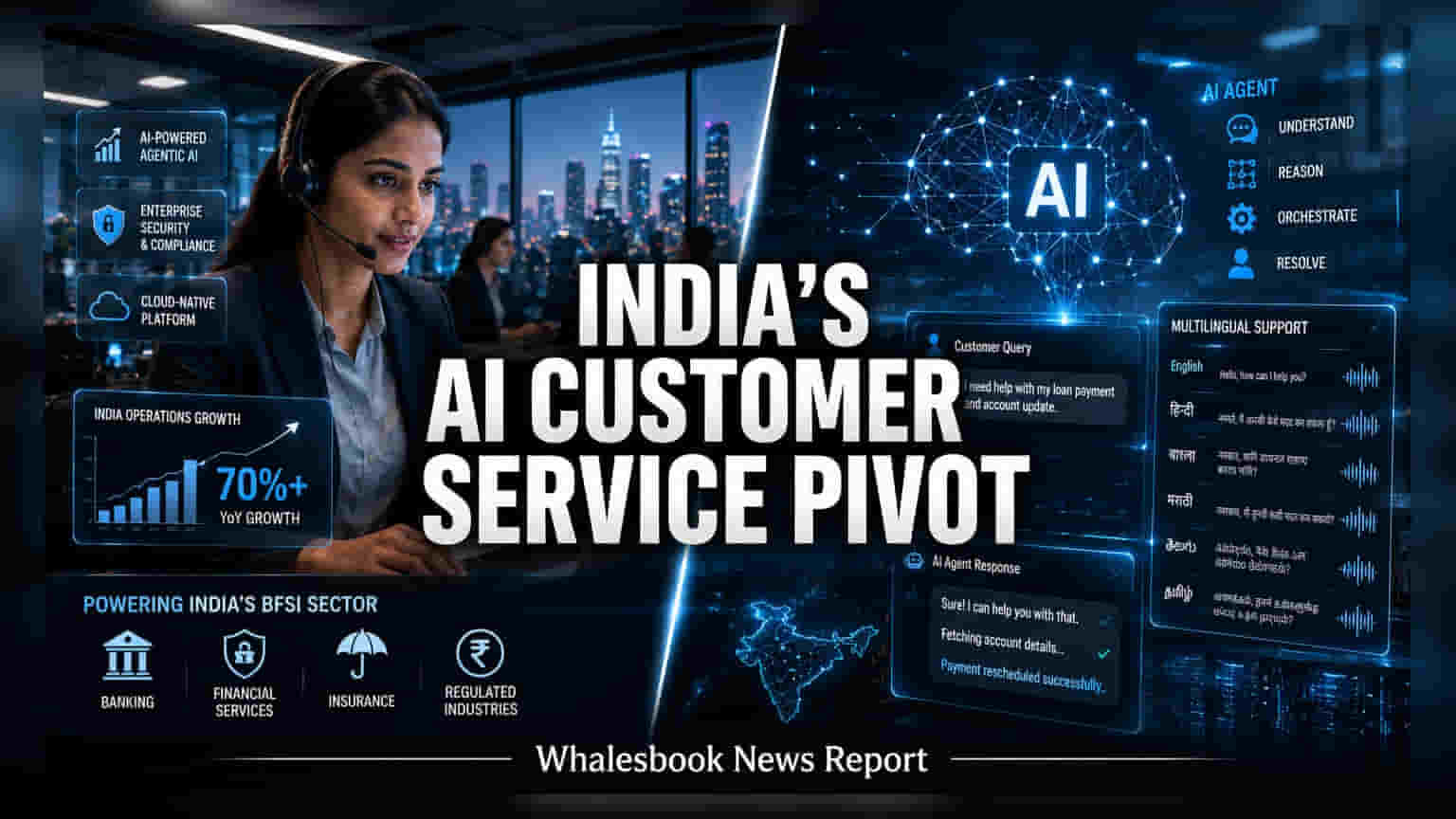
Genesys, a global cloud customer experience firm, is scaling its AI-driven operations in India, targeting BFSI and service sectors. Investors should note that this is a private global entity, distinct from the Indian-listed Genesys International Corporation Ltd. Understanding this distinction is vital for those tracking technology trends and AI adoption in the Indian enterprise sector.
Genesys, a global provider of cloud customer experience solutions, is aggressively expanding its AI-driven infrastructure in India. The company reported a significant growth in its Indian operations over the past year, driven by a strategic shift toward cloud-native platforms. This expansion is designed to meet the rising demand for automated, intelligent customer support, particularly within India’s highly regulated Banking, Financial Services, and Insurance (BFSI) sector.
Investor Clarity on Market Identity
A critical detail for Indian stock market participants is distinguishing between this global entity and local companies with similar names. Genesys (the company leading this AI-driven customer experience push) is a private global provider of contact center technology. It is not affiliated with Genesys International Corporation Ltd, which is listed on the National Stock Exchange (NSE) and the BSE. Genesys International Corporation Ltd operates in the geospatial and 3D mapping services sector. Investors tracking news on AI adoption should be aware of this distinction to avoid confusion when analyzing market movements or investment opportunities in the Indian technology space.
AI Trends in Indian Customer Support
The broader trend highlighted by this development is the acceleration of 'agentic AI' within Indian enterprises. Companies are moving beyond basic chatbots to systems capable of reasoning and orchestrating complex workflows. Research indicates that a large majority of customer experience leaders now expect autonomous AI agents to manage customer journeys within the next three years. This shift is particularly pronounced in India, where businesses are dealing with unique operational challenges, including the need for multilingual support across regional languages like Bengali, Marathi, Telugu, and Tamil.
Risks and Implementation Challenges
While the adoption of AI-driven customer service is growing, the sector faces several risks that investors and business leaders monitor. First is the implementation complexity. Connecting advanced AI agents with legacy enterprise systems often involves significant technical hurdles. If integration is not seamless, it can lead to operational inefficiencies rather than the promised productivity gains.
Second, governance and service failure risks are high. As autonomous AI agents take on more responsibilities, poorly governed or configured systems can cause large-scale service issues before human teams can intervene. Finally, there is the ongoing challenge of maintaining high-quality human oversight. As the industry moves toward a hybrid model of automated and human support, the cost of balancing these two—maintaining empathy in complex interactions while automating routine ones—remains a financial variable that companies must manage to protect their profit margins.
Investors tracking the AI space in India may watch how enterprise software spending patterns evolve across the technology sector. The ability of companies to effectively integrate these new AI tools into their existing workflows without inflating operational costs will be the key metric for success in the coming quarters.