

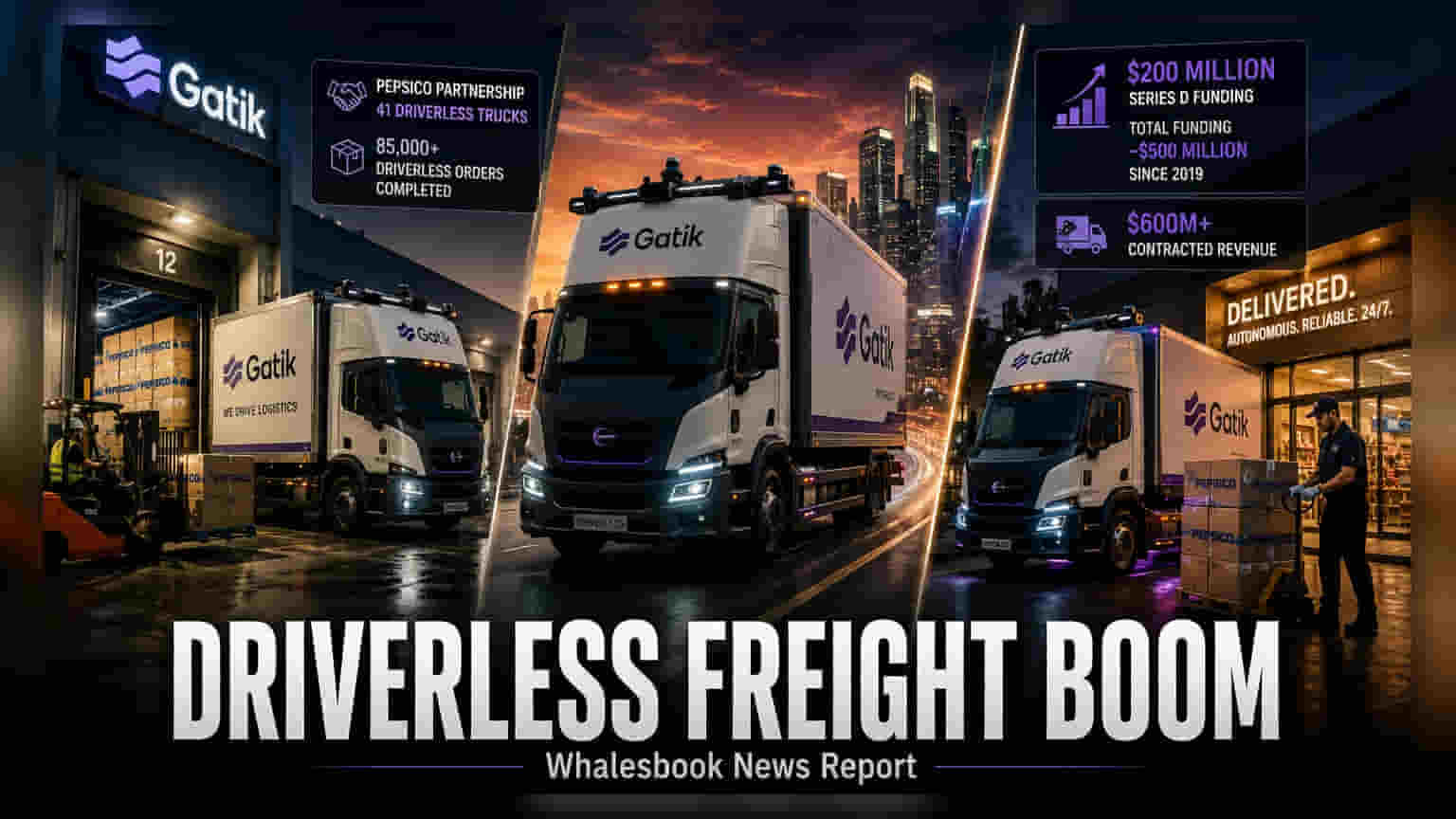
Autonomous logistics startup Gatik has raised $200 million in a Series D funding round led by Qatar Investment Authority and Koch Disruptive Technologies. The company, which focuses on middle-mile delivery, now has over $600 million in contracted revenue. Please note that Gatik is a private company and is not currently listed on any public stock exchange.
Gatik AI, a startup specializing in autonomous box trucks for commercial logistics, has successfully secured $200 million in its latest Series D funding round. The investment was co-led by the Qatar Investment Authority and Koch Disruptive Technologies, with additional participation from investors including Millennium Management and ARK Invest. This infusion of capital brings the company's total funding to approximately $500 million since its founding in 2019.
The capital will support Gatik’s move from pilot testing to full-scale commercial operations. Unlike many competitors in the autonomous vehicle space that target long-haul trucking or robotaxis, Gatik has focused its business model on the middle-mile segment. This involves moving goods between distribution centers, warehouses, and retail hubs, typically covering routes of up to 400 miles. By sticking to these relatively shorter, repetitive, and fixed routes, the company has managed to streamline its technology deployment and secure partnerships with major retailers and consumer goods companies.
The company has reported significant commercial traction, citing over $600 million in contracted revenue. It has also successfully completed more than 85,000 fully driverless orders, a key indicator of its operational progress. Recent partnerships, including a notable project with PepsiCo involving a fleet of 41 box trucks, demonstrate its ability to scale in real-world scenarios. These trucks operate around the clock in varied weather conditions, which is a major focus for the company as it attempts to prove the reliability of its autonomous transportation-as-a-service model.
For investors following the logistics and technology sectors, it is important to understand the risks and hurdles associated with such startups. The business operates in an environment with high capital spending, as developing artificial intelligence and hardware for autonomous driving is costly. Furthermore, the company faces significant regulatory and safety risks. Deploying fully driverless vehicles on public roads requires meeting strict government standards and safety regulations, which can change or tighten at any time.
Competition is also intense, with numerous startups and major technology firms vying for market share in autonomous logistics. The company’s success will ultimately depend on its ability to maintain its technological advantage, ensure consistent safety, and manage costs effectively as it grows. The next major monitorable for the business will be the successful scaling of its fleet operations and its ability to turn contracted revenue into consistent, profitable cash flow.