 Whalesbook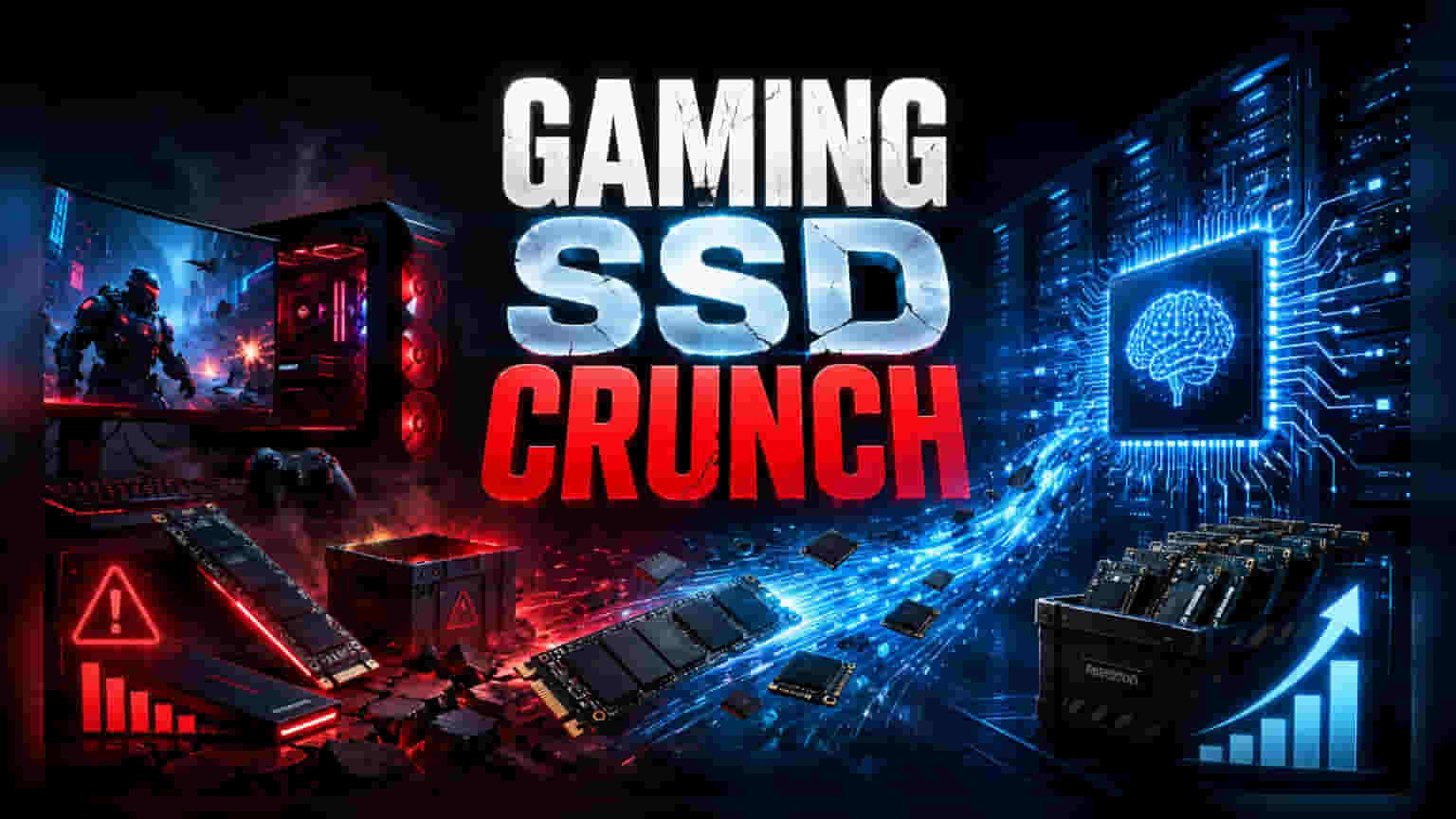


The Memory Supply Paradox
The gaming sector's escalating hunger for high-capacity storage is colliding with an unprecedented supply-side reality. While individual AAA titles now regularly demand between 2TB and 4TB of space to accommodate ultra-high-resolution textures and complex asset streaming, the broader NAND flash market is currently defined by structural scarcity rather than consumer demand. Industry analysts identify this phenomenon as a byproduct of the ongoing AI supercycle, where enterprise and hyperscale data centers are aggressively siphoning off NAND and DRAM production capacity to support power-intensive AI infrastructure.
The Shift in Market Dynamics
Unlike previous hardware cycles where demand was primarily driven by consumer upgrades, the current market is witnessing a fundamental decoupling of PC and enterprise priorities. Memory giants including Samsung, SK Hynix, and Micron have shifted their manufacturing focus toward high-margin server-grade enterprise SSDs (eSSDs) and high-bandwidth memory (HBM). Consequently, conventional NAND capacity available for consumer gaming SSDs has tightened significantly. Data indicates that enterprise SSD demand, which accounted for a massive share of the NAND market in early 2026, is projected to command even greater production priority throughout the remainder of the year. This reallocation has forced manufacturers to prioritize server-side contracts, leaving consumer-facing segments to absorb volatile pricing and reduced inventory availability.
The Forensic Bear Case: Structural Weaknesses
The current gaming hardware "crunch" is not merely a transient shortage but a structural realignment of the electronics supply chain. For gamers and investors in the gaming ecosystem, the risk factors are twofold. First, the escalating costs of NAND flash directly inflate the bill of materials for console and PC manufacturers. With memory prices surging significantly year-over-year, OEMs are faced with the choice of absorbing margin compression or passing these costs onto the end consumer, which threatens to dampen hardware adoption rates in the mid-market.
Second, the rise of alternative players like China's YMTC—which has rapidly expanded its market share amid the shortage—introduces a new layer of geopolitical and supply chain uncertainty. Relying on these suppliers introduces risks associated with export controls and fragmented global distribution, which could lead to inconsistent product quality or availability for Western hardware brands. Furthermore, the industry is entering a period where "meaningful capacity expansion" is unlikely until late 2027, suggesting that the current inflationary pressure on storage hardware is likely to persist as a permanent feature of the mid-2026 landscape.
Future Outlook
Market trackers forecast that the tightness in memory allocation will continue to suppress the consumer gaming sector as long as AI-driven infrastructure spending remains the dominant force in semiconductor manufacturing. While high-performance PCIe 5.0 drives are technically superior, their market penetration is being hampered by price volatility. Moving forward, the industry must prepare for a scenario where storage remains a premium, often supply-constrained component, fundamentally altering the economics of future game development and distribution.