 Whalesbook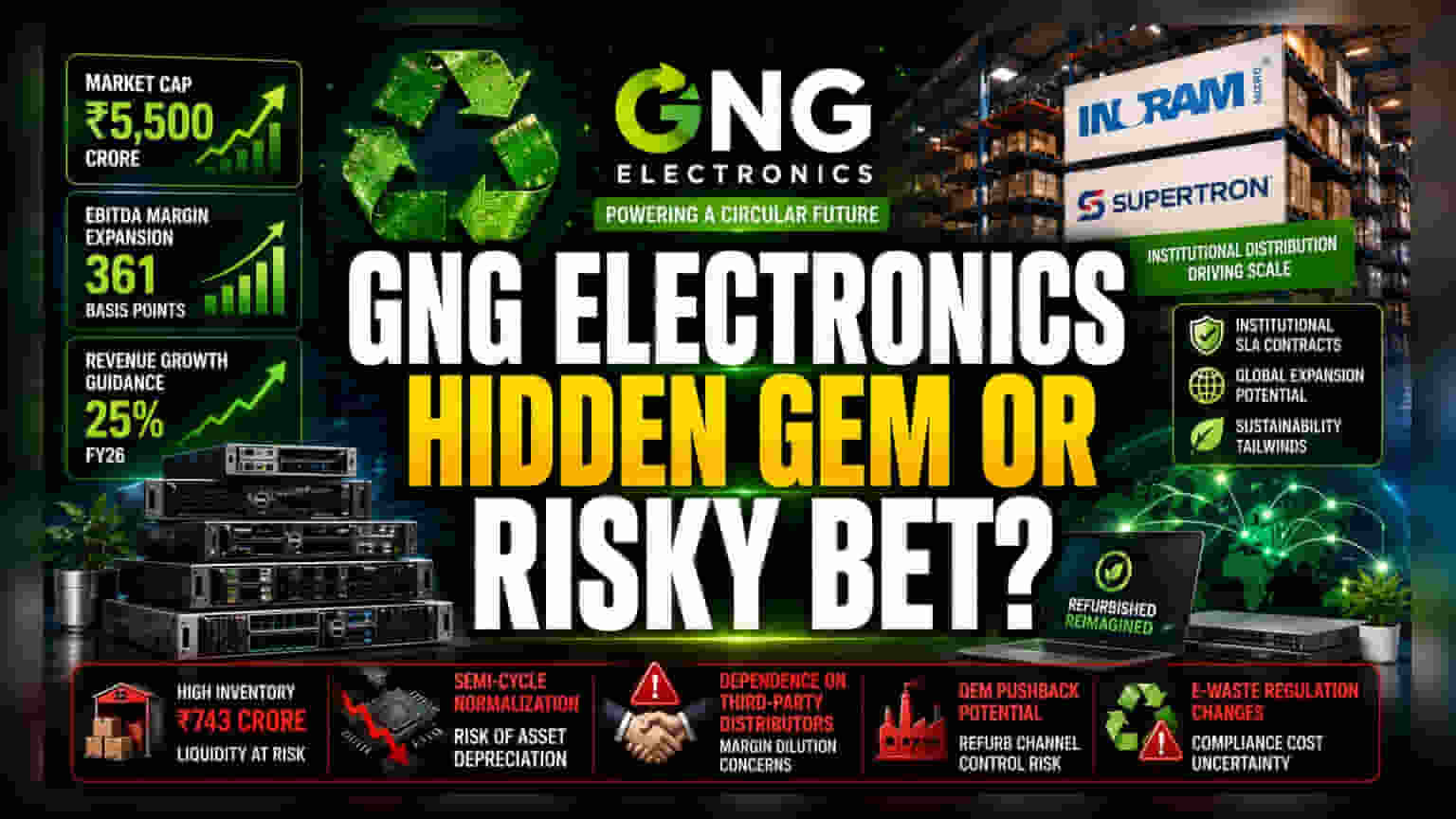


The Valuation of Circular Tech
Market enthusiasm for GNG Electronics, currently trading at a market capitalization of Rs 5,500 crore, stems from the company's ability to extract value from the widening affordability gap in enterprise computing. As AI-specific demand consumes the lion’s share of available high-end memory and processors, corporate procurement cycles are increasingly pivoting toward secondary-market hardware. Unlike traditional hardware manufacturers that face direct exposure to semiconductor spot-price volatility, GNG occupies a strategic middle ground, leveraging its proprietary refurbishment processes to maintain stable gross spreads despite inflationary pressure on raw materials.
Scaling the Distribution Moat
The company’s recent efforts to integrate into mainstream distribution channels via entities like Ingram and Supertron signal a shift from localized secondary-market trading to formalized industrial supply chains. This evolution is necessary to shed the stigma of the 'refurbished' label. By formalizing these channels, GNG gains access to institutional contracts that require strict Service Level Agreements (SLAs), which typically carry higher retention rates than spot-market retail transactions. While current revenue contribution from these institutional alliances remains modest, the infrastructure they provide is essential for any potential expansion into North American or European markets, where regulatory support for circular economy initiatives is becoming a tailwind for growth.
The Forensic Bear Case
Investors must look past the 361-basis-point expansion in EBITDA margins to examine the risks inherent in the company’s capital allocation. The ballooning inventory balance of Rs 743 crore is a double-edged sword. While management frames this as a strategic buffer against component scarcity, it represents a substantial liquidity drain. Should the supply-demand imbalance in the semiconductor sector normalize faster than anticipated, GNG risks holding significant quantities of depreciating assets that could force aggressive price discounting, directly threatening the very margin improvements investors are currently celebrating.
Furthermore, the company’s reliance on third-party distributors introduces a layer of margin dilution. As GNG scales, it faces potential friction with original equipment manufacturers (OEMs) who may seek to control their own refurbished pipelines to protect brand integrity. Unlike direct-to-consumer players that maintain full control over the user experience, GNG’s dependence on external channels limits its ability to respond to market shifts in real-time. Any disruption in these partnership agreements, or a sudden change in global environmental regulations regarding electronic waste, could materially impact the company’s ability to maintain its aggressive 25% revenue growth guidance for the upcoming fiscal year.