 Whalesbook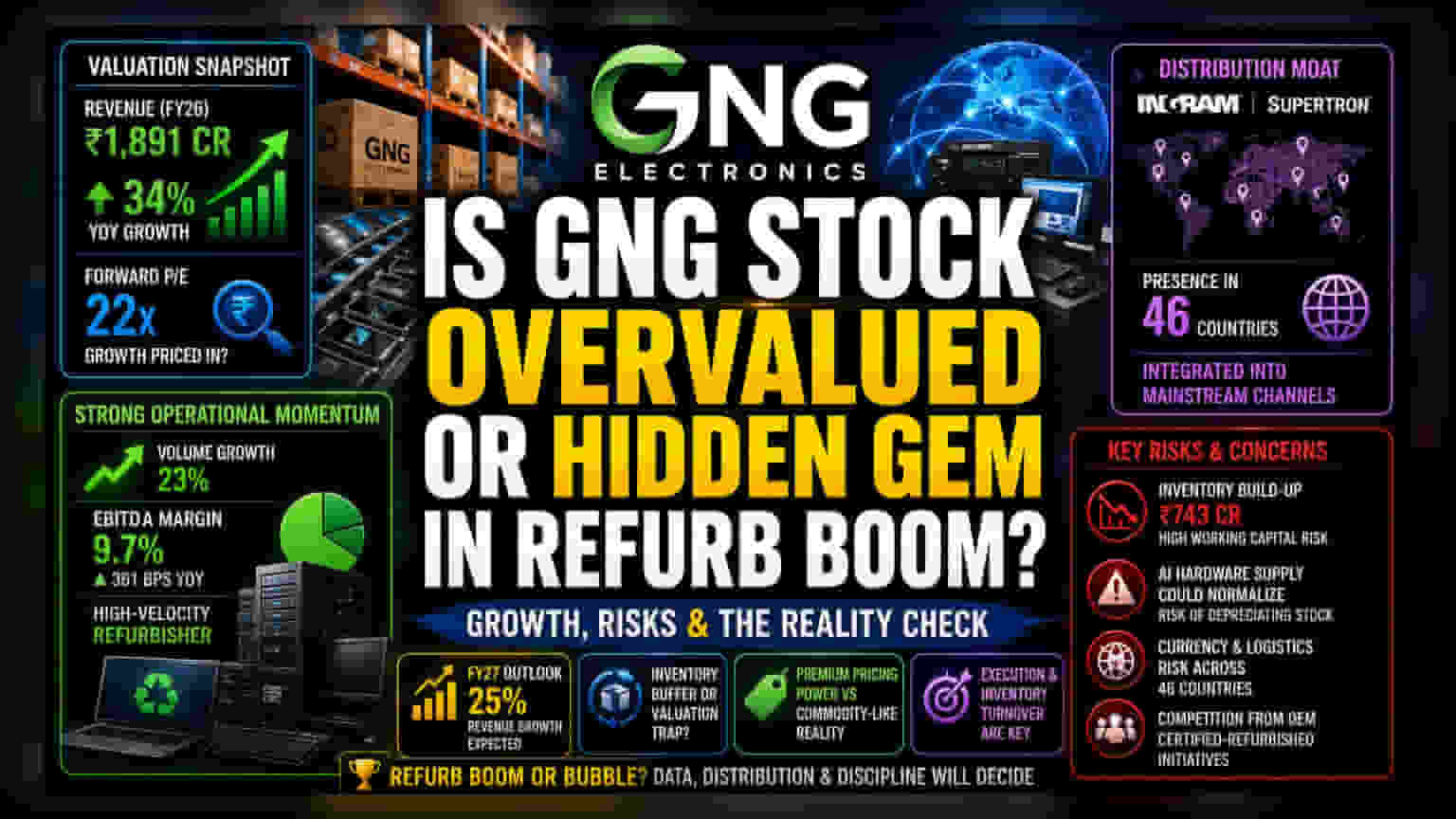


The Valuation Gap
While the 34% revenue expansion to Rs 1,891 crore reflects strong market appetite, the valuation multiple of 22 times forward earnings assumes that GNG can maintain its current pace of margin expansion. The stock’s recent performance hinges on its ability to command premium pricing in a sector historically defined by commodity-like margins. Investors are currently pricing in the transition from a secondary-market player to a mainstream enterprise supplier, yet the underlying dependency on hardware availability creates a volatile baseline for long-term valuation models.
Scaling Against Sector Headwinds
The recent 361 basis point improvement in EBITDA margins to 9.7% serves as a testament to operational efficiency, particularly as the firm scales its volume by 23%. Unlike traditional hardware retailers, GNG operates as a high-velocity refurbisher. This necessitates a delicate balancing act with distributors like Ingram and Supertron. By integrating refurbished inventory into primary channels, the company is effectively lowering the cost-of-acquisition for customers deterred by the premium pricing of new AI-capable silicon. However, this model faces stiff competition from original equipment manufacturers who are increasingly launching their own certified-refurbished initiatives, potentially squeezing the addressable market for third-party providers over the next twenty-four months.
The Forensic Bear Case
The most glaring risk remains the aggressive inventory build-up, which reached Rs 743 crore by the close of fiscal 2026. While management characterizes this as a strategic buffer against supply shocks, it represents a substantial commitment of working capital. If the AI-driven hardware shortage moderates sooner than anticipated, GNG risks holding overvalued, depreciating inventory. Furthermore, the company’s reliance on international distribution networks across 46 countries introduces significant currency risk and complex logistical overheads. Past market cycles show that firms in this space often struggle to maintain margins during economic contractions, as secondary electronics are typically the first discretionary budget item that corporate clients pare back.
The Forward Outlook
Market expectations for a 25% revenue increase in FY27 suggest that analysts remain optimistic about the firm's reach into European and American markets. The sustainability of these gains will likely be determined by the firm's ability to maintain high inventory turnover ratios while navigating the potential softening of component prices. If GNG fails to maintain its current pace of distribution expansion, the current valuation premium will likely face downward pressure, forcing a re-evaluation of its growth-to-capital ratio.