

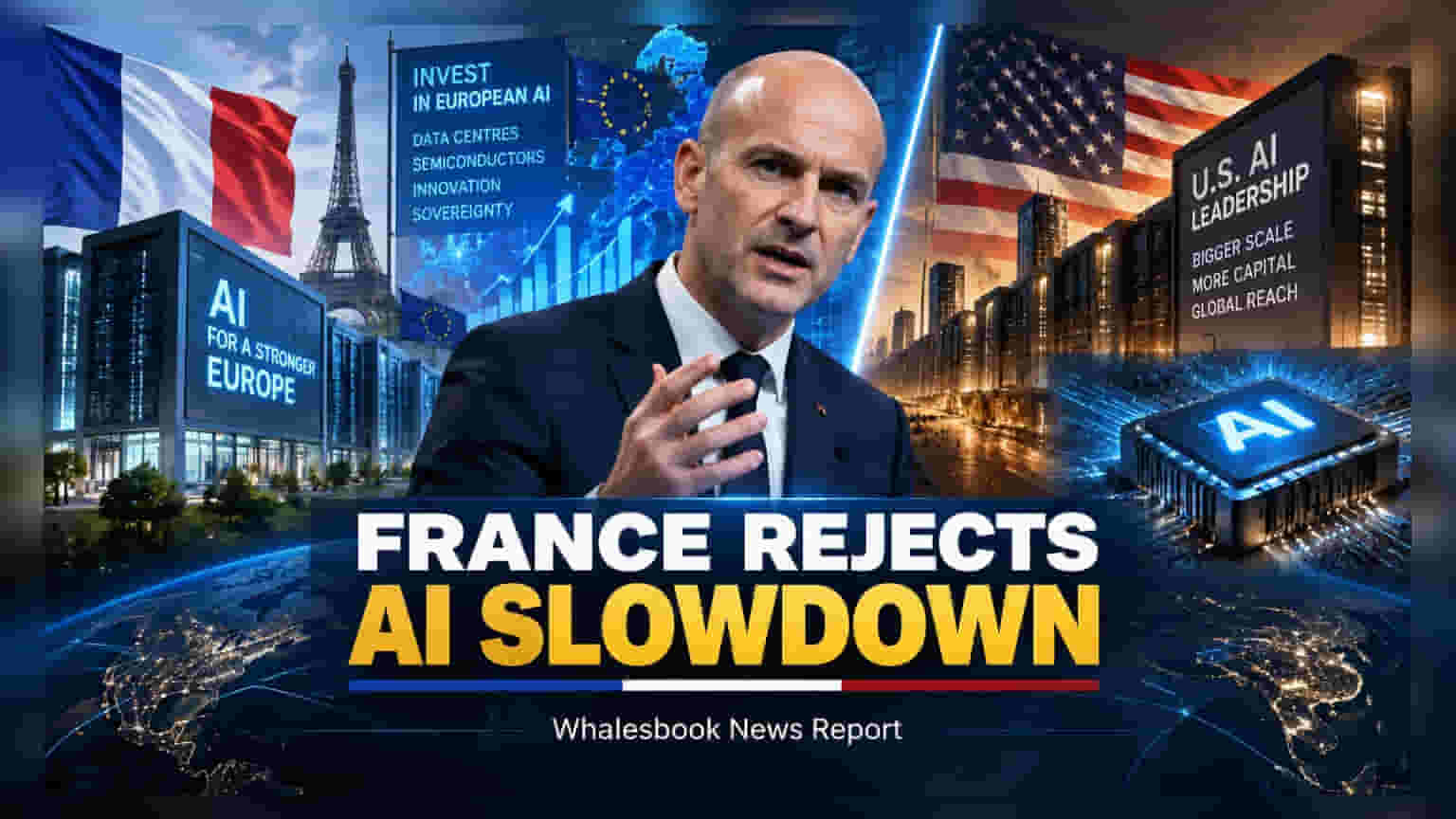
French Finance Minister Roland Lescure has dismissed calls to slow artificial intelligence development, advocating for a faster European race to compete globally. While the move signals a major strategic shift, France faces significant hurdles, including a lowered 2026 economic growth forecast of 0.5% and a widening capital gap for local technology firms.
French Finance Minister Roland Lescure has officially rejected proposals to slow down artificial intelligence development, arguing that such delays would primarily benefit current market leaders in the United States. Speaking at an event organized by the French startup lobby France Digitale, Lescure stated that France and the broader European region must instead accelerate their AI efforts to foster homegrown leadership and improve risk management capabilities.
This stance marks a clear pivot for European technology policy. Rather than prioritizing a cautious approach, the French government is framing AI development as a matter of industrial competition and sovereignty. This view aligns with recent commentary from European Central Bank President Christine Lagarde, who has consistently highlighted the urgent need for Europe to develop its own AI infrastructure and data centers to reduce its dependency on external powers like the U.S. and China.
However, the path to becoming an AI competitor is complicated by the current economic reality in France. The country is navigating significant fiscal strain, with the government recently lowering its 2026 economic growth forecast to just 0.5%. High public debt and limited fiscal space create a challenging environment for state-led investment, which is often required to build the massive computing capacity and infrastructure that modern AI systems demand.
For investors, the gap between ambition and reality remains the central monitorable. While the political will to catch up is clearly strengthening, European AI startups—such as Mistral AI—continue to face a significant shortage of late-stage capital compared to their American peers. This funding gap often forces promising European firms to seek capital and commercial scale in U.S. markets, undermining the goal of European sovereignty.
Additionally, the challenge of balancing rapid innovation with safety remains a complex policy hurdle. The French approach seeks to develop the capacity to control technological risks alongside faster deployment, but implementing this without stifling the nascent sector will require precise regulatory execution.
Investors looking at the European technology space will likely track whether this political push for faster development translates into concrete policy changes, such as increased subsidies, tax incentives for research and development, or streamlined approvals for data center construction. The key metric to watch will be whether the French and broader European government budgets can support such investments without worsening the current fiscal situation.