

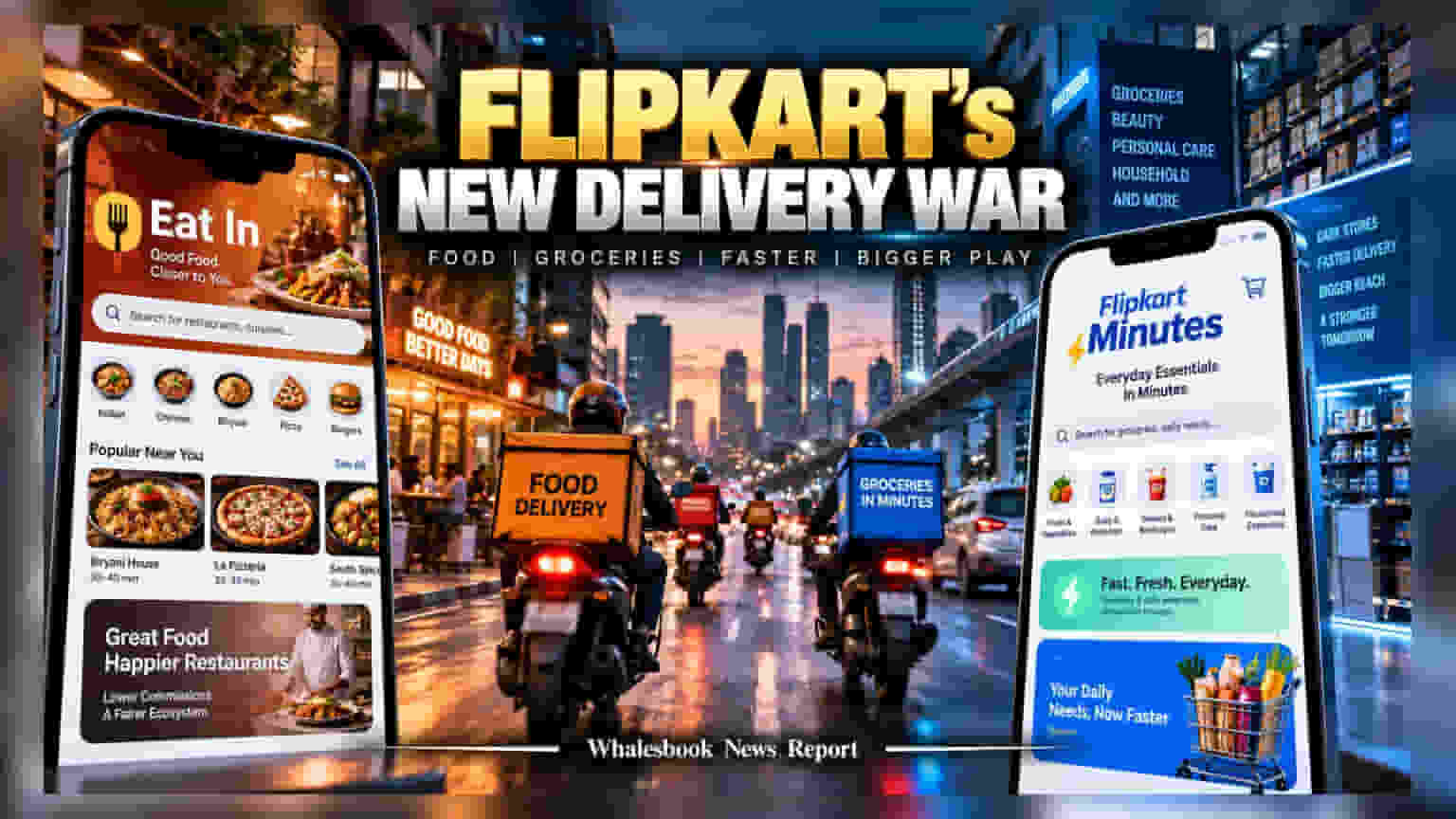
Flipkart has started an employee-only pilot for its ONDC-powered food delivery service, 'Eat In', in Bengaluru, targeting lower restaurant commissions. To strengthen its quick-commerce presence, the company has also launched a standalone 'Flipkart Minutes' app. These moves aim to reverse a decline in platform engagement and capture rising consumer interest in rapid delivery ahead of the festive sale season.
Flipkart is making two major changes to its business model to stay relevant in a market where consumers are increasingly shifting toward rapid, high-frequency delivery services. The company has begun testing a food delivery service called "Eat In" in Bengaluru and has launched a dedicated, standalone app, "Flipkart Minutes," for its quick-commerce business. These steps are a direct effort to regain market share and consumer time, as the company works to prepare for the upcoming Big Billion Days sale.
The "Eat In" food delivery service is built on the government-backed Open Network for Digital Commerce (ONDC). By leveraging this open, decentralized network, Flipkart aims to provide a more competitive environment for restaurants. The company is reportedly targeting commission fees between 10% and 11%, which is designed to be significantly lower than the rates charged by established delivery aggregators. The pilot is currently restricted to company employees in Bengaluru, with a broader public rollout expected to follow the completion of this testing phase around mid-September.
Separately, the launch of "Flipkart Minutes" as a standalone app marks an aggressive push into the quick-commerce race. As shoppers increasingly turn to rapid-delivery platforms for groceries and daily essentials, traditional e-commerce giants are under pressure to provide similar speed. With the quick-commerce sector—including players like Blinkit, Zepto, and Swiggy Instamart—now capturing a notable portion of user engagement, Flipkart is trying to ensure it does not lose its relevance in the daily shopping habits of Indian households.
For investors and market observers, this pivot is driven by shifting usage patterns. Recent data indicates that the combined monthly active users for Flipkart and Myntra have slipped from 39% in 2023-2024 to 35% in 2026. As users spend more time on apps offering sub-30-minute deliveries, Flipkart is looking to anchor these consumers back within its own ecosystem by integrating food and rapid-delivery touchpoints.
However, these strategies come with notable challenges. Entering the food delivery space places Flipkart in direct competition with established giants like Zomato and Swiggy, which have entrenched logistics networks and strong consumer habits. The strategy of using lower commissions to attract restaurants may also put pressure on unit economics and overall profitability as the company burns cash to acquire and retain users. Furthermore, there is a clear execution risk: scaling these two new, logistics-heavy operations simultaneously while managing the heavy demand of the festive season is a significant operational hurdle.
Moving forward, the market will likely track the public rollout of the "Eat In" pilot to determine if the company can successfully maintain its cost structure while attracting enough restaurants to make the service viable. The ability of the "Flipkart Minutes" app to scale effectively and gain traction before the peak festive sales will also be a key performance indicator for the company’s logistics and delivery capabilities.