

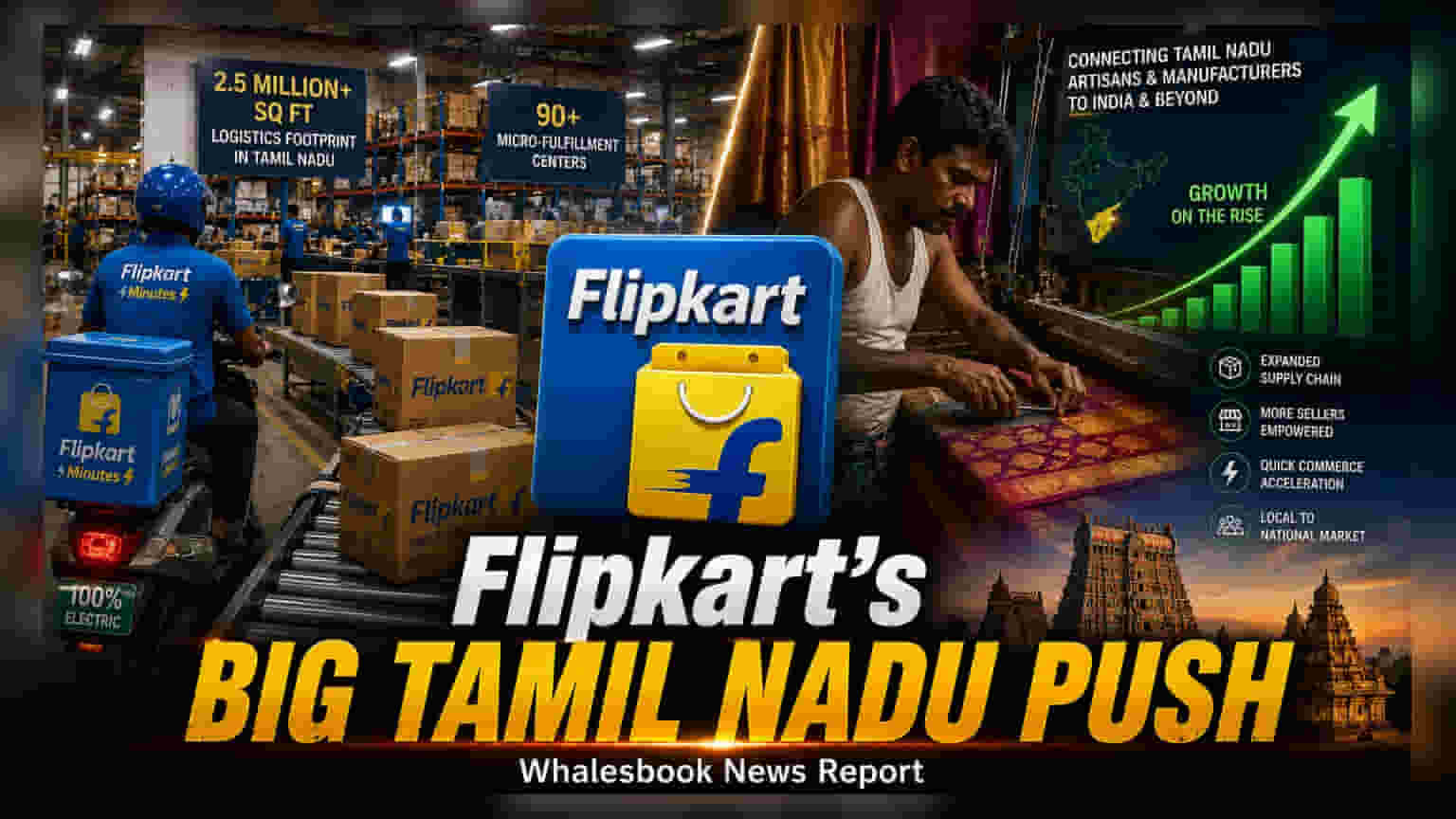
Flipkart is deepening its presence in Tamil Nadu, expanding its supply-chain footprint to 2.5 million square feet and scaling its quick-commerce unit, Flipkart Minutes. While Flipkart is a private entity owned by Walmart, this infrastructure investment highlights the intense competition in the e-commerce sector, where platforms are prioritizing rapid deliveries and deep logistics networks to gain market share.
Flipkart has announced a significant expansion of its operations in Tamil Nadu, focusing on strengthening its digital commerce network, technology infrastructure, and supply-chain capabilities. The company is scaling its logistics footprint in the state to over 2.5 million square feet, with a particular emphasis on its quick-commerce venture, Flipkart Minutes, which has established more than 90 micro-fulfillment centers. This move is designed to connect local manufacturing hubs, such as textile centers in Erode and Salem, and artisan communities, with a broader national market through its platform.
From a financial and operational perspective, it is important for investors to understand that Flipkart operates as a private company, with a majority stake held by Walmart. It does not trade directly on the Indian stock exchanges. However, its strategic decisions serve as a major signal for the broader Indian retail and logistics sector. The company's push into quick commerce and expanded warehousing requires massive capital spending, a trend that is currently defining the competitive landscape for listed e-commerce, delivery, and retail companies in India.
In its latest available financial data for the fiscal year ending March 2025, Flipkart India reported a consolidated net loss of ₹5,189 crore, despite achieving revenue of ₹82,787.3 crore. While the marketplace entity, Flipkart Internet, managed to reduce its net losses compared to the previous year, the overall group continues to face significant pressure from high operational expenses. These costs are driven by aggressive investments in logistics, technology, and market penetration, which are necessary to compete with other major players in the fast-paced delivery segment.
For investors monitoring the retail and delivery sectors, the core risk remains the path to profitability. The e-commerce industry in India is currently in an intense cycle of investment where companies are spending heavily to build 'last-mile' delivery capacity. This leads to a scenario where profit margins remain under pressure across the board. The ability of companies to manage this high capital spending while maintaining or growing market share is a key monitorable.
Looking ahead, the success of this infrastructure expansion will depend on the company's ability to maintain efficient supply-chain operations and demand from the sellers it aims to support. Market participants will likely continue to observe how these large-scale investments in quick commerce and logistics influence the financial health and operational efficiency of the broader e-commerce ecosystem, as these trends often dictate the competitive environment for other retail businesses listed in India.