

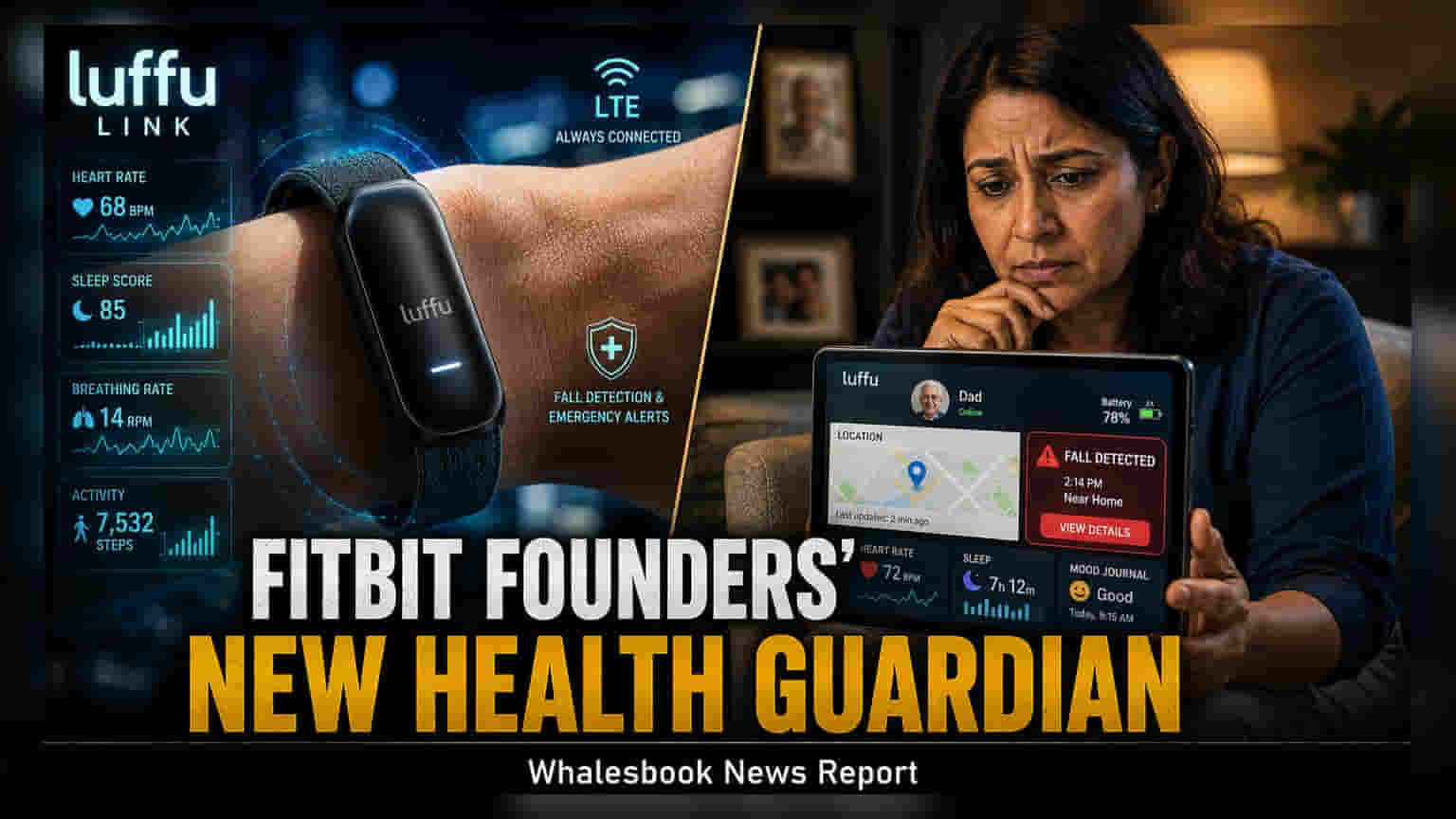
Fitbit co-founders James Park and Eric Friedman have unveiled the Luffu Link, a new LTE-enabled wearable for family care. The $250 device tracks health vitals and location, operating independently of a smartphone. As a private startup, Luffu is not listed on public stock exchanges, though the launch signals a notable move toward AI-integrated caregiving technology.
Fitbit co-founders James Park and Eric Friedman are returning to the wearables space with a new private startup named Luffu. The company has announced the launch of its first product, the Luffu Link, an LTE-enabled health and safety band designed specifically for family care. Priced at $250, the device aims to bridge the gap between standard health tracking and the needs of aging individuals.
Product Features and Functionality
The Luffu Link is designed to function independently, meaning it does not require a nearby smartphone to stay connected. It continuously monitors standard health metrics, such as activity levels, sleep patterns, heart rate, and breathing rates. Beyond simple tracking, the device includes a voice journaling feature, allowing users to record updates regarding medication, mood, or symptoms. This information is integrated into an accompanying app that uses artificial intelligence to identify daily patterns and flag concerning changes, helping families manage health context without constant intrusive check-ins.
Safety is a primary focus of the new wearable. It includes built-in GPS for location tracking and a specific feature for emergency assistance. If a user suffers a fall or injury, the device can send an alert to trusted family members, including their location, battery status, and vital health data. The company has announced that the product is available for pre-order and is expected to ship in early 2027.
Business and Operational Context
For followers of the health-tech sector, it is important to note that Luffu is a private startup. It is not currently listed on any public stock exchange, and it does not have publicly available financial statements, debt reports, or margin data. Consequently, the company does not provide the transparency regarding financial health and profitability that listed companies do.
The project carries inherent risks common to hardware-focused startups. The primary monitorable for the company will be its ability to successfully manage the manufacturing and supply chain processes to meet the early 2027 shipping target. Additionally, the company faces significant challenges regarding data privacy and security, as it will be managing sensitive health information. Moving from a software-based platform to an integrated hardware ecosystem also presents execution risks, as the company must compete against established players in the global wearables market. Success will depend on the company's ability to demonstrate clear value in its family care system while scaling its operations and maintaining robust data protection standards.