

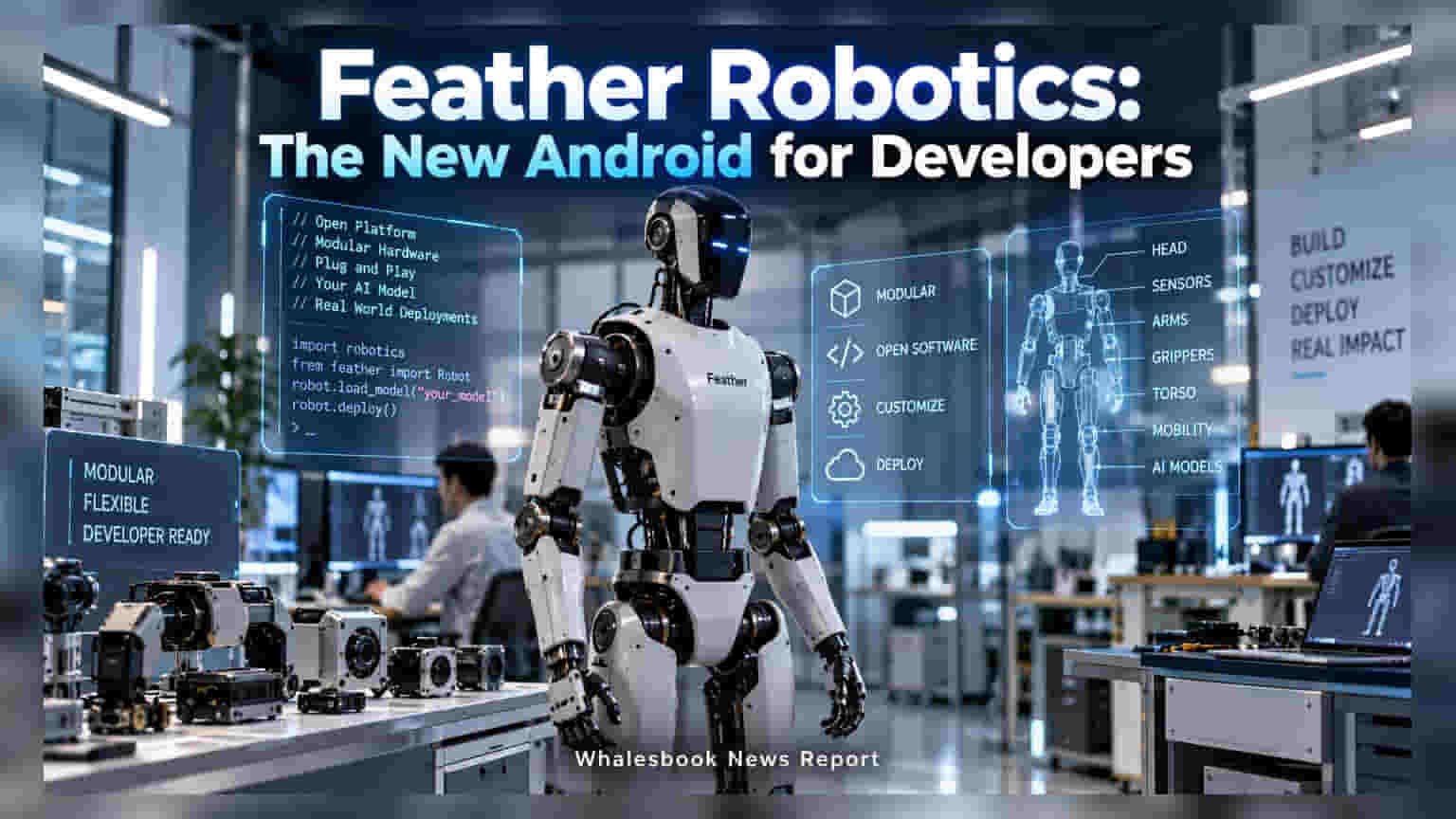
US-based startup Feather Robotics is gaining traction with a $30,000 modular humanoid robot platform. With $1 million in revenue, the company aims to challenge proprietary robotics giants by offering an open hardware alternative for AI developers. The company is navigating a competitive robotics sector while focusing on domestic production.
Feather Robotics is entering the emerging market for humanoid robots with a modular hardware strategy designed for immediate deployment. Unlike industry incumbents that typically build integrated, closed-loop systems where hardware and software are strictly bundled, the company focuses on creating a flexible platform. This approach allows AI developers to customize robot configurations and integrate third-party software models directly into the hardware. The firm is led by Hoa Mai and former Tesla engineer Parsa Bakhtiari, who are positioning the product at a $30,000 price point to appeal to industries seeking to replace manual labor.
Financials and Early Adoption
The startup reports reaching $1 million in revenue, with units currently operational in niche environments such as Japanese restaurant kitchens and scientific laboratories. This early adoption provides initial validation of the demand for task-specific, lower-cost humanoid robots. Backed by venture capital firm Gradient Ventures, the company has secured $7.6 million in pre-seed funding. With a reported lean spending profile, management is utilizing these funds to support an expanded product launch and scale its operations.
Market Position and Risks
The business model is built as an alternative to international competitors like Unitree and larger, proprietary robotics firms. By emphasizing an American-based manufacturing ecosystem, Feather Robotics aims to navigate tightening trade restrictions and supply chain complexities often associated with overseas robotics production.
However, the robotics sector remains capital-intensive and inherently high-risk. Scaling hardware production involves significant engineering challenges and the possibility of cost overruns or execution delays. Additionally, the company faces intense competition from better-funded incumbents that may possess larger balance sheets to subsidize costs and protect market share.
The primary monitorable for the firm’s long-term sustainability will be its ability to maintain its modular advantage while managing hardware costs at scale. As the physical AI sector evolves, the company’s success will depend on whether this hardware-centric approach can secure a stable market position against larger, more established players in the global robotics supply chain.