

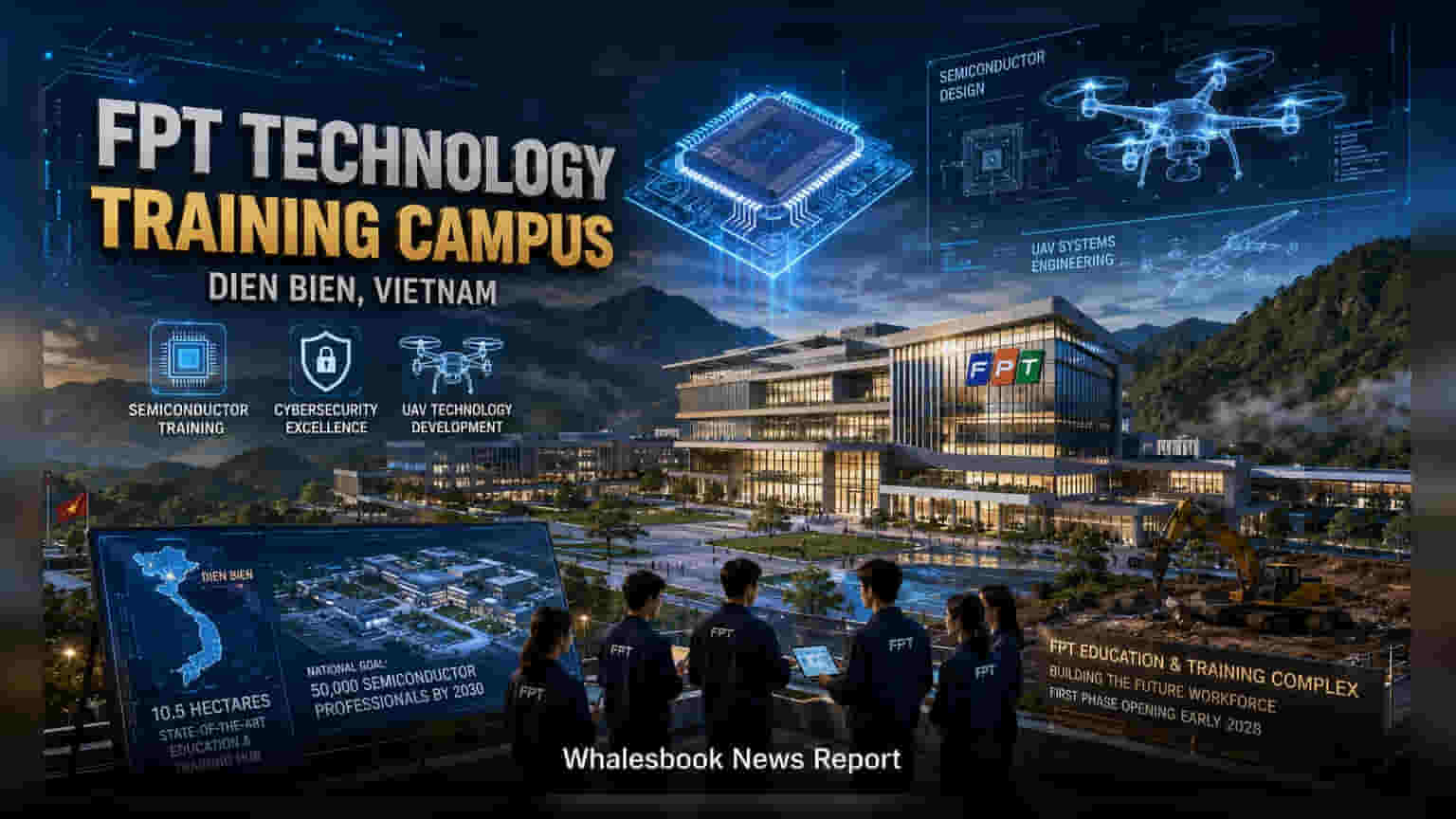
Vietnamese tech giant FPT Corporation has started building a 10.5-hectare training center in Dien Bien to develop talent for the semiconductor, cybersecurity, and drone sectors. The initiative aligns with the national goal to produce 50,000 chip experts by 2030. This project reflects the company's strategy to move into high-value technology segments, though it faces long-term execution and capital spending risks.
FPT Corporation has begun construction on a 10.5-hectare education and training complex in the Dien Bien province of Vietnam. This move marks a strategic shift for the technology company as it prepares to meet the growing demand for highly skilled labor in the global semiconductor, cybersecurity, and unmanned aerial vehicle (UAV) technology sectors. The project is designed to support the Vietnamese government’s national target of training 50,000 semiconductor professionals by 2030.
The new facility, which is scheduled to open its first phase in early 2028, will offer educational programs ranging from high school through postgraduate levels. By focusing on both academic training and practical industry application, FPT is working to secure a long-term pipeline of talent for its own operations and the broader regional tech ecosystem.
Strategic Shift Toward High-Value Tech
For investors and industry observers, this project signals FPT's push into more complex areas of technology. While the company is primarily known for its software and IT services, the global shift in the semiconductor supply chain has prompted many technology firms in Southeast Asia to expand their hardware and engineering capabilities. By diversifying into chip-related training and services, FPT aims to move beyond traditional IT outsourcing and capture higher-value opportunities in the global tech value chain.
However, such ambitious projects come with inherent risks. Building and running a large-scale technical campus requires significant capital spending, which can pressure cash flow and profit margins if returns on investment take longer than expected. Furthermore, the global semiconductor industry is known for its high volatility and rapid technological changes. Success depends heavily on the company's ability to maintain high-quality training standards and ensure that graduates remain relevant to the evolving needs of international chip manufacturers.
Another challenge involves talent retention. In a competitive regional market, attracting students and preventing skilled professionals from moving to competing firms or other industries will be a critical task. Investors and analysts will likely track the company's ability to turn this human capital investment into tangible business revenue as the 2028 commissioning date approaches. The key monitorable for the market will be how the company manages the project’s execution while maintaining its overall financial flexibility.