

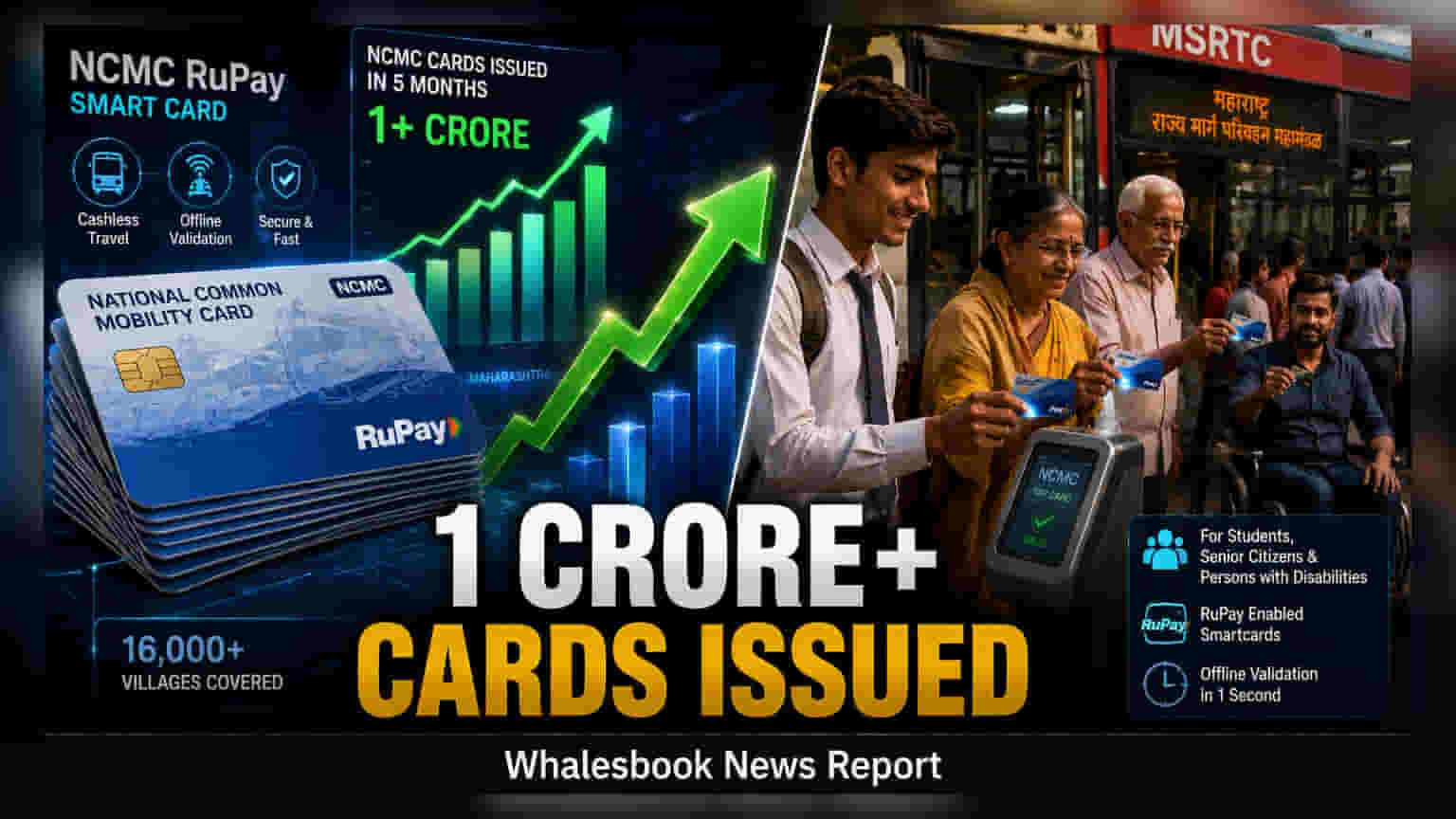
Ebix Payment Services and NSDL Payments Bank have successfully issued over 1 crore National Common Mobility Cards in five months to digitize travel for Maharashtra state transport passengers. While this operational milestone replaces traditional paper passes, investors should remain aware of the company’s broader financial concerns, including debt risks and recent stock performance pressure.
Ebix Payment Services, in partnership with NSDL Payments Bank, has reached a new operational milestone by registering over 1 crore National Common Mobility Cards (NCMC) in just five months. This initiative is part of the Maharashtra State Road Transport Corporation’s (MSRTC) effort to modernize its ticketing system across the state.
The project aims to replace the traditional paper-based concession pass system with digital RuPay-enabled smartcards. These cards are being issued to eligible categories, including students, senior citizens, and persons with disabilities. The new system allows for offline validation of travel concessions within a second at ticketing machines. This is particularly useful for bus services where the time available for boarding is limited. The program has been implemented across approximately 16,000 villages in Maharashtra, providing digital payment access to a wide user base.
From an operational perspective, the project aligns with the national 'One Nation, One Card' initiative, which seeks to unify transit payments across different modes of transport and regions in India. EbixCash is managing the technical infrastructure for this rollout, which includes card personalization, issuance, and transaction processing.
While the company has achieved this rapid increase in card issuance, investors should evaluate this news alongside the company's broader financial and business context. The company has faced significant financial pressure, with its stock price experiencing substantial declines over the past year. Financial data and market analysis have raised questions regarding the company's overall stability, citing factors such as high debt levels, significant contingent liabilities, and the necessity for external financing.
These factors mean that despite the operational success of specific projects like the MSRTC smartcard rollout, the company's ability to maintain long-term financial health remains a point of concern for market observers. Historical filings have also noted ongoing litigation, which adds another layer of complexity for shareholders.
The key monitorable for investors going forward is not just the success of individual digital service projects, but the company's ability to manage its financial obligations and improve its balance sheet. Investors tracking the stock may look for updates on debt repayment, legal proceedings, and overall profit margins in the coming quarters to better understand the company's path to stability.