 Whalesbook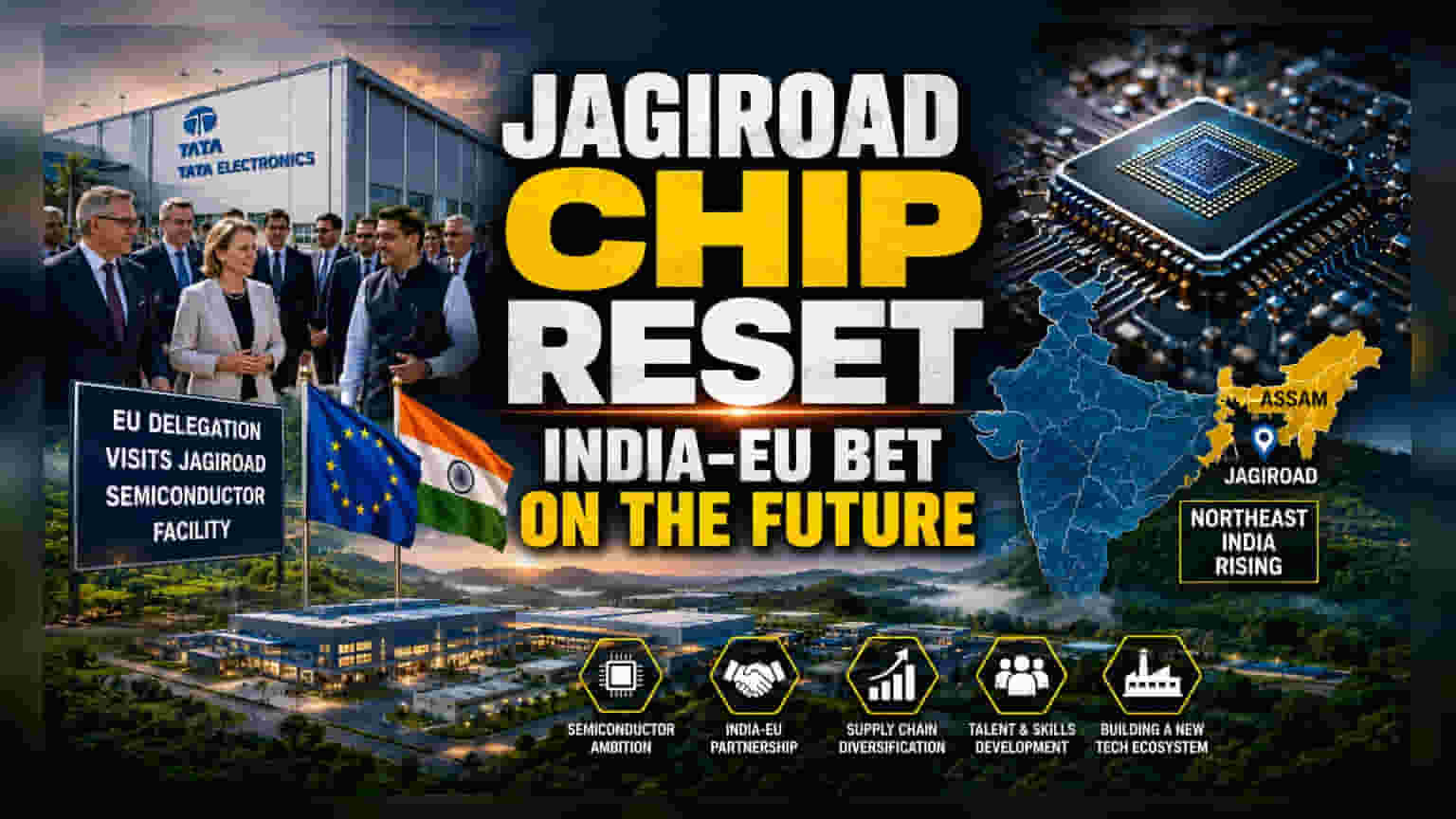


The Geopolitical Pivot to Jagiroad
The site visit by high-level European Union delegates to the Jagiroad semiconductor assembly and testing facility represents a strategic alignment between New Delhi’s "Make in India" initiatives and Brussels’ quest for supply chain de-risking. Tata Electronics is positioning its Assam OSAT project as a critical link in the global chip ecosystem, aiming to service international clients who are increasingly wary of over-reliance on traditional East Asian manufacturing hubs. By hosting ambassadors from across the EU, the project gains implicit diplomatic backing, which is essential for attracting long-term foreign capital and securing high-end technical partnerships.
Scaling the Infrastructure Gap
Transitioning Assam into a semiconductor nerve center requires more than just capital; it demands an ecosystem that does not yet fully exist in the Northeast. Unlike mature clusters in Gujarat or Taiwan, which benefit from decades of power stability and specialized logistics, the Jagiroad project faces unique challenges regarding technical talent availability and specialized industrial infrastructure. Tata’s push to build an OSAT facility here is a bold bet on the state government's ability to fast-track regional development. Investors are watching closely to see if the promised "Blue Valley Cluster" can actually provide the logistical synergy needed to support high-precision tech manufacturing, or if it will remain an isolated industrial experiment.
The Bear Case: Execution and Integration Risks
While the diplomatic optics are positive, significant execution risks remain for Tata Electronics. Semiconductor assembly is a low-margin, high-volume business where efficiency is paramount; any disruption in energy supply or logistical delays in moving finished wafers to global markets could erode the cost advantages the facility hopes to achieve. Furthermore, the global semiconductor market is notoriously cyclical, and Tata faces stiff competition from established players in Malaysia and Vietnam who have already optimized their operations for Western multinational corporations. Critics also point to the ambitious 4P model—public-private-people-partnership—noting that integrating localized manufacturing with complex European trade standards requires a level of regulatory and operational sophistication that has historically proven difficult to maintain at scale.
Future Trajectory and Market Sentiment
Looking ahead, the success of the Jagiroad facility will likely be measured by the ability of the state to attract secondary suppliers and downstream ecosystem partners. If the European delegation follows through with the technical cooperation hinted at during the summit, it could provide a vital pipeline for intellectual property and workforce training. However, the market remains guarded, waiting for concrete evidence that the facility can reach operational capacity and yield targets on schedule, rather than relying on geopolitical tailwinds.