 Whalesbook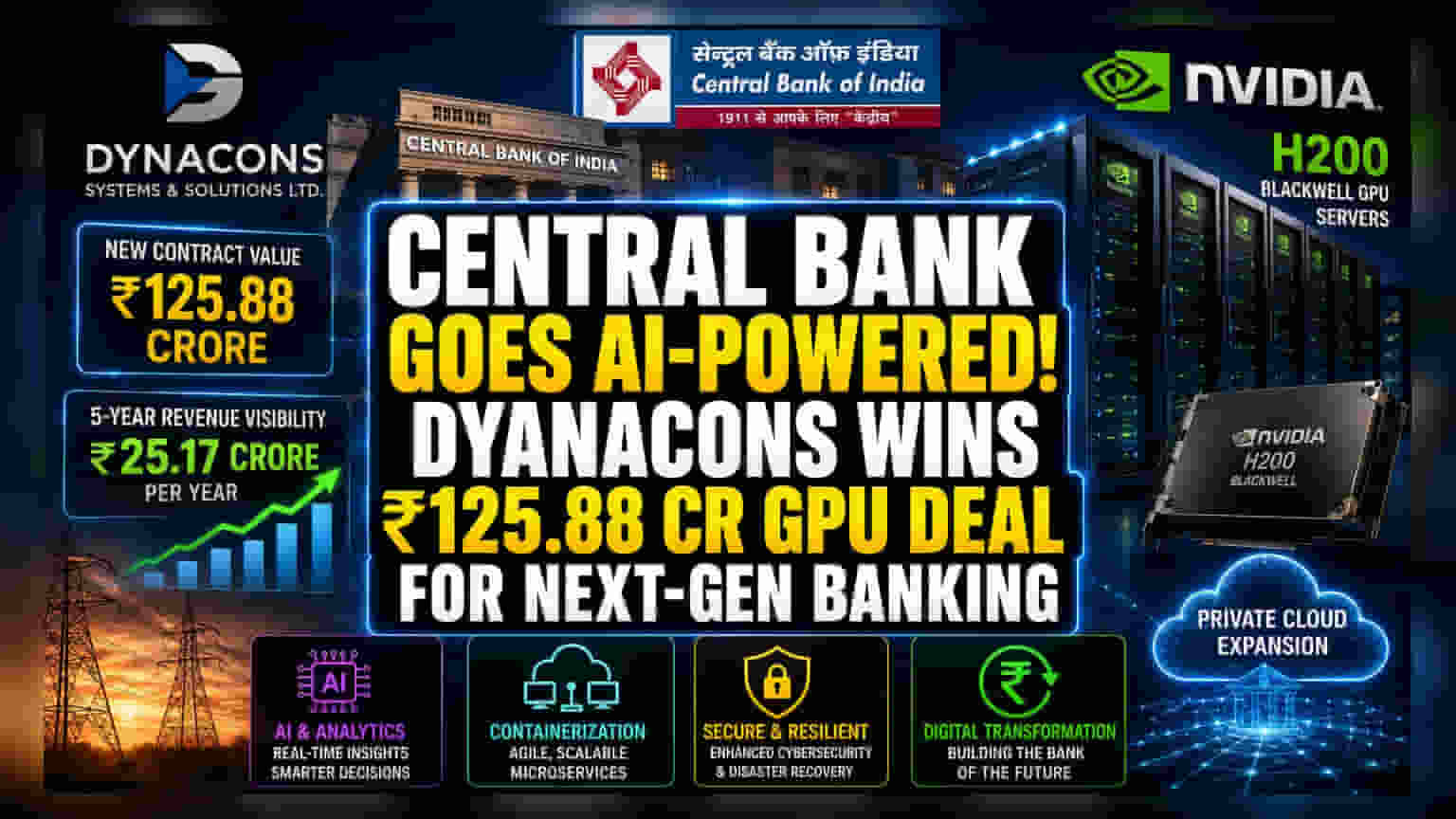


The Catalyst for Compute Expansion
The Rs 125.88 crore agreement marks a strategic shift in the technological trajectory of the Central Bank of India. Rather than standard infrastructure maintenance, this project centers on the deployment of high-performance computing power via NVIDIA H200 Blackwell GPU servers. By integrating containerization platforms and expanding private cloud capacity, the bank is attempting to transition from monolithic legacy architecture toward a microservices-based model capable of supporting intensive data processing, real-time analytics, and emerging artificial intelligence applications.
Strategic Implications and Revenue Visibility
For Dynacons Systems and Solutions, this multi-year engagement secures approximately Rs 25.17 crore in annual revenue for the next 60 months. This contract follows the company’s recent trajectory of winning high-value mandates within the public sector, including a massive Rs 750.82 crore project from the Reserve Bank of India. By capturing these key mandates, Dynacons is solidifying its position as a primary system integrator for the Indian financial sector, effectively moving up the value chain from basic IT support to specialized AI-infrastructure provider.
The Forensic Bear Case: Operational Realities
Despite the positive headline, institutional investors often scrutinize the sustainability of such infrastructure-heavy growth. One primary concern is the company’s working capital cycle. Historical disclosures highlight that Dynacons maintains high debtor levels, often exceeding 150 days, which can strain cash flow during periods of rapid project execution. Furthermore, the firm operates in a highly competitive arena where pricing pressure remains intense. Unlike larger global competitors that may benefit from greater balance sheet liquidity, Dynacons’ reliance on timely government payments poses a localized risk. Additionally, while the company has maintained an unmodified audit opinion, the capital-intensive nature of supplying and maintaining high-end GPU hardware introduces inventory and technological obsolescence risks if project timelines or technical specifications shift significantly.
Future Outlook and Sector Context
The broader Indian banking sector is currently in the midst of a critical modernization cycle, mandated by the need to support real-time payments, open banking APIs, and robust cybersecurity. With institutions like the Central Bank of India prioritizing AI-driven operational efficiency, the demand for high-end data center and disaster recovery solutions is expected to persist. Analyst consensus generally views this move toward high-performance computing as an inevitable evolution for the domestic banking sector, positioning technical service providers with proven execution track records as beneficiaries of this multi-year digital refresh.