

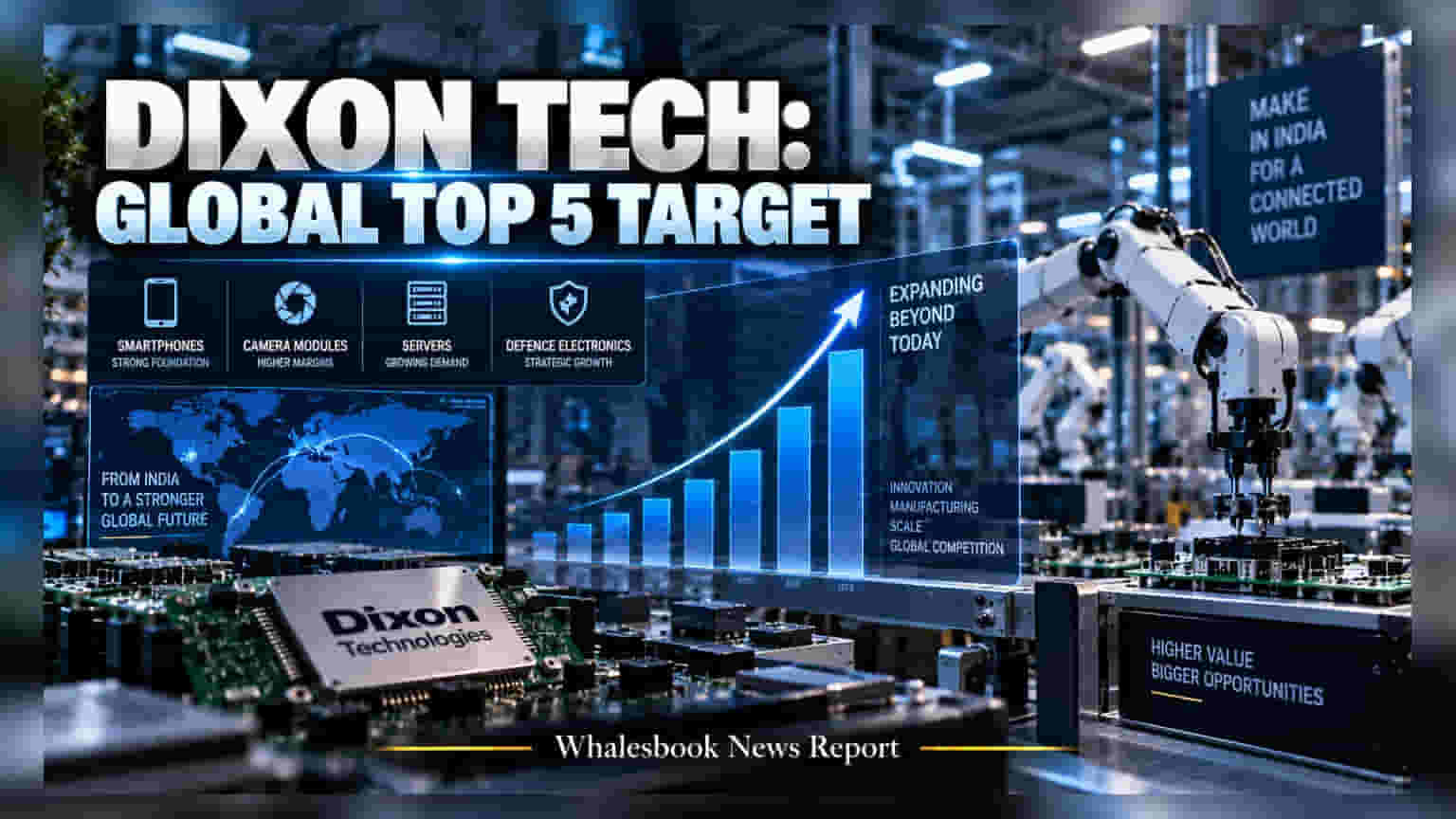
Dixon Technologies is moving beyond its reliance on smartphone assembly by expanding into high-margin areas like camera modules, servers, and defense electronics. While the company aims for a top-ten global EMS ranking within five years, investors remain cautious. The stock has fallen 28% over the past year as markets weigh the high costs of this expansion against the company's shift away from its core consumer durables business.
Dixon Technologies is undergoing a significant transformation in its business model. For years, the company has relied heavily on smartphone assembly, which currently accounts for over 90% of its total revenue. To evolve, management is now pivoting toward complex, high-margin electronics including camera modules, servers, and defense-related hardware. This shift is designed to help the company compete more effectively with global manufacturing giants like Foxconn and scale its operations for long-term growth.
Strategic Expansion into New Electronics
The company is diversifying its reach through several new initiatives. A major part of this plan involves a partnership with a Taiwanese manufacturer to produce optical gear for data centers, a move to capture the growing demand for digital infrastructure. Additionally, Dixon is preparing to open its second IT hardware manufacturing facility in late November. This capacity increase is timed to take advantage of government-backed Production Linked Incentive (PLI) schemes, which offer financial rewards to companies that increase local manufacturing and reduce India's reliance on imported electronics.
Market Concerns and Execution Risks
Despite these ambitious plans, the company's stock has faced significant pressure, declining 28% over the last year. Investors are balancing the potential for long-term growth against the high cost of building new factories and entering complex product categories. This capital-intensive strategy marks a departure from Dixon's historical strength in consumer durables, such as televisions and washing machines, which typically have different profit margin profiles and operational requirements. The market is waiting to see how the company manages this increased spending and whether the new ventures can achieve profitable margins quickly.
Moving Up the Value Chain
To bridge the gap while these new businesses scale, the company has secured a joint venture with the local unit of Vivo. This partnership is expected to help sustain cash flow as the company navigates its transition toward higher-value products. The success of this move will depend on the company's ability to maintain its efficiency as it moves from simple assembly to the manufacturing of sophisticated components.
What Investors Should Monitor
The key focus for shareholders will be the execution of these expansion projects. Investors should track whether the new IT hardware facility achieves the expected output and how quickly the data center and defense segments begin to contribute to the bottom line. Additionally, management’s ability to manage debt levels while spending on these new factories will be a crucial factor in the stock's future performance. Monitoring capacity utilization—how much of the new factory space is actually being used for production—will provide a clearer picture of whether the expansion is meeting demand.