 Whalesbook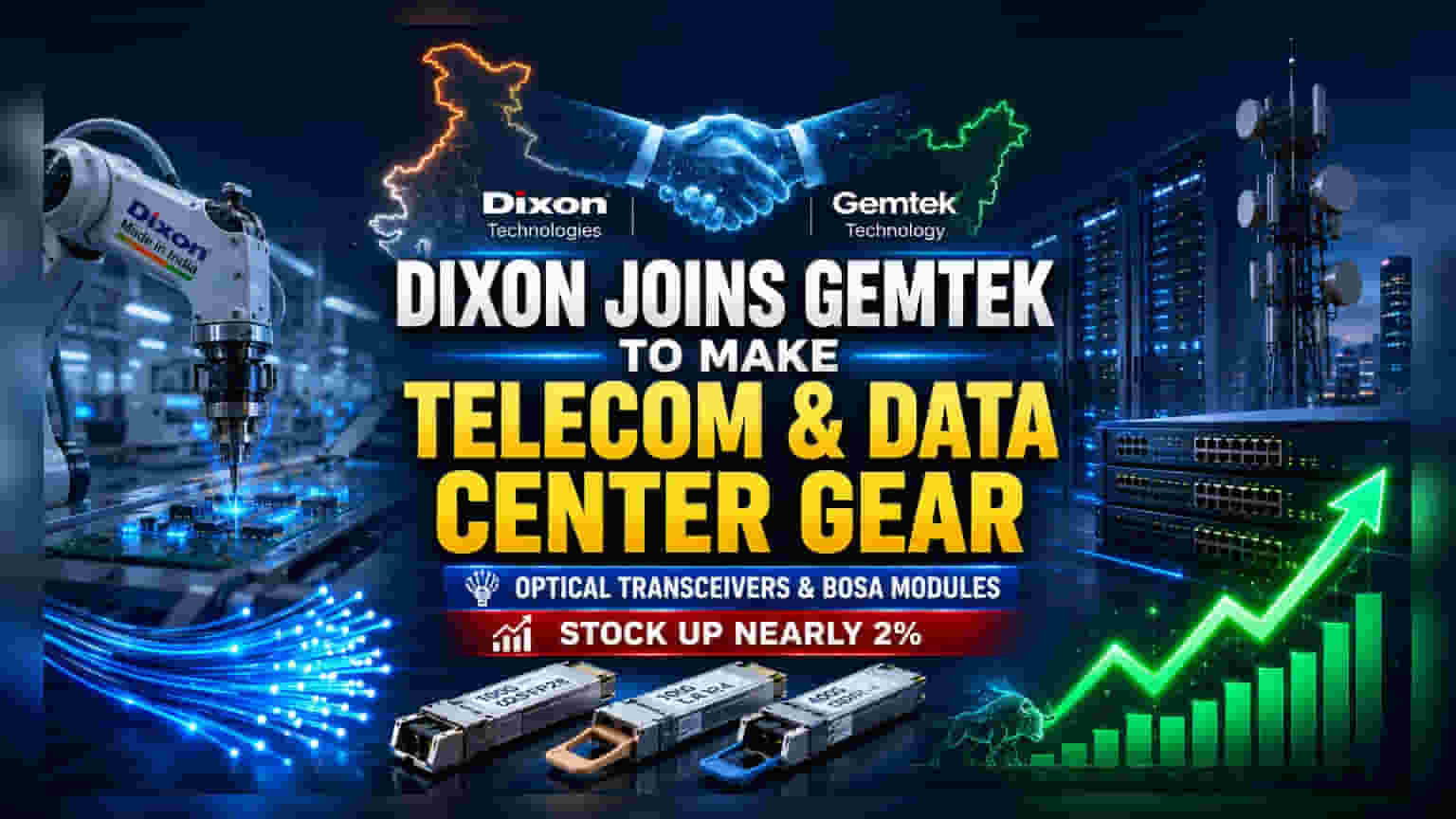


What Happened
Dixon Technologies has entered into a formal agreement to establish a joint venture with Taiwan-based Gemtek Technology. This new partnership will focus on manufacturing specialized telecom and data center equipment in India. The primary products will include optical transceivers and Bidirectional Optical Subassembly (BOSA) modules. These components are vital for high-speed networking and data center operations. The venture will operate through Dixon Electroconnect Private Limited, a subsidiary of Dixon Technologies. Under the arrangement, Dixon will hold a 60% majority stake, while Gemtek will hold the remaining 40%.
Why This Matters For Investors
For an electronics contract manufacturer like Dixon, moving into optical transceivers is a shift toward more advanced, higher-value products. Most contract manufacturers start by assembling simpler items, but specialized networking gear requires more technical precision. Entering this space can potentially offer better profit margins compared to basic assembly work. This move also aligns with the broader push in India to increase local manufacturing of critical electronic components, often supported by government incentive schemes.
How The Stock Reacted
On June 9, 2026, the market showed interest in this strategic development. Shares of Dixon Technologies rose by nearly 2%, closing the trading session at ₹11,616. This price movement suggests that investors are optimistic about the company's efforts to diversify its product portfolio into the fast-growing technology infrastructure space.
The Bigger Business Context
Demand for robust data center and high-speed networking hardware is rising rapidly. This is driven by the global growth of artificial intelligence, cloud computing, and next-generation connectivity needs. By partnering with Gemtek, which brings technical expertise, Dixon aims to create a local supply chain to meet this demand. This reflects a shift for Indian manufacturers, who are increasingly moving from being simple assemblers to becoming partners for more complex technology products.
What Could Go Wrong
Investors should be aware of the challenges in this new venture. Manufacturing optical transceivers and BOSA modules is technically complex compared to standard consumer electronics like lights or appliances. The company faces the risk of a learning curve in mastering this technology. Success will depend heavily on the company's ability to set up the facility, manage initial costs, and gain the trust of major telecom operators and data center clients. There is also significant competition in the global networking equipment market, and Dixon will need to prove it can deliver products that match international quality and cost standards.
What Investors Should Track
Moving forward, the most important updates will be the timeline for starting commercial production and whether the company manages to secure orders from large telecom and data center customers. Investors may also watch for management commentary on how this new segment fits into the company's overall revenue mix and whether it begins to positively impact profit margins in the coming years.