 Whalesbook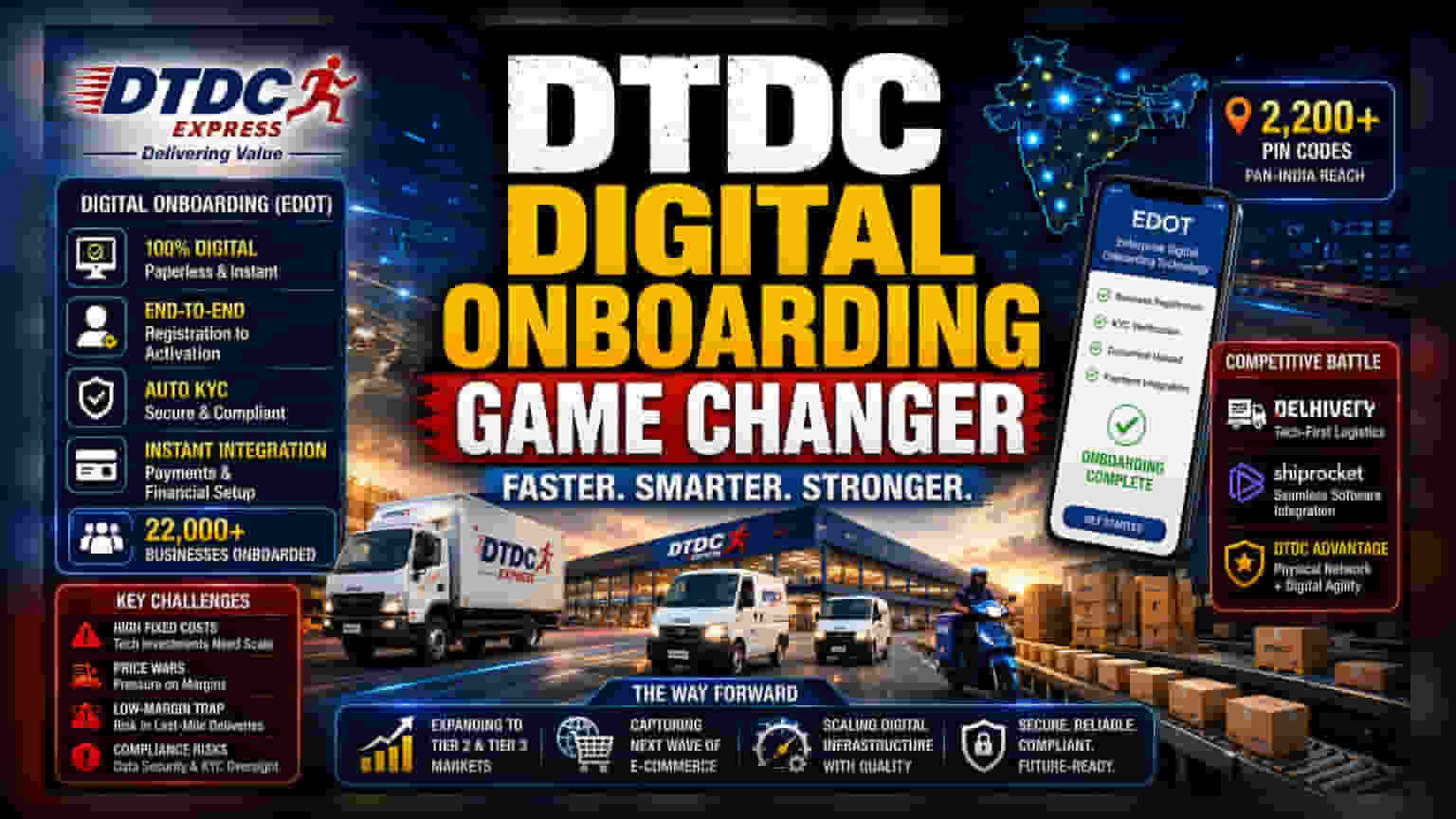


The Shift Toward Automated Efficiency
DTDC Express is aggressively attempting to modernize its legacy operational framework through the deployment of its Enterprise Digital Onboarding Technology, known as EDOT. This platform represents a shift from traditional, paperwork-heavy client acquisition toward a friction-free digital interface. By enabling businesses to finalize registration, KYC mandates, and financial integration without human intervention, the firm is attempting to remove the friction that has historically hindered small and medium enterprises from adopting its services. This structural change is a tactical response to the logistical bottlenecks that often plague traditional courier companies when scaling to meet the rapid velocity of modern digital commerce.
Scaling Against Agile Competitors
The logistics sector is currently witnessing an intense battle for dominance in the MSME and D2C segments. While DTDC leverages its extensive reach across 2,200 pin codes to maintain relevance, it faces stiff competition from tech-first logistics providers like Delhivery and Shiprocket, which have built their business models on seamless software integration from inception. Unlike these digital-native rivals, DTDC is undergoing a complex transition to retrofit its physical dominance with digital capabilities. The early adoption data, reporting 22,000 registrations, suggests that the market for simplified onboarding is substantial, yet the true test lies in whether these automated sign-ups translate into long-term, high-volume shipping contracts rather than transient, low-margin business.
The Operational Bear Case
While the automation of client onboarding provides a necessary efficiency boost, investors should remain cautious regarding the underlying cost structure. The heavy investment in proprietary technology—including the previously deployed DIVA chatbot—adds a layer of fixed-cost overhead that requires sustained volume growth to justify. Furthermore, as the logistics sector consolidates, price wars in the e-commerce delivery space remain a constant threat to profitability. DTDC must balance the cost of maintaining its physical distribution network with the rapid, often capital-intensive, development of digital tools. Any failure to capture high-value clients through these platforms will leave the company exposed to the volatility of low-margin, high-competition last-mile deliveries.
Forward Strategy
Management is clearly betting that aggressive digitization will mitigate the competitive disadvantage against newer entrants. By focusing on Tier 2 and Tier 3 markets, the company is positioning itself to capture the next wave of e-commerce expansion. Future performance will depend on the firm's ability to maintain service quality while scaling its digital infrastructure, as any technical failure or security oversight during the automated KYC process could lead to regulatory scrutiny or reputational damage.