

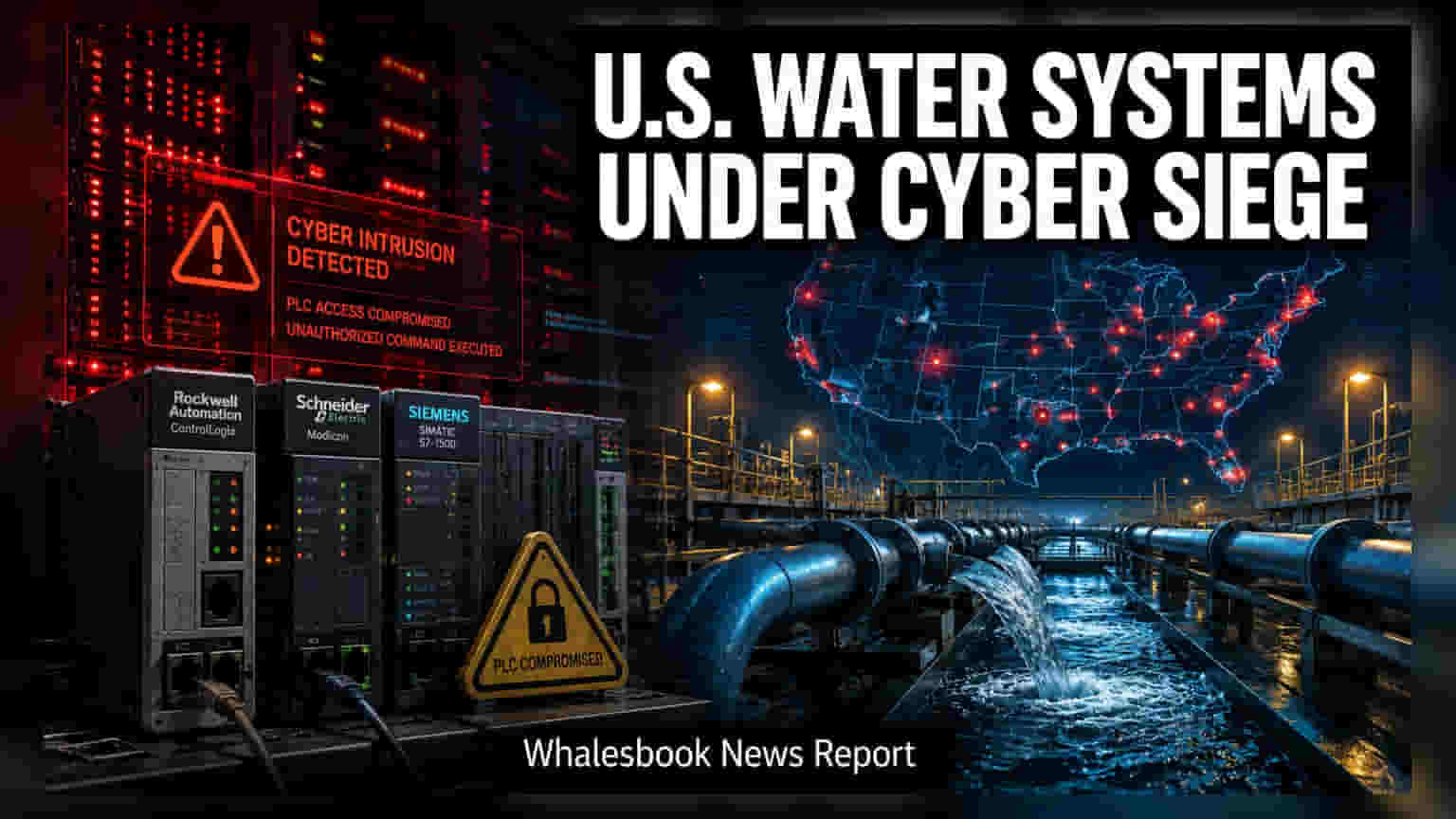
Over 100 U.S. water systems were targeted in July 2026 by hackers using AI tools to exploit industrial control hardware. This event draws attention to security vulnerabilities in systems manufactured by Rockwell Automation, Schneider Electric, and Siemens. For investors, the incident highlights rising cybersecurity costs and potential regulatory pressure on industrial infrastructure providers.
The Cybersecurity and Infrastructure Security Agency (CISA) and federal investigators have confirmed a widespread series of cyberattacks targeting more than 100 water and wastewater systems across the United States. These attacks, which took place throughout July 2026, did not shut down national water supplies, but they caused significant disruptions including localized outages and emergency shutdowns.
The attacks specifically targeted Programmable Logic Controllers (PLCs). These are the digital brains used by factories and utility plants to control physical processes, such as the flow of water, pressure levels, and chemical treatments. Investigators found that the attackers used AI-driven tools to create scripts that allowed them to bypass standard security alarms and change the settings of these controllers remotely.
Hardware from major global manufacturers, including Rockwell Automation, Schneider Electric, and Siemens, was central to these incidents. The attackers exploited the fact that many of these controllers were connected directly to the public internet without proper, modern security layers. This practice is common in older facilities that were not originally designed with the expectation of being online.
For investors and market participants, this event highlights two major trends. First, the cost of securing critical infrastructure is rising rapidly. Utility companies and industrial facilities are now under immense pressure to replace outdated equipment or invest heavily in cybersecurity software. This creates a challenging environment for operators, who may face increased spending requirements and stricter government regulations.
Second, the use of AI by bad actors is lowering the barrier to entry for cyberattacks. The ability to use automated tools to exploit hardware vulnerabilities means that companies must now focus more than ever on continuous security updates, not just the physical reliability of their machines.
While the direct impact is felt by U.S. water utilities, the global nature of these industrial technology providers means that the focus on security will extend to their operations worldwide. The incident is currently linked by federal intelligence to threat actors affiliated with Iran, marking it as a geopolitical event as much as a technical failure.
The next important monitorable for shareholders in the industrial automation sector will be management commentary from firms like Rockwell Automation, Schneider Electric, and Siemens regarding their security R&D and any potential impacts from government-mandated infrastructure security overhauls. Investors should track whether these companies face increased liability or if they can turn this demand for higher security into a new revenue stream through specialized cybersecurity services for industrial clients.