 Whalesbook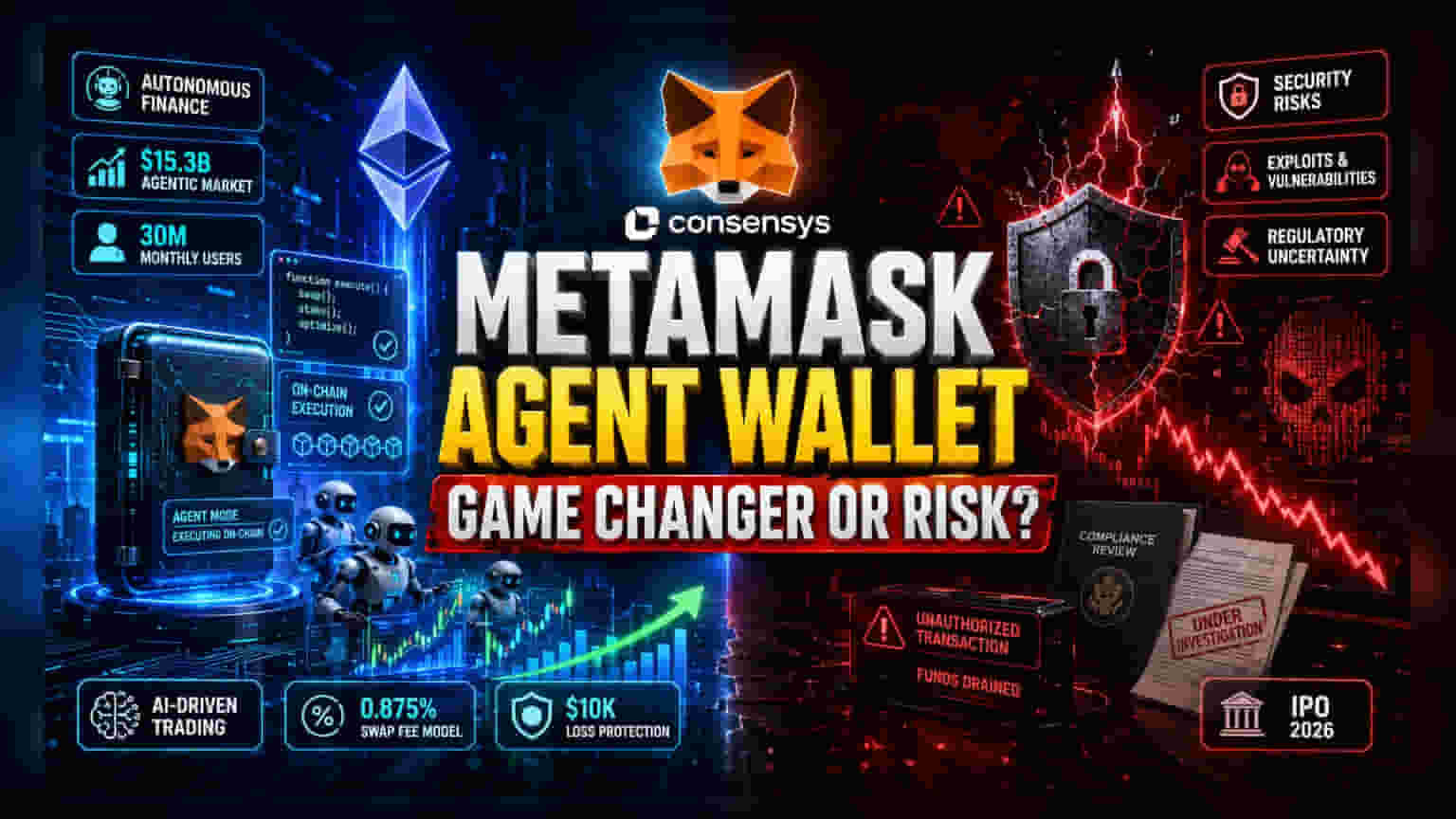


The Shift to Autonomous Infrastructure
The introduction of the MetaMask Agent Wallet represents a strategic pivot for Consensys, moving beyond simple retail asset storage toward the infrastructure layer for autonomous finance. While the broader cryptocurrency market has seen a rapid adoption of intent-based systems—where software entities handle complex trading strategies, yield farming, and liquidity provision without real-time human intervention—the integration of these capabilities into the industry's most widely used wallet is a move to standardize the 'agentic' trading experience. This development directly targets the competitive landscape of 2026, where specialized platforms like Cobo, Coinbase, and various intent-based protocols are vying for market dominance in a sector that some analysts estimate now commands a $15.3 billion market capitalization.
Scaling Revenue Beyond Swap Fees
Historically, Consensys has relied heavily on the 0.875% service fee generated by MetaMask Swaps to sustain its operations and justify a valuation that reached $7 billion in its 2022 Series D round. With the company pushing its IPO to the fall of 2026, the development of this agentic infrastructure is essential for shifting the narrative from volatile trading-based revenue toward more predictable, recurring income streams. By positioning itself as the foundational wallet for AI-driven on-chain activity, Consensys aims to cement its relevance in a market that is increasingly shifting away from manual, UI-heavy interaction toward programmatic, automated execution.
The Forensic Bear Case: Security and Liability
The deployment of autonomous trading agents introduces a significant, arguably existential, security challenge for the firm. While the company has implemented transaction simulations and a $10,000 loss protection program, the inherent risk profile of AI agents—which can be susceptible to indirect prompt injections, 'agentic looping,' and malicious data poisoning—remains elevated. Historically, DeFi protocols have struggled with the 'wild west' nature of automated exploits, and the transition of these risks to a self-custodial wallet model puts the onus of protection squarely on the user’s ability to set effective guardrails. Furthermore, as regulators increase scrutiny on AI-driven financial conduct, the legal gray area surrounding non-human actors executing trades creates a potential compliance burden that could complicate a near-term public offering if the platform experiences a high-profile security breach or mass asset drainage.
Future Outlook and Market Positioning
Consensys’s ability to scale this product will likely determine its competitive standing against emerging infrastructure providers that offer more robust, policy-enforced execution models. With nearly 30 million monthly active users providing a massive data advantage, the firm is betting that its scale, combined with new, security-conscious features, will prevent the multiple compression often seen in high-profile crypto listings. Success in this cycle requires more than just mass adoption; it requires proving that the platform can serve as a secure gateway for institutional and retail agents alike without succumbing to the automation-driven threats that have plagued the sector throughout 2025 and 2026.