 Whalesbook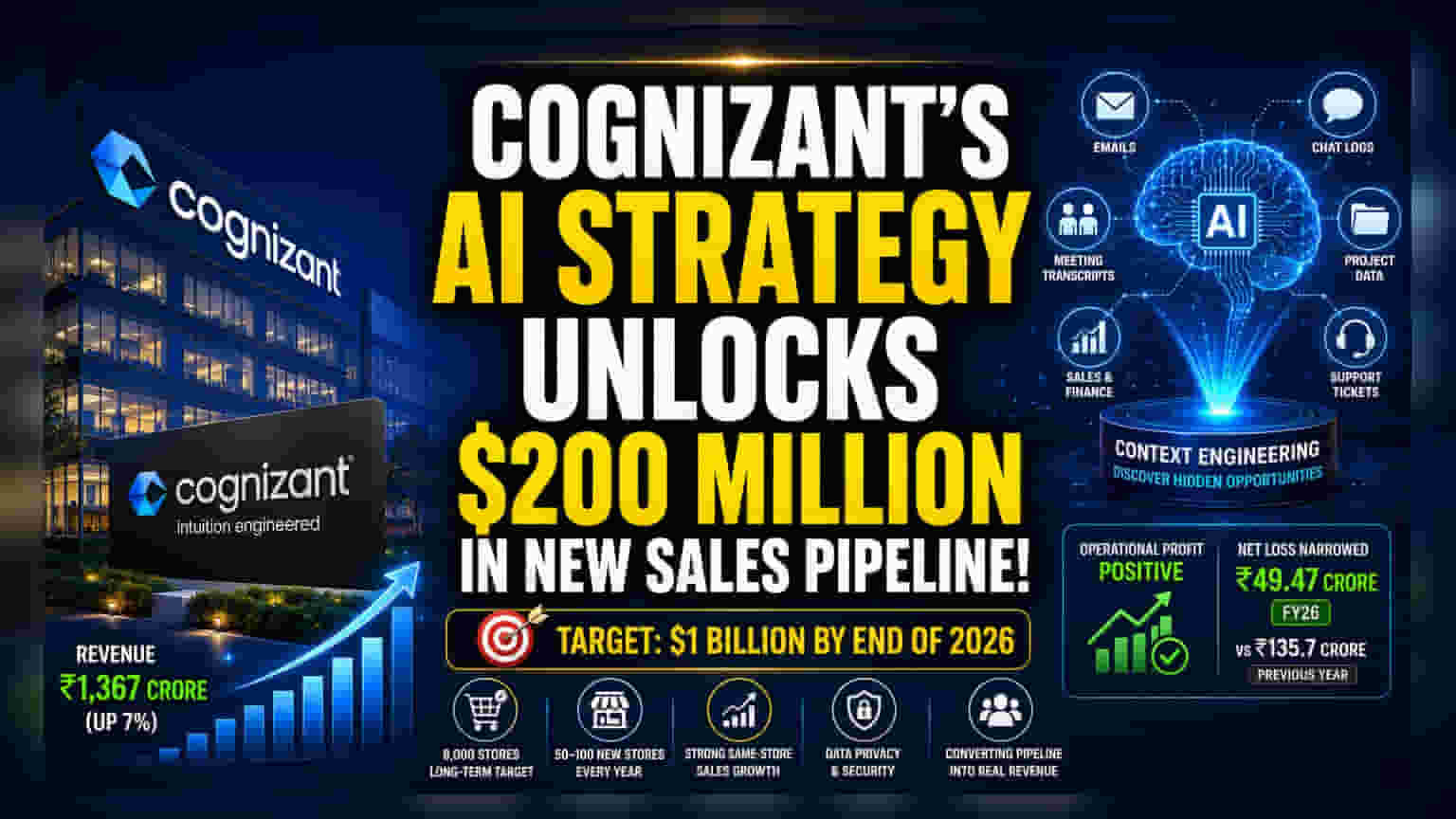


Cognizant has generated a $200 million sales pipeline by using AI to analyze internal communications, a move aimed at turning 'context engineering' into a real revenue driver. This initiative highlights the industry's shift from using AI simply to cut costs to using it for finding new business opportunities.
What Happened
Cognizant, a global leader in IT services, has announced that its new AI-driven strategy has uncovered an additional $200 million in potential sales pipeline. The company is using an internal platform to scan emails, meeting transcripts, and chat logs across its global operations to identify business opportunities that would otherwise remain hidden.
This initiative is part of Cognizant’s "context engineering" strategy, which aims to help its AI systems understand the specific way a client’s business functions. By integrating data from sales, delivery, support, finance, and other operational areas, the platform creates digital twins of customer accounts. This allows the AI to spot patterns and recommend specific sales pitches. For example, the system recently identified that a client was struggling with engineering costs, prompting the sales team to successfully pitch a quality assurance solution.
Why This Matters For Investors
For many years, IT services companies have justified their AI investments through productivity gains and cost savings. Cognizant’s announcement signals a shift toward using AI as an active engine for growth rather than just a cost-cutting tool. CEO Ravi Kumar S stated that the company expects this AI-generated pipeline to reach $1 billion by the end of 2026. If the company can successfully turn this "pipeline" into actual, signed revenue, it could prove that AI is a differentiator for profit growth in an industry that has faced pressure to show tangible returns on its heavy technology investments.
The 'Context Engineering' Strategy
Cognizant is developing this platform in partnership with Workfabric, a startup co-founded by Rohan Murty. The core idea is that generic AI models lack the specific, "tribal" knowledge of how a company works. By feeding AI tools internal data—the emails, meetings, and project delivery updates that make up a company's daily workflow—Cognizant is trying to build a "context fabric" that makes AI agents more reliable, accurate, and useful for enterprise tasks.
How Investors May Read This
The IT industry is currently facing a challenge often called the "AI value gap." While massive amounts of capital are flowing into AI infrastructure, many enterprises are finding it difficult to translate that investment into business value. Cognizant’s move is a direct attempt to bridge this gap. Investors may track whether this strategy leads to better margins or faster revenue growth compared to competitors. The ability to use internal data to drive sales is an advantage, but it also creates pressure to perform. The market will likely watch closely to see if the company can convert these identified opportunities into firm, signed contracts, rather than just empty leads.
Potential Risks and Concerns
While the technology shows promise, it is not without risk. Analyzing internal employee communications like emails and chats requires strict data privacy and security measures. If not managed carefully, this could lead to regulatory or privacy issues. Additionally, there is a risk of "AI hallucinations" or poor recommendations if the data fed into the system is not high-quality. Clients may also be cautious about having their internal interactions analyzed by AI systems. Furthermore, the entire IT sector is in a race to implement "agentic AI," meaning Cognizant will need to maintain a clear lead in this technology to sustain any competitive advantage.
What Investors Should Track
Going forward, the key monitorable is the conversion rate—what percentage of this $200 million pipeline actually turns into revenue? Investors may also keep an eye on management commentary regarding the scalability of this platform across more accounts and any potential client feedback or privacy disclosures. Tracking the timeline for the projected $1 billion target will also be important to see if the company can maintain its momentum.