

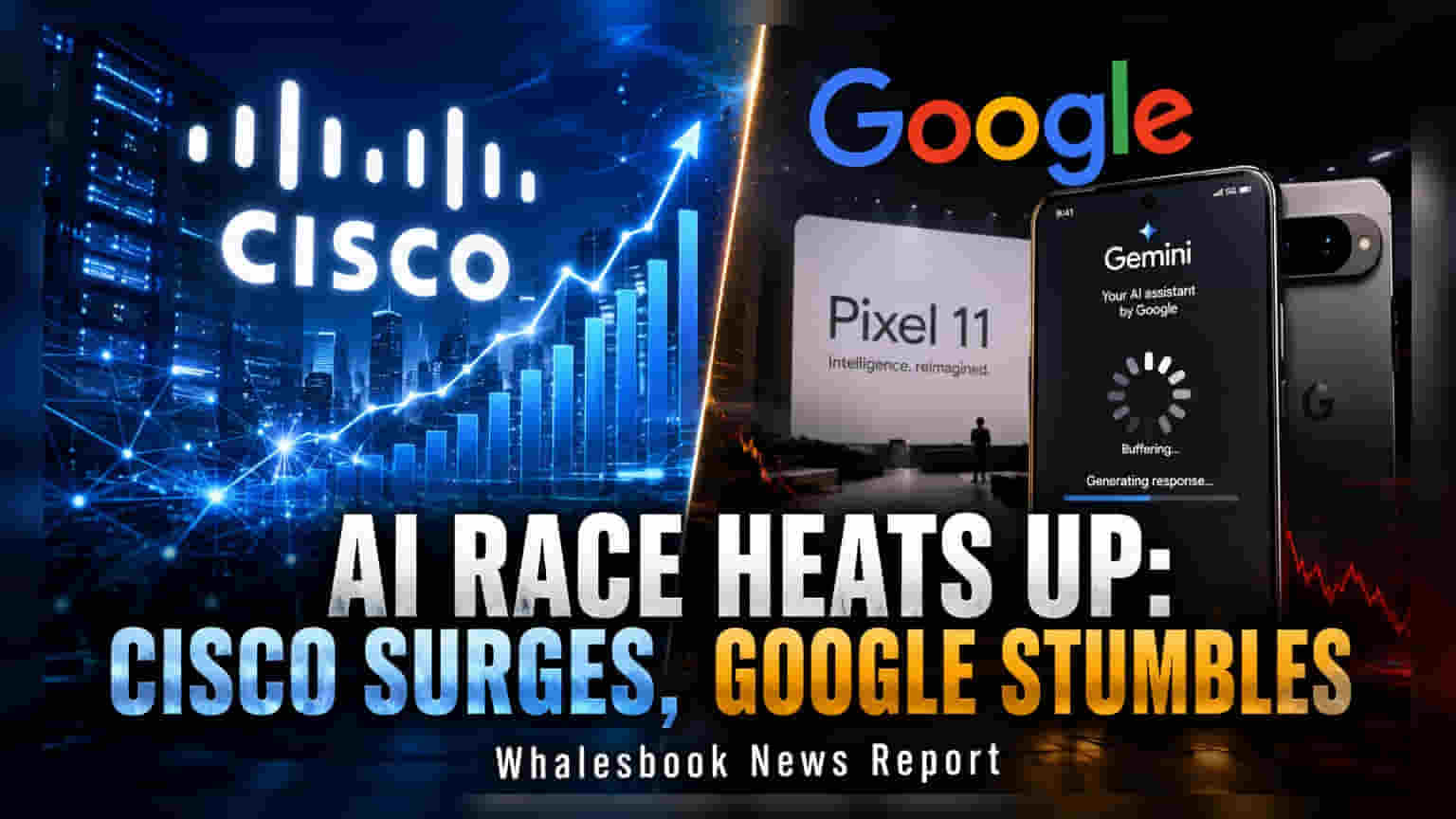
Cisco Systems reported record fiscal Q4 revenue of $17.3 billion, but its shares fell after giving a conservative AI revenue forecast for 2027. Meanwhile, Alphabet's Google launched the Pixel 11 smartphone but faces delays in its broader Gemini AI model rollout. Investors are closely monitoring how these tech giants manage execution risks and capital spending in a highly competitive AI market.
Cisco Systems reported a strong finish to its 2026 fiscal year, with revenue hitting a record $17.3 billion in the fourth quarter. This represents an 18% increase compared to the same period last year. The networking giant also reported adjusted earnings of $1.22 per share, beating analyst estimates. Despite these solid numbers, the stock fell approximately 4% in extended trading on August 12 and 13, 2026, as the market reacted to the company's future outlook.
The decline was triggered by Cisco's fiscal 2027 guidance. The company forecasted $7.5 billion in AI-related revenue for the upcoming year. Many investors viewed this as a conservative estimate, especially since Cisco had already secured $9.3 billion in AI-related orders during fiscal 2026. This gap between the strong existing order backlog and the cautious future forecast has left investors questioning how quickly AI infrastructure demand will convert into consistent, long-term sales growth.
Meanwhile, Alphabet-owned Google is navigating a different set of challenges in the artificial intelligence race. The company hosted its 'Made by Google' event on August 12, 2026, unveiling the Pixel 11 smartphone series. The new phones feature the Tensor G6 chip and are deeply integrated with Gemini artificial intelligence. While the hardware launch shows the company's commitment to consumer AI, it is happening alongside reports that the rollout of Google’s broader, more powerful Gemini AI model is facing delays.
For investors, these developments highlight the execution risks inherent in the AI sector. Google is currently managing high capital expenditure, with spending guidance for 2026 ranging between $195 billion and $205 billion. These costs are largely driven by the need to build out infrastructure to support AI demand. However, delays in core software models like Gemini can limit the company's ability to maintain its competitive edge against other tech giants.
Both companies are currently at a stage where market expectations are extremely high. For Cisco, the most important update for shareholders to track will be its ability to convert its substantial AI order backlog into actual revenue in the coming quarters. For Alphabet, the focus shifts to when the delayed Gemini features will be fully deployed and whether its massive spending will deliver the expected returns on profit margins.