 Whalesbook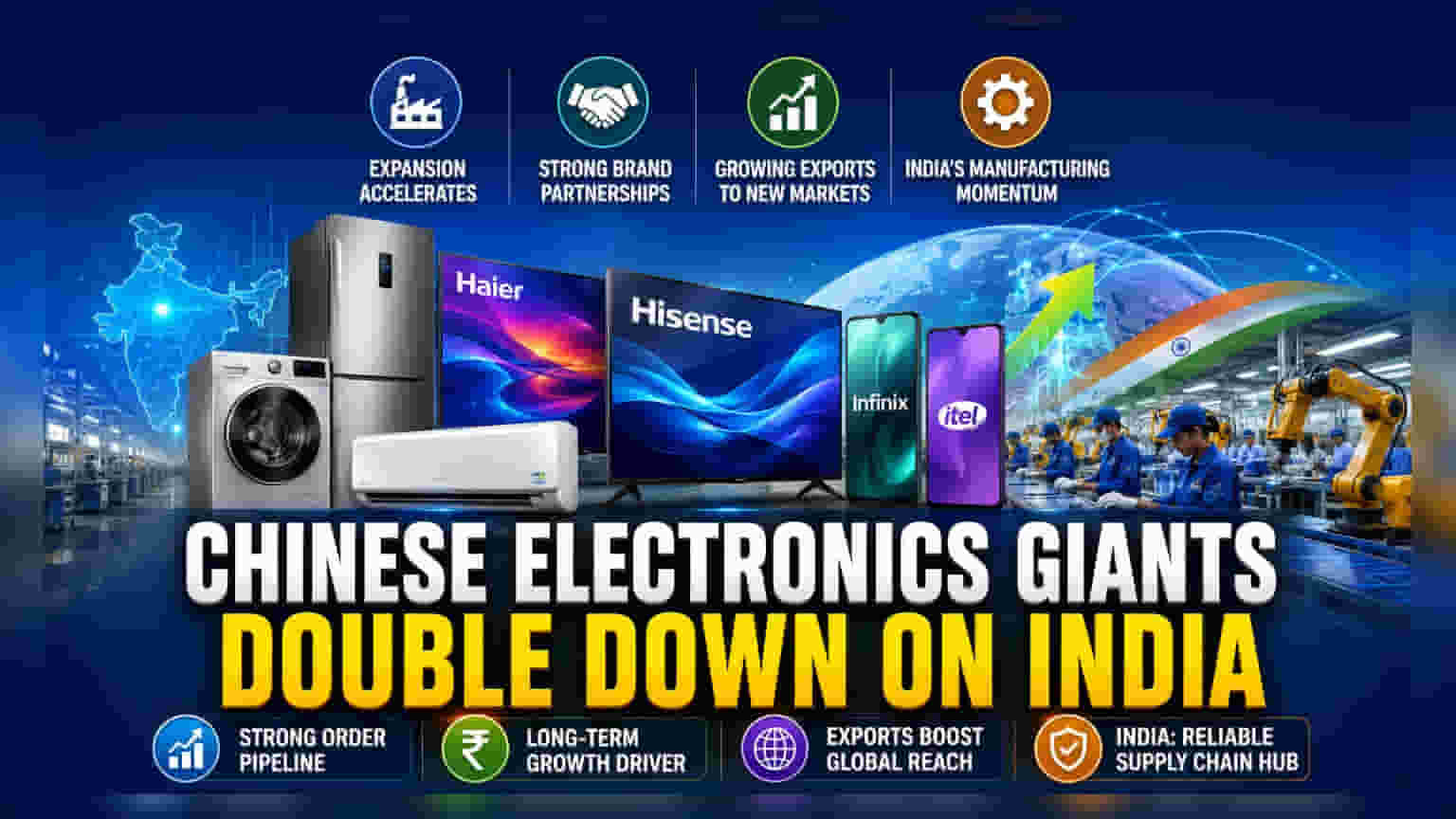


What Happened
Major Chinese electronics brands, including Haier, Hisense, and mobile manufacturers like Infinix and Itel, are continuing their production expansion in India. Contract manufacturers such as Dixon Technologies, Epack Durable, and Bhagwati Products report that they are not seeing any immediate disruption to their operations due to China's recent export controls or tech transfer restrictions. These companies are actively scaling up local assembly lines, broadening their product ranges, and increasing export volumes to markets like Africa and West Asia.
Strategic Expansion Continues
Haier India is moving ahead with its expansion plans, which include a proposed investment of approximately ₹3,500 crore to set up a new manufacturing facility. This expansion is designed to support both local demand and export goals. Similarly, Dixon Technologies is deepening its relationship with key global brands. The company’s joint venture with Ismartu India is ramping up production for mobile exports, while its partnerships for manufacturing Motorola and Oppo devices remain on a growth trajectory. These moves suggest that major consumer electronics players are prioritizing local manufacturing to stay competitive in the fast-growing Indian market.
Why This Matters For Investors
For Indian investors, these developments underscore the ongoing shift in global electronics manufacturing. Despite geopolitical friction, India remains a critical destination for multinational companies looking to diversify their supply chains. The expansion of these brands creates a sustained order flow for domestic contract manufacturers (EMS players). When contract manufacturers secure long-term partnerships with major brands, it provides better revenue visibility and helps improve economies of scale, which can lead to better profit margins over time. The commitment of global firms to invest in new factories and distribution networks acts as a signal of their long-term confidence in the Indian consumer market.
The Regulatory Context
While routine manufacturing operations currently appear unaffected, investors should remain aware of the broader regulatory environment. India’s Press Note 3, which requires prior government approval for foreign investments from countries sharing a land border with India—including China—remains a factor for companies planning new FDI-funded projects. While firms like Haier are navigating this by using internal accruals or finding strategic partners, the regulatory landscape is complex and continues to evolve. Any future shifts in trade policy or tighter restrictions on technology transfers could create bottlenecks for companies heavily dependent on Chinese machinery or high-end components.
What Investors Should Monitor
As the sector evolves, investors may track the execution of large capital expansion projects, such as the new manufacturing plants announced by major players. It will be important to observe whether these projects stay on schedule or face delays due to regulatory or supply chain hurdles. Additionally, the ability of contract manufacturers to maintain and grow their client base while managing raw material and component costs will be a key performance indicator. Monitoring management commentary on export growth and the success of new product categories can also provide insight into how well these companies are navigating the balance between global supply chain reliance and domestic manufacturing requirements.