

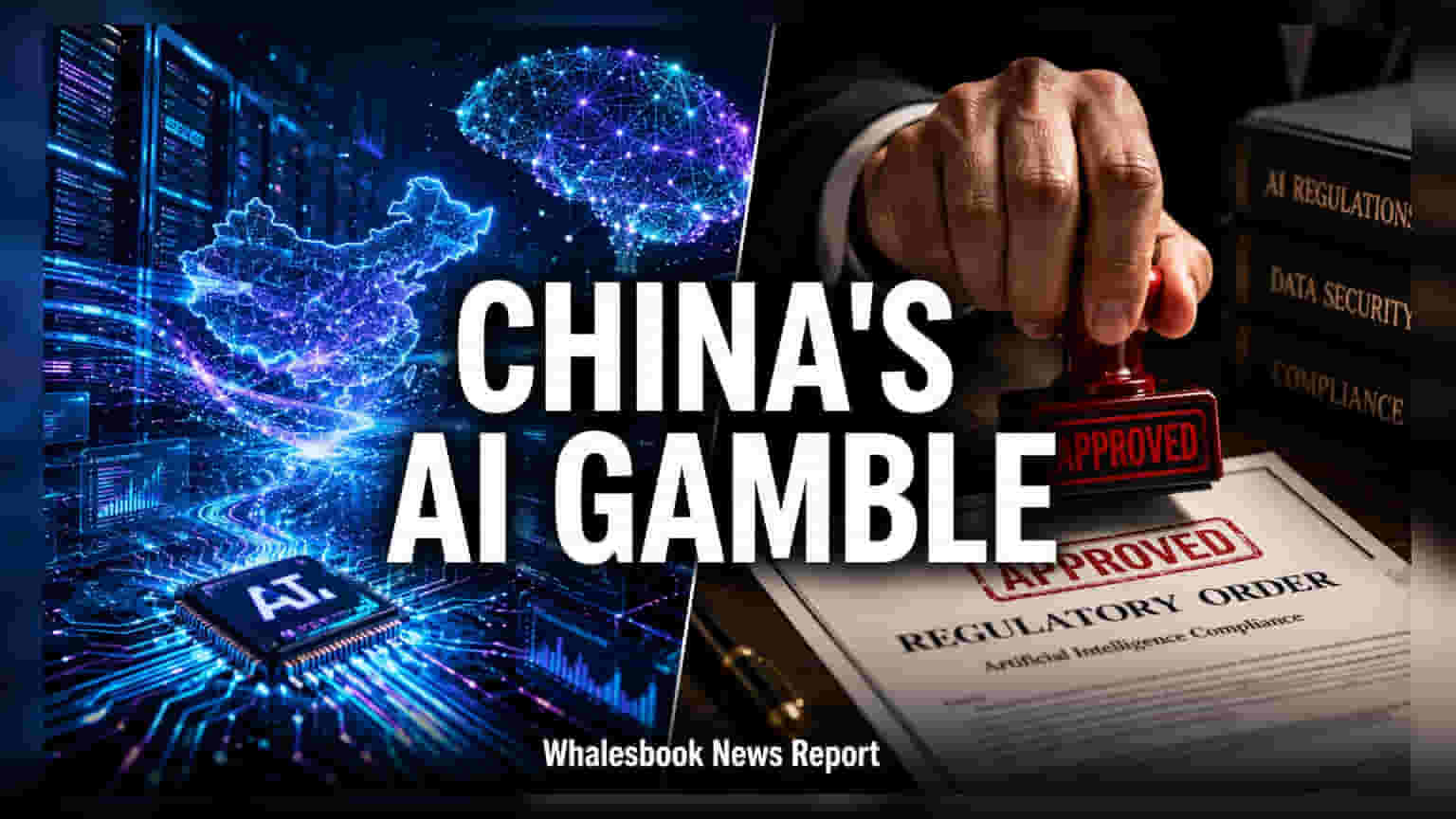
Beijing’s “AI Plus” initiative mandates AI integration across industries, aiming for 70% adoption by 2027. While China is rapidly narrowing the performance gap with the U.S., investors face risks from hardware export restrictions and high compliance costs.
China is undergoing a massive shift in its technology sector, aggressively pushing the adoption of artificial intelligence through its "AI Plus" initiative. The government has set ambitious targets, aiming for intelligent devices and AI systems to reach a 70% penetration rate by 2027, climbing to 90% by 2030. This push is not limited to tech labs; it encompasses factories, schools, hospitals, and government services, signaling a state-driven effort to overhaul the broader economy.
Simultaneously, Beijing has built a complex regulatory framework that dictates how these systems operate. Unlike the more voluntary models seen in many Western nations, China requires strict adherence to rules regarding training data, content safety, and algorithm registration. Starting September 2025, AI-generated content must also include explicit labels to ensure transparency. While some observers previously believed these rules would stifle innovation, the industry is proving otherwise. Experts now suggest that this regulatory environment is intended to act as an infrastructure for safe and standardized growth, rather than a barrier to progress.
Technological progress in the region is moving quickly. A clear example of this momentum is the recent launch of Moonshot AI’s Kimi K3, a model with 2.8 trillion parameters. In independent testing, such systems have performed at levels very close to top-tier U.S. frontier models, particularly in coding and complex reasoning. This narrowing gap in performance has forced global competitors to adjust, contributing to a sharp decline in the cost of AI services and tokens since mid-2026.
However, this growth story comes with specific risks that investors must track. The primary constraint on China’s AI sector is not a lack of code or expertise, but access to high-end hardware. Ongoing U.S. export restrictions on advanced semiconductors remain the single biggest threat to this development. To bypass these limitations, major tech firms are pouring money into large-scale cluster investments to maximize the efficiency of available chips. This environment favors large incumbents like Alibaba, Tencent, and Baidu, which have the deep pockets necessary to absorb high compliance costs and build the required hardware infrastructure.
Smaller players, meanwhile, face a tougher road. The high cost of staying compliant with state regulations, combined with the difficulty of acquiring hardware, creates a high barrier to entry. For investors, the next important updates will be the progression of these semiconductor clusters and how effectively the large tech giants can navigate the dual pressure of strict government oversight and the limitations imposed by global trade restrictions.