

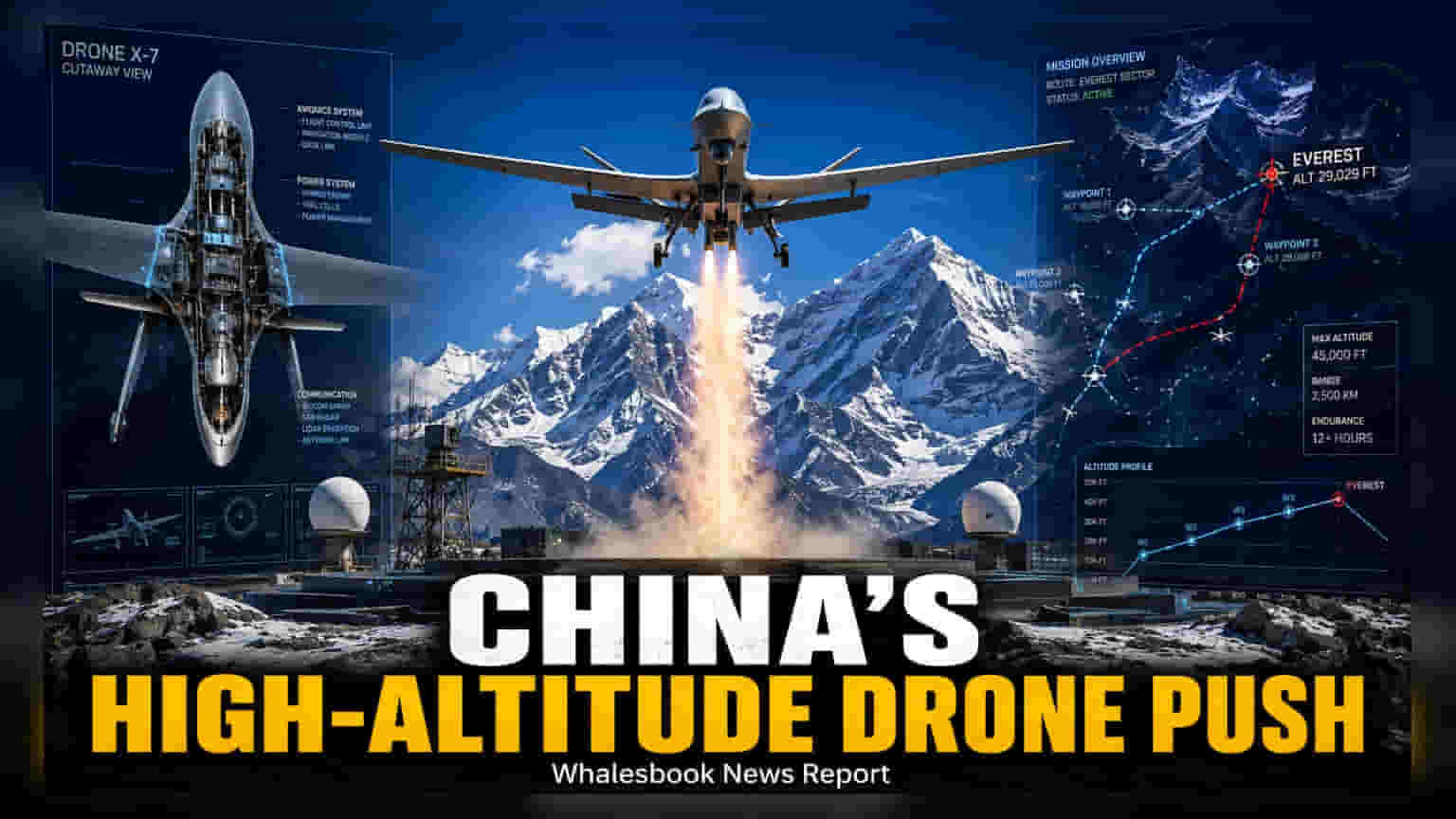
China has launched the Plateau Drone R&D Application Centre near Mount Everest to test unmanned aerial vehicles in extreme conditions. The facility aims to improve drone performance in low-oxygen, high-altitude environments for border security and logistics. For investors, this marks a strategic acceleration in China's low-altitude economy, a sector increasingly focused on autonomous transport and surveillance technology.
China has officially inaugurated the Plateau Drone R&D Application Centre at Xizang University, located in the Tibet Autonomous Region. The facility, which began operations in July 2026, is specifically designed to overcome the engineering barriers posed by high-altitude environments. By using the challenging terrain near Mount Everest as a primary testing ground, the project seeks to develop drone technology capable of functioning reliably at elevations exceeding 4,000 meters.
Strategic Focus on Low-Altitude Technology
The new research center is part of a broader national push to advance the country’s low-altitude economy. This sector encompasses the development and deployment of various unmanned aerial vehicles for tasks such as ecological monitoring, emergency supply delivery, and security operations. Xizang University plans to integrate this initiative with its academic programs, including new specializations in plateau-specific drone applications and artificial intelligence, to create a pipeline for engineering talent capable of managing these specialized systems.
Industrial and Geopolitical Context
This development is significant as it highlights the ongoing global race to master drone logistics in extreme environments. While the center is focused on engineering challenges like low air density and harsh climates, its potential applications in border security and logistics have clear strategic implications. The initiative mirrors a growing trend among tech-focused nations to utilize specialized regional centers to gain an advantage in autonomous hardware and surveillance systems.
Practical Applications and Regional Impact
Beyond government and security interests, the technology being tested has potential commercial utility in logistics, particularly in mountainous regions where traditional infrastructure is limited. Recent successful use cases by private operators, such as the use of drones by companies like DJI in Nepal to transport supplies to Everest base camps, demonstrate the immediate practical value of these systems. By reducing the reliance on human carriers for high-altitude transport, such technology can improve efficiency and safety in remote operations.
Investors monitoring the drone and autonomous systems sector may look toward future updates regarding the center's specific technical breakthroughs and how these innovations are eventually commercialized or integrated into broader state infrastructure projects. The key monitorable will be the transition from research-led development to scalable, cost-effective deployment of these high-altitude UAV systems in diverse commercial and logistical environments.