

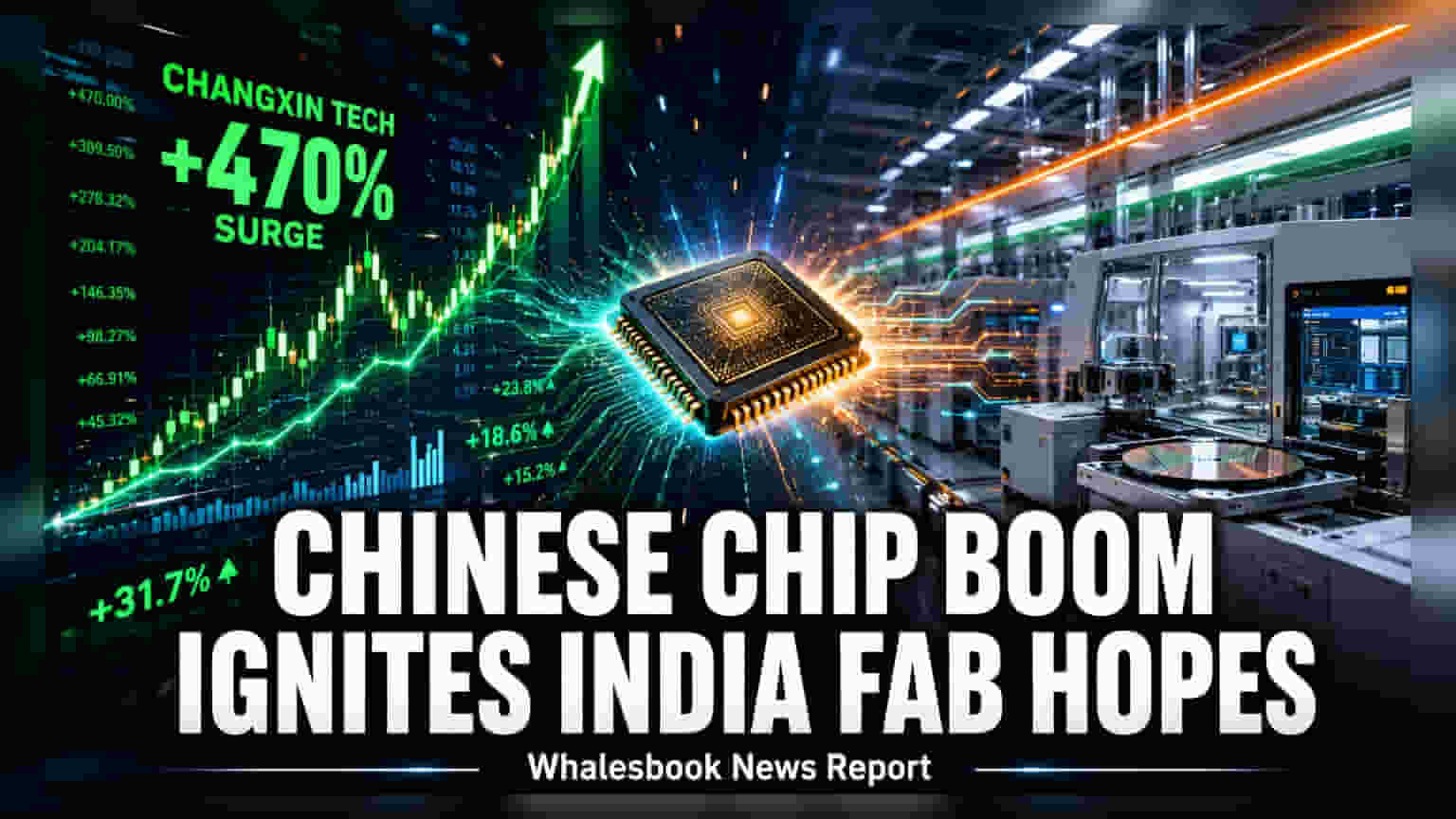
Chinese memory chip maker ChangXin Memory Technologies surged 470% on its Shanghai market debut. This massive listing highlights global demand for microchips as India progresses with its own ₹1.3 trillion Semiconductor Mission. Investors are tracking how domestic projects, including those by Tata Electronics and Micron, build local manufacturing capabilities.
Detailed Coverage
The debut of Chinese memory chip manufacturer ChangXin Memory Technologies on the Shanghai Stock Exchange has drawn significant global attention, with the stock climbing 470% on its first day of trading. The company, which holds an estimated 8% share of the global memory chip market, now reflects a massive market valuation that underscores the intense investor appetite for semiconductor-related businesses.
India’s Semiconductor Mission and Local Projects
For Indian market observers, this listing provides a global backdrop to the country’s ongoing efforts to build a domestic semiconductor ecosystem. The Indian government’s Semiconductor Mission, backed by an investment outlay of nearly ₹1.3 trillion, is currently in its second phase. This policy, which evolved from initial incentives launched in 2021, is designed to encourage the establishment of fabrication, assembly, testing, and packaging units within India.
Several major players are already participating in this initiative. Tata Electronics, Micron Technology, and Kaynes Technology have announced and initiated projects under the government's subsidy framework. While these Indian efforts currently focus on establishing foundational manufacturing and assembly infrastructure rather than directly matching the specialized memory chip output of firms like ChangXin, they are critical for reducing import dependence and building technological depth.
Industry Challenges and Future Outlook
Building a semiconductor manufacturing base is a complex, long-term undertaking that involves high capital spending and significant technical expertise. Unlike software-driven technology sectors, semiconductor fabrication requires sustained investment in advanced machinery and a reliable supply chain for specialized materials. Investors monitoring this space often look for progress on construction timelines, the actual commissioning of these plants, and the ability of companies to secure skilled talent and long-term customer contracts.
While the global market for chips is experiencing high demand, the sector is also subject to cyclical price fluctuations and intense international competition. India's strategy is to integrate into the global value chain rather than aiming for immediate, full self-sufficiency. The progress of current projects remains a key monitorable, as these will determine whether India can successfully transition from being a consumer of semiconductor technology to an active participant in global production.