

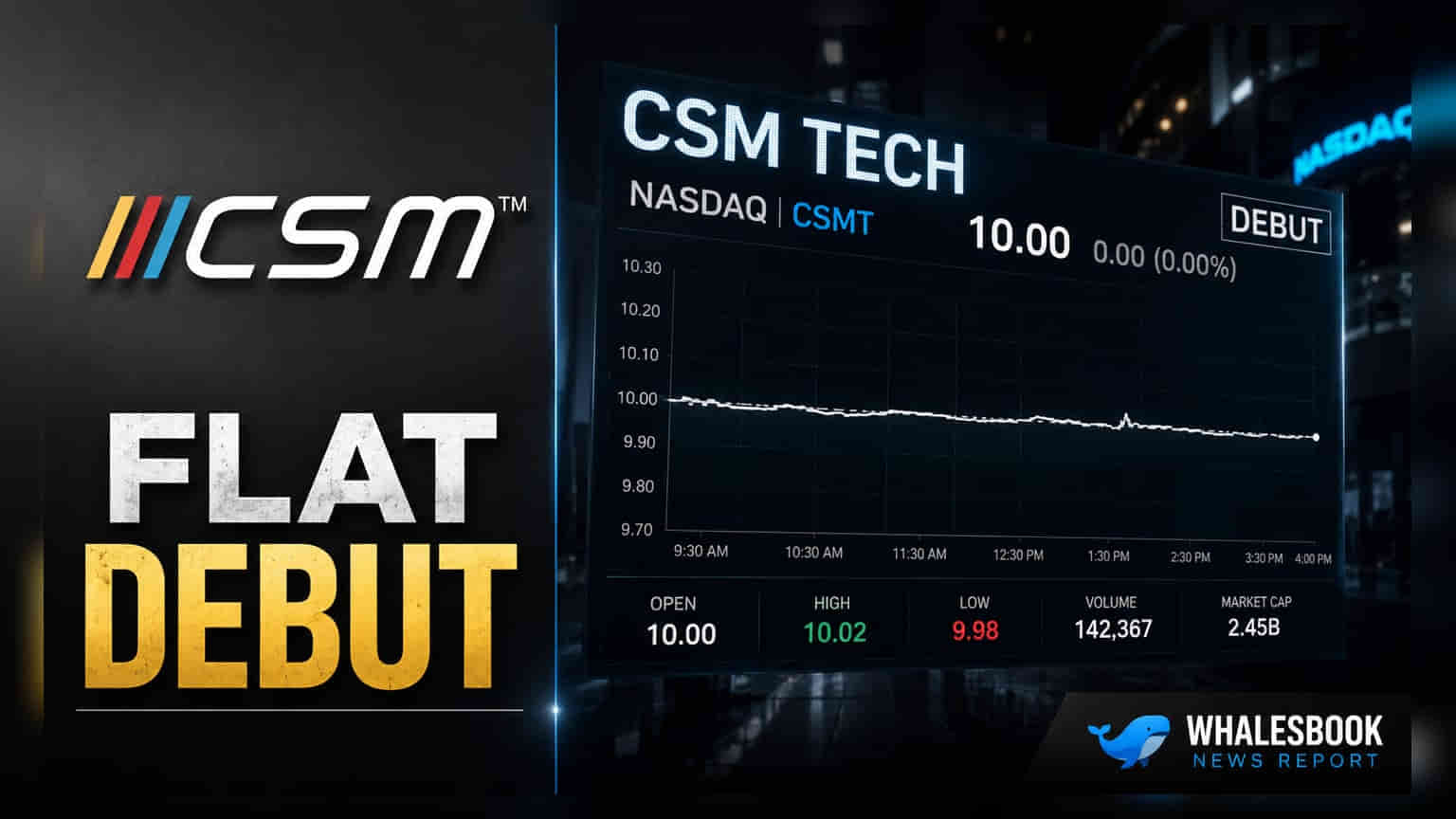
CSM Technologies debuted on the stock exchanges at its IPO price of ₹113, showing no immediate gain for investors. The company raised ₹145.78 crore to support operations and debt reduction. With a modest subscription level of 1.36 times, investors are now watching how the firm navigates the competitive GovTech sector.
What Happened
CSM Technologies made its market debut on Thursday, July 2, 2026, with shares listing at ₹113 on both the BSE and the National Stock Exchange (NSE). The listing was flat, meaning the shares opened at the exact price set during the initial public offering (IPO), offering no immediate gains for participants. The company had successfully raised ₹145.78 crore through its IPO, which was priced in the range of ₹107 to ₹113.
The Market Reaction
The flat listing aligns with the lukewarm response the IPO received during its subscription period. The total issue was subscribed only 1.36 times, a relatively modest figure that reflects a cautious stance from investors. While retail investors showed some interest by subscribing 1.62 times, the participation from institutional and non-institutional investors was limited. This neutral listing suggests that the market is waiting for more clarity on the company's growth execution before assigning a higher valuation to the stock.
Business Model and Use of Funds
CSM Technologies operates in the GovTech space, providing digital transformation and IT solutions specifically for government agencies. This business model involves building and managing digital infrastructure for public sector projects. While this can provide stable long-term contracts, it also comes with unique challenges.
The company has outlined that the funds raised in this IPO will be primarily used for three objectives: strengthening working capital, prepaying certain outstanding borrowings, and funding potential inorganic growth opportunities. Reducing debt is a positive step as it lowers interest expenses, potentially helping the company manage its bottom line better. However, the requirement for working capital is often high in the IT services sector, as companies often face long payment cycles when working on large government projects.
Sector Context and Risks
The GovTech sector is competitive, with both small and large IT players vying for government contracts. One of the main risks for companies like CSM Technologies is their dependence on government spending. If government budgets are delayed or if projects face bureaucratic hurdles, it can directly impact the company’s revenue recognition and cash flow. Additionally, since the company handles complex digital projects, there is a constant need to manage execution risks, such as project delays or cost overruns.
What Investors Should Track
Investors will likely watch how the company uses its newly raised capital to scale operations. The key monitorable will be the company's ability to maintain healthy profit margins while managing the working capital requirements typical of the GovTech business. Future exchange filings regarding new order wins and progress on debt reduction will be important indicators for shareholders. Additionally, comparing the company's profit growth and debt levels with industry peers in the coming quarters will provide a clearer picture of its financial health.