

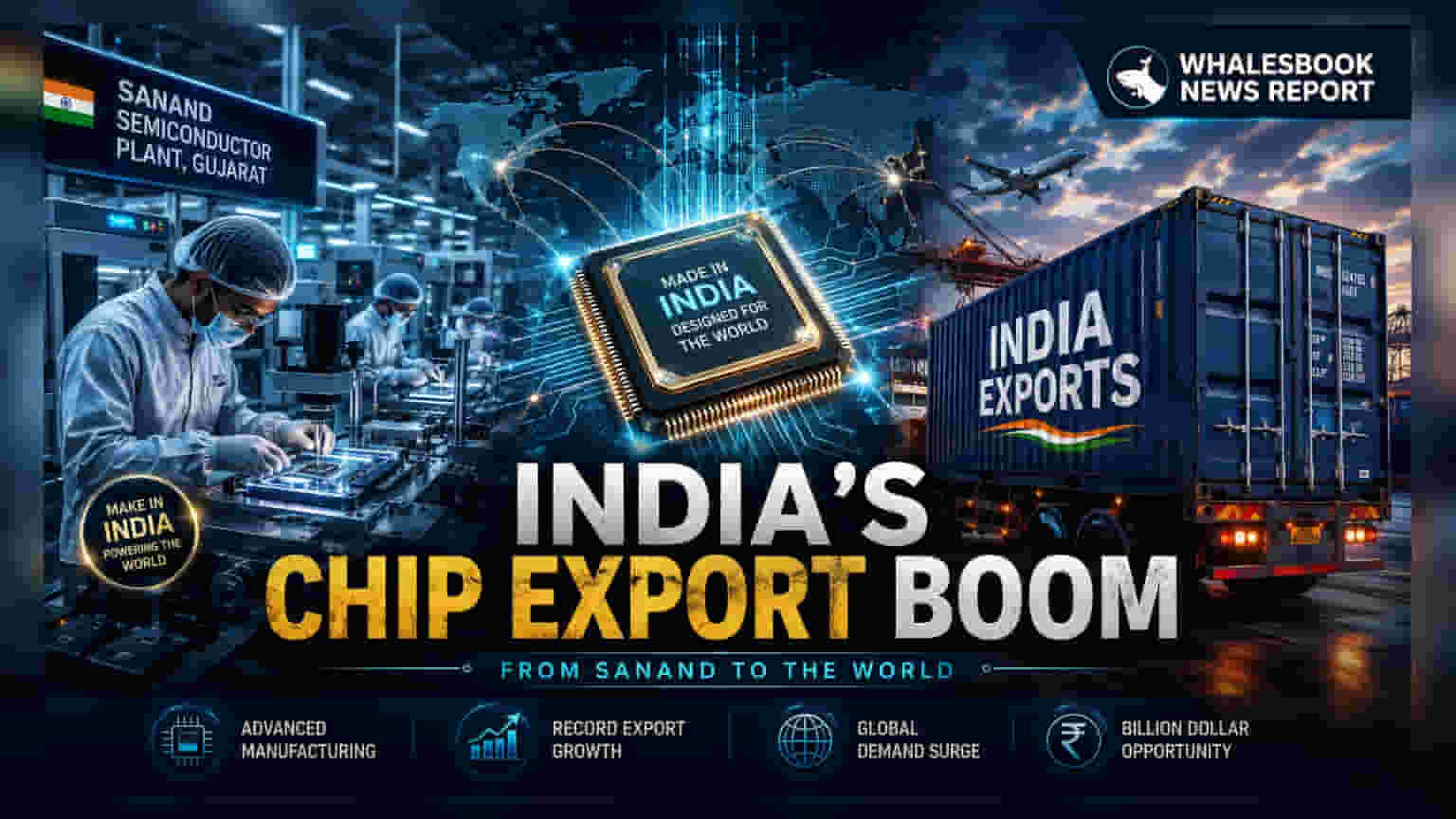
Murugappa Group-owned CG Power has started semiconductor exports from its Sanand facility to Malaysia. This marks a major shift for the power equipment maker into the chip assembly and testing (OSAT) sector. Investors will now track the scale-up of the G1 facility and the planned G2 plant as the company commits a multi-year ₹7,600 crore investment.
What Happened
CG Power & Industrial Solutions, a Murugappa Group company, has begun commercial exports of semiconductor chips from its new facility in Sanand, Gujarat. The company sent its first shipment of assembled chips to Malaysia, fulfilling orders for its joint venture partner, Renesas Electronics. This activity follows the operational commissioning of the G1 facility. Prime Minister Narendra Modi is scheduled to visit the site on July 4 to inaugurate the commercial production operations, a significant event for India’s growing semiconductor assembly and testing industry.
Why This Matters For The Business
For CG Power, traditionally known for power transformers and industrial solutions, this move represents a major business diversification. The company is entering the Outsourced Semiconductor Assembly and Test (OSAT) market. This sector involves packaging and testing chips manufactured by others, which is a critical step in the semiconductor supply chain before chips are ready for electronics. By entering this space, the company aims to reduce its reliance on its core power equipment business and tap into the global demand for electronics manufacturing.
Investment And Capacity Roadmap
The project is capital-intensive. CG Power has committed to investing over ₹7,600 crore over five years to build two OSAT facilities in Sanand, in partnership with Renesas Electronics and Stars Microelectronics. The currently operational G1 facility has a peak daily capacity of 0.5 million units. The company has also announced plans for a second facility, G2, which is expected to be completed by the end of 2026. If these plans materialize, the total daily packaging capacity is projected to reach approximately 14.5 million chips, significantly expanding the company's manufacturing footprint.
The Business Reality Check
Entering the semiconductor space brings specific business risks. OSAT is a high-volume, cost-competitive industry. Profitability depends heavily on maintaining high capacity utilization and securing consistent orders from global semiconductor companies. While the company has secured a partner in Renesas, the ability to maintain margins in a cyclical industry where demand can fluctuate based on global tech cycles is a key factor. Additionally, the company is also looking at design startups and potential acquisitions via its subsidiary, Axiro, to build capabilities in chip design, which requires careful capital allocation to avoid overstretching the balance sheet.
What Investors Should Track
Investors should monitor several specific factors following this launch. First, the timeline for the completion and commissioning of the G2 facility will be critical to achieving the projected capacity goals. Second, the company’s management commentary on the profitability and margins of the chip assembly business will be important, as this differs from their traditional power equipment margins. Finally, tracking the actual volume of chip exports and client diversification beyond the initial partnership will show how successful the company is in gaining traction in the competitive global semiconductor market.