

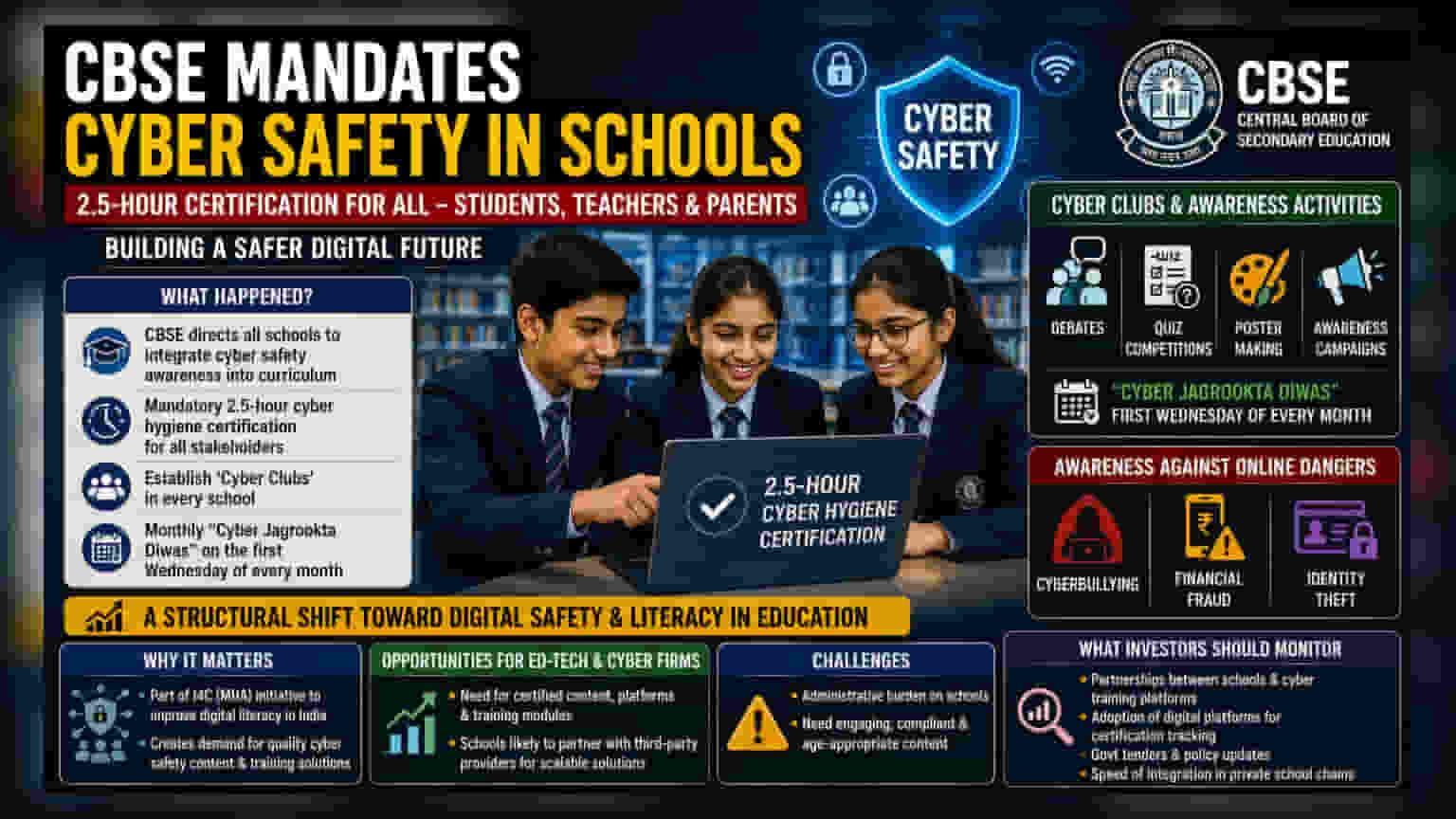
The Central Board of Secondary Education has directed all affiliated schools to implement a 2.5-hour cyber hygiene certification course for students, teachers, and parents. This government-backed initiative aims to combat rising digital risks, creating potential long-term demand for structured digital safety content and training tools in the education sector.
What Happened
The Central Board of Secondary Education (CBSE) has issued a directive to all affiliated schools to integrate cyber safety awareness into their curriculum. The core of this initiative is a mandatory 2.5-hour cyber hygiene certification course designed for students, teachers, and parents.
Schools are also instructed to establish "cyber clubs" to foster a culture of digital safety. These clubs will facilitate monthly awareness campaigns, branded as "Cyber Jagrookta Diwas," on the first Wednesday of every month. The activities will range from debates and quiz competitions to poster-making, all aimed at building awareness about online dangers like cyberbullying, financial fraud, and identity theft.
Why This Matters for the Digital Education Sector
This move by the CBSE is part of a broader push by the Ministry of Home Affairs, specifically the Indian Cyber Crime Coordination Centre (I4C), to improve digital literacy in India. For investors, this signifies a structural shift in how educational institutions approach technology.
Historically, digital literacy in schools focused on basic computer usage. The inclusion of cyber hygiene as a mandatory certification suggests that schools will need to source or develop more advanced content related to internet safety, data privacy, and ethical digital behavior. This demand can open up new avenues for educational content providers, ed-tech firms, and cybersecurity training platforms that offer specialized modules for the K-12 (Kindergarten to 12th grade) market.
The Shift Toward Cybersecurity Integration
The integration of cyber safety into schools is a direct response to the rising reliance on digital platforms for education. While the immediate effect is a requirement for schools to conduct awareness activities, it points to a future where cybersecurity awareness training could become a standardized component of the academic ecosystem.
Companies providing digital content, interactive educational tools, and specialized cybersecurity training material may find an expanded total addressable market as schools look for standardized resources to meet these mandates. As private schools seek to enhance their offerings to comply with these requirements, they are likely to partner with third-party service providers rather than developing content in-house, creating opportunities for specialized service providers.
Potential Challenges for Schools and Providers
While the mandate aims to protect students, its implementation poses logistical challenges. Schools must manage the administrative burden of ensuring all students and parents complete the certification, which could lead to a preference for easy-to-use, scalable digital platforms that track progress automatically.
Furthermore, for service providers, the primary hurdle will be creating content that is engaging enough for students but rigorous enough to meet the government’s safety standards. Companies that can bridge this gap and offer affordable, scalable solutions will be better positioned to capitalize on this regulatory trend.
What Investors Should Monitor
Investors should keep an eye on how schools adopt these digital safety protocols and whether there is an increase in procurement of third-party cybersecurity awareness tools.
Key monitorables include:
- Growth in partnerships between educational institutions and cybersecurity training platforms.
- Adoption rates of centralized digital platforms that help schools manage the certification process.
- Any future government tenders or policy updates that might require schools to invest in specific cybersecurity software or certified content modules.
- The speed at which private school chains integrate these mandated cyber clubs into their annual operational plans.