

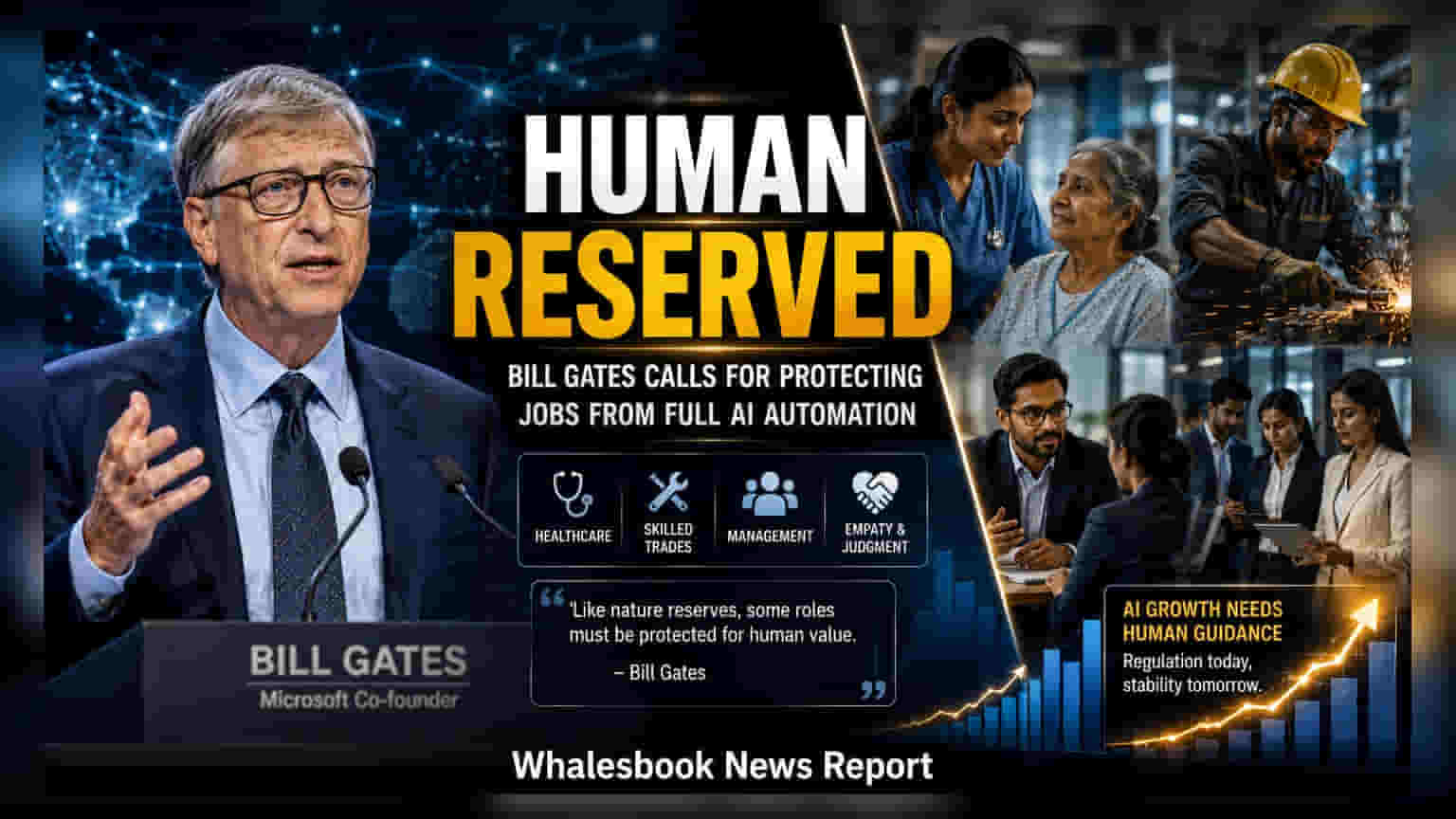
Microsoft co-founder Bill Gates has proposed the creation of 'human reserved' zones to protect specific job roles from total AI automation. In a new essay, Gates calls for international oversight to manage AI's impact on labor. For the technology sector, this highlights a growing push for regulation, which investors are watching as it could influence future policy, operational costs, and the pace of AI deployment.
Microsoft co-founder Bill Gates has called for a new approach to managing the rapid expansion of artificial intelligence, specifically advocating for the designation of 'human reserved' job roles. In a recent essay published this week, Gates proposed that certain categories of employment, particularly those requiring complex human judgment, empathy, or physical presence, should be protected from being fully automated by AI systems.
Drawing a comparison to nature reserves, where land is protected from industrial development to preserve its value, Gates argues that policymakers need to treat human labor with similar caution. He suggested that roles in sectors like healthcare, skilled trades, and management may be resilient to displacement and should be prioritized for human workers. The proposal is framed as a necessary step to prevent societal instability caused by mass unemployment as companies rush to replace human tasks with automated alternatives.
From an investor and market perspective, this advocacy for tighter regulation is a signal of the shifting sentiment surrounding the AI boom. For years, the focus has been on the potential for productivity gains and revenue growth for technology firms. However, as the focus shifts toward the societal costs of these technologies, the risk of legislative intervention increases. Major global technology firms, which are currently investing billions in AI infrastructure, may eventually face new compliance requirements, tax structures, or labor regulations if governments begin to adopt the oversight frameworks Gates describes.
Gates also emphasized the need for an international regulatory body, drawing parallels to the existing safety standards for nuclear energy and aviation. He suggested that without a global watchdog to monitor the deployment of powerful AI models, there is a risk of dangerous or irresponsible development. He identified potential threats, such as non-state actors leveraging open-source AI to conduct cyberattacks or develop bioweapons, as urgent reasons for structured governance.
The proposal highlights significant challenges for the tech industry. While proponents see this as a way to ensure long-term stability, there are risks associated with such regulation. Critics often point out that overly rigid labor protections could stifle innovation, increase operational costs for businesses, or put countries that implement strict AI regulations at a competitive disadvantage compared to those that do not. Furthermore, there is the risk of policy lag, where regulatory frameworks fail to keep pace with the rapid speed of technological change, creating uncertainty for companies attempting to plan long-term capital investments.
Investors monitoring the technology sector should track how governments and global bodies respond to these calls for regulation. The next important update to watch will be whether major economies begin to formalize AI labor policies or establish the international oversight boards Gates has recommended, as these decisions will directly impact the cost of doing business and the operational flexibility of AI-focused enterprises.