

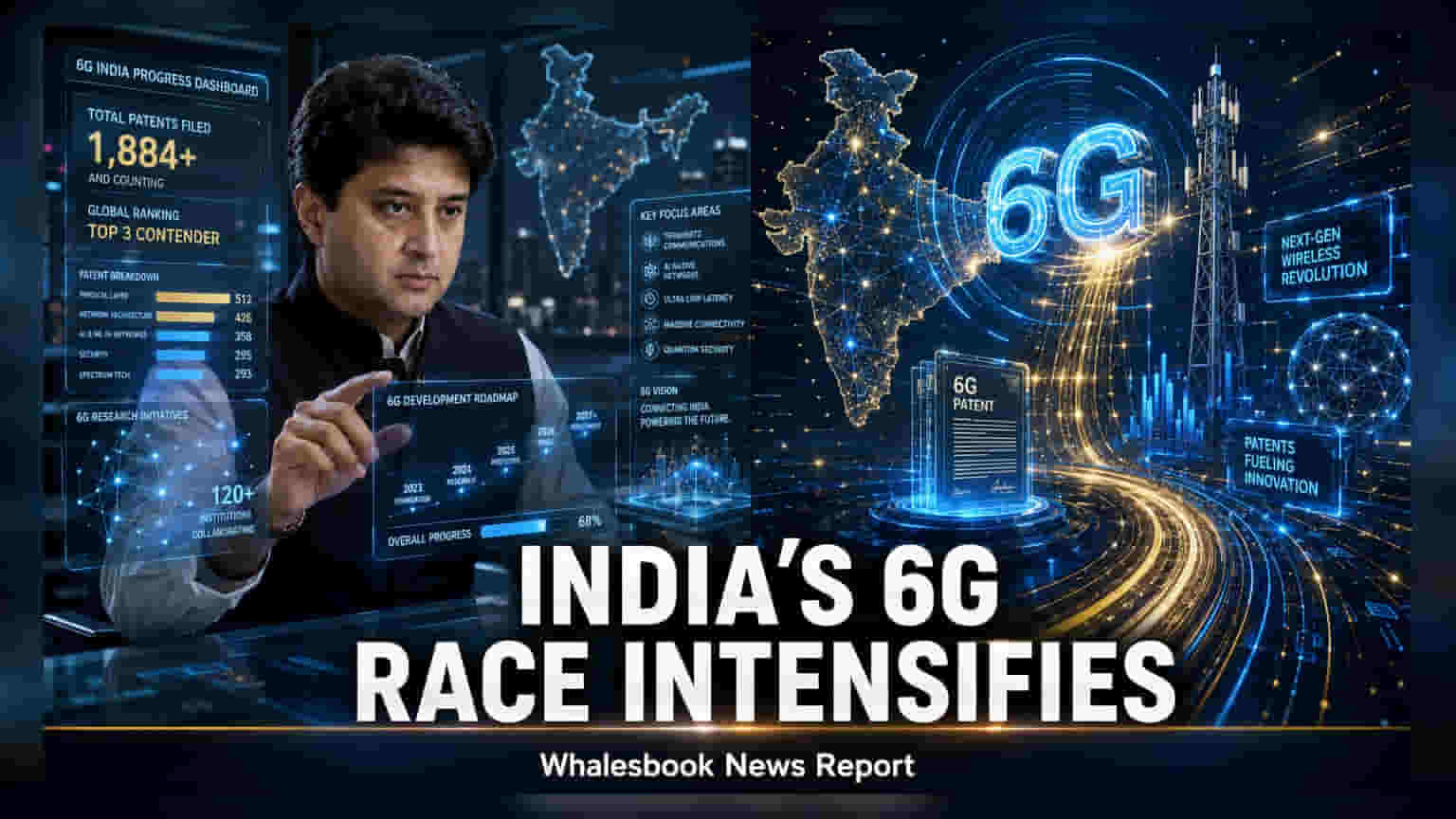
Communications Minister Jyotiraditya Scindia reviewed the Bharat 6G Alliance’s advancements, focusing on India's goal to lead 6G development by 2030. Alliance members have collectively filed over 7,700 patents in 5G and 6G technologies, indicating a growing focus on intellectual property and research.
Communications Minister Jyotiraditya Scindia held a review meeting on Tuesday to evaluate the progress of the Bharat 6G Alliance, or B6GA. The meeting was attended by Minister of State for Communications Chandra Sekhar Pemmasani and Telecom Secretary Amit Agrawal to assess the steps being taken toward India's goal of becoming a global leader in next-generation telecommunications technology by 2030.
Strategic Focus and Working Groups
The B6GA was established to support the 6G vision document introduced by the Prime Minister in March 2023. To achieve its objectives, the alliance operates through seven specialized working groups. These teams are tasked with navigating complex areas such as how spectrum will be allocated, how 6G devices will be manufactured in India, and how the country can develop its own technology rather than relying solely on imported solutions. Other focus areas include creating sustainable and green technology practices, finding practical ways for businesses to generate revenue from 6G, and ensuring the technology can be used effectively in real-world applications.
Intellectual Property and R&D Investment
A significant part of the alliance's strategy involves building an intellectual property portfolio. According to official data from the ministry, members of the alliance have filed more than 7,700 patents related to 5G and 6G technologies. Of this total, over 4,400 are international patent filings. For investors, this indicates that the domestic telecommunications ecosystem is increasingly prioritizing research and development. Moving from 5G to 6G requires not just infrastructure deployment but the creation of core technologies, which is why patent filings are often used as a yardstick for a country's potential competitiveness in the global telecom market.
Challenges and Monitoring for Investors
While the focus on research is a positive step for long-term technological independence, the actual deployment of 6G remains a long-term goal. The telecom sector is capital-intensive, and companies involved in this ecosystem often face high spending requirements for research, development, and eventual network infrastructure. Investors should monitor how these research initiatives transition into commercial use cases and whether Indian companies can successfully monetize these advancements once the technology matures. The financial performance of telecom equipment manufacturers and service providers will depend on their ability to manage debt levels while investing in these new, unproven technologies. The primary monitorable for the next few years will be the progress of the seven working groups and whether they can meet the technical milestones set for the 2030 target.