 Whalesbook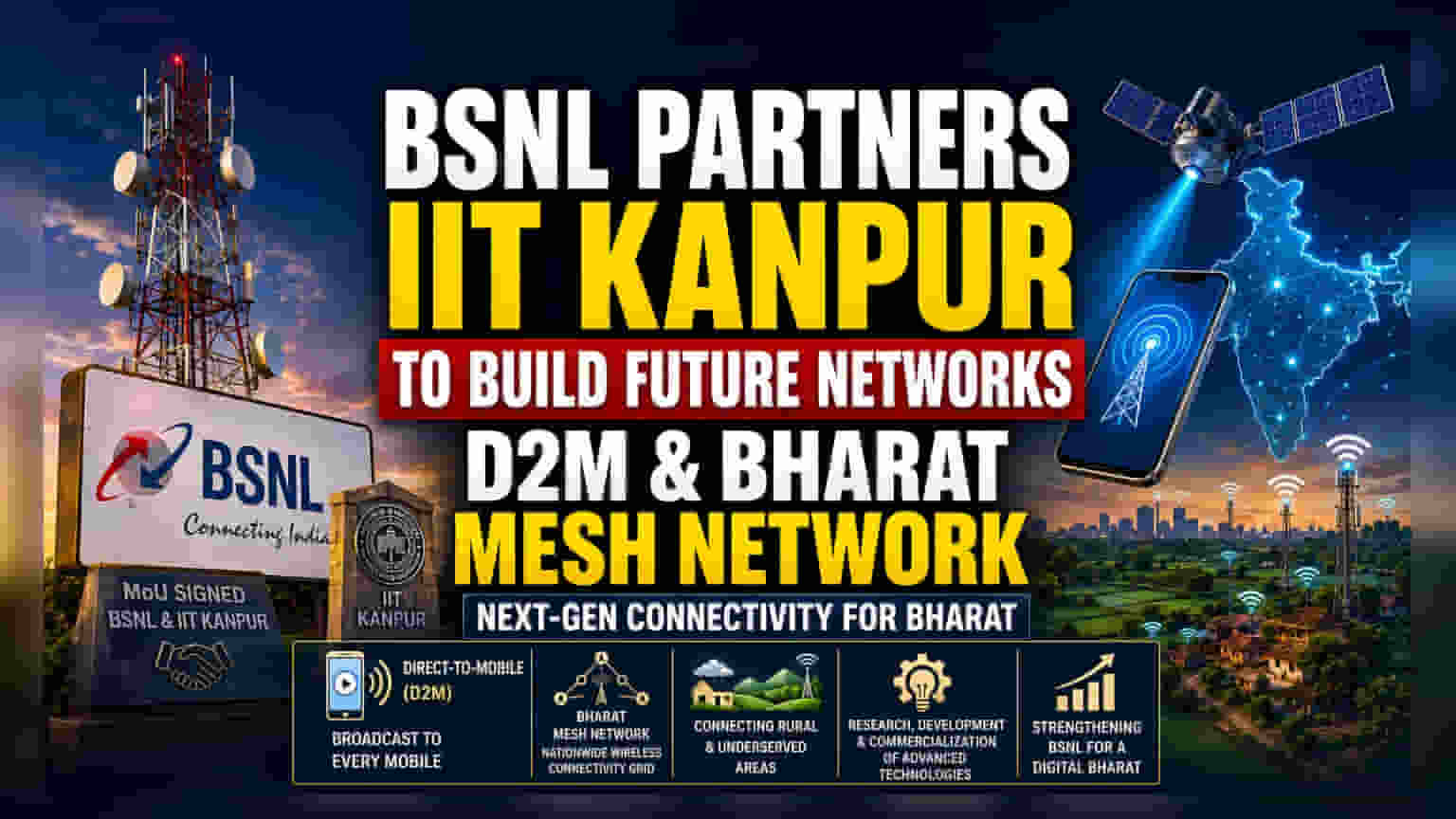


BSNL has partnered with IIT Kanpur to research and deploy next-generation telecom technologies like Direct-to-Mobile (D2M) and the Bharat Mesh Network. The move aims to improve rural connectivity and integrate broadcasting with mobile networks. For the telecom sector, this initiative reflects an effort to modernize BSNL’s infrastructure and potentially offer new digital services, though the success of these plans will depend on execution and competition with private rivals.
What Happened
Bharat Sanchar Nigam Limited (BSNL) has signed a Memorandum of Understanding (MoU) with the Indian Institute of Technology (IIT) Kanpur. The collaboration is designed to focus on the research, development, testing, and eventual commercialization of advanced communication technologies. The primary goals of this partnership include the development of Direct-to-Mobile (D2M) capabilities and the creation of a 'Bharat Mesh Network.'
Understanding D2M and Bharat Mesh
Direct-to-Mobile technology is an emerging concept that allows video and data content to be broadcast directly to mobile devices without needing a traditional mobile data connection. This could potentially reduce the load on mobile networks and allow consumers to access content without consuming their data packs. The Bharat Mesh Network is envisioned as a nationwide wireless connectivity framework that uses various technologies, such as Wi-Fi and 4G, to create a widespread grid. The aim is to ensure consistent connectivity, particularly in rural and underserved areas where building traditional fiber infrastructure is difficult or expensive.
The Business Context
This partnership comes at a time when BSNL is working to regain market relevance in an industry dominated by major private players like Reliance Jio and Bharti Airtel. Historically, BSNL has struggled with aging infrastructure and slower service rollouts compared to its private competitors. The government has been providing significant financial support and revival packages to modernize the state-owned operator. By tapping into the research expertise of an institution like IIT Kanpur, BSNL is attempting to leapfrog older technologies and adopt advanced systems that could differentiate its services in the long run.
Execution Challenges
While the partnership is a strategic step toward modernization, the company faces significant execution hurdles. The telecom sector in India is highly competitive, with private operators already setting high standards for service quality and speed. Past projects, such as the BharatNet program—which aims to connect Gram Panchayats with high-speed internet—have faced delays due to technical and logistical challenges. The core risk for the company remains its ability to move these technologies from the lab to a commercial, mass-market scale within a competitive timeframe.
What Investors and Observers Should Monitor
The most important monitorable for observers will be the timeline for pilot testing and the actual deployment of these new technologies on the ground. Additionally, market participants will watch to see if these initiatives help BSNL improve its market share or service quality, which are currently being challenged by more agile private competitors. Success will depend on the speed of implementation, the government's continued support, and whether the company can effectively integrate these advanced systems into its existing, often legacy, network infrastructure.