

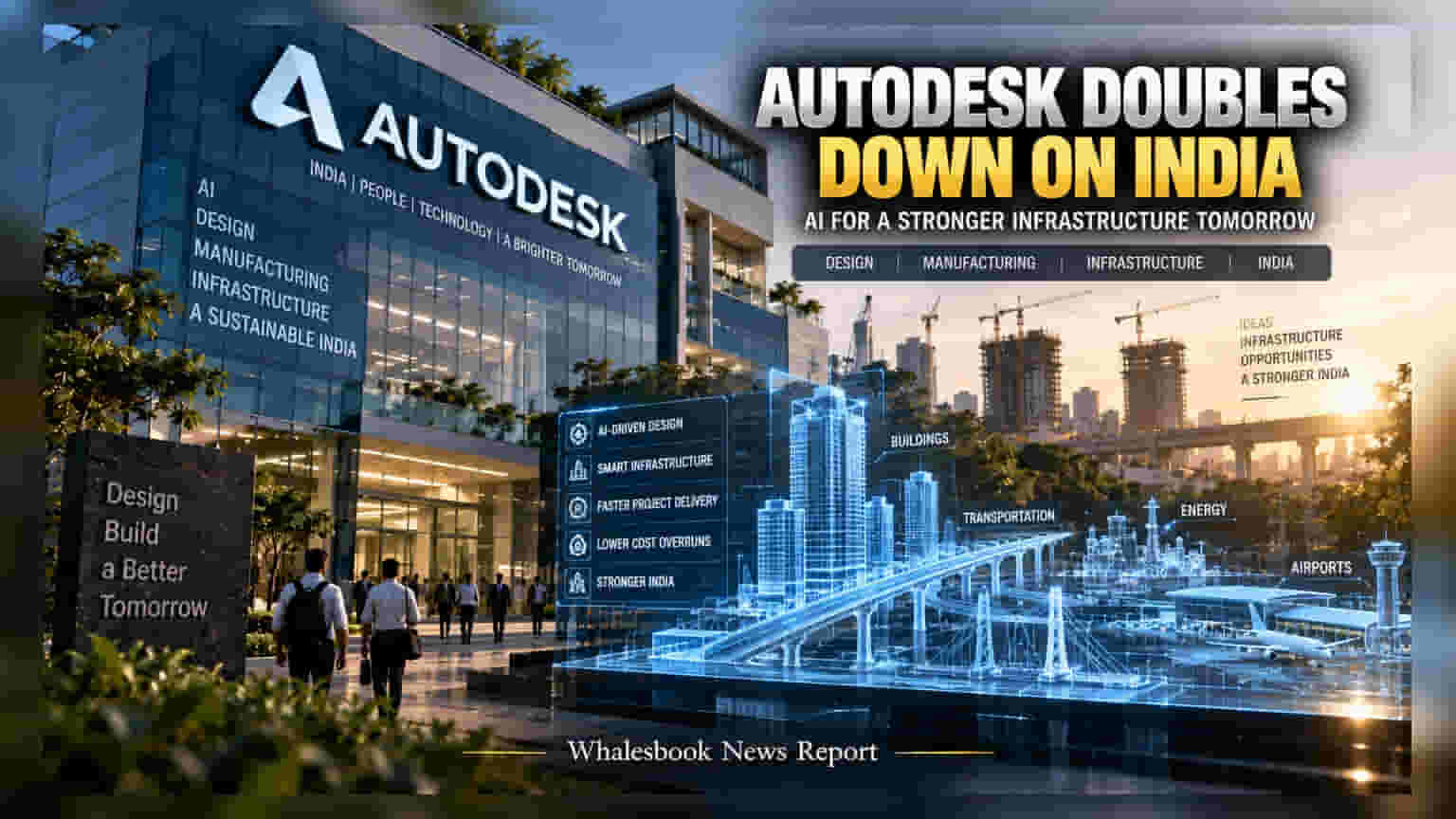
US-based design software giant Autodesk is deepening its India operations, utilizing the country's talent pool to build cloud-based and agentic AI platforms for industrial projects. By partnering with major firms like the Adani Group, the company aims to modernize infrastructure design. Investors may watch how this digital transformation strategy impacts the firm's global margins and long-term demand for its software suite.
Autodesk, the US-based software company known for its design and engineering platforms, is significantly increasing its focus on India as a strategic hub. While India has long served as the company’s second-largest employee base globally, recent updates indicate that the focus is shifting from pure software development to the active deployment of AI-driven solutions within the domestic infrastructure and manufacturing sectors.
The core of this strategy revolves around integrating agentic AI into industrial workflows. Unlike standard AI that simply suggests ideas, agentic AI is designed to take independent actions, such as automating complex decision-making processes for engineers and architects. Autodesk is now pushing to deploy these advanced tools locally to help large-scale industrial projects reduce cost overruns and shorten timelines. This push is being supported by recent collaborations, including a high-profile partnership with the Adani Group to apply automated design technology across energy, transportation, and airport infrastructure projects.
For the company, India acts as both a development center and a growing market. The government’s continued focus on large-scale infrastructure projects aligns with Autodesk’s core business, which provides the software used for designing roads, buildings, and industrial plants. By embedding its tools into these projects, the company aims to solidify its position against key competitors in the engineering software space, such as Dassault Systemes and Bentley Systems, who are also competing for market share in the industrial digital twin and design automation sector.
Despite the growth potential, the company faces business risks that investors should consider. Software demand for construction and manufacturing is often tied to the broader economic cycle. If global construction spending slows down due to high interest rates or inflation, it can pressure the firm’s revenue growth. Additionally, the adoption of advanced AI tools in infrastructure requires significant training and integration efforts. The company’s recent collaboration with the Directorate General of Training to standardize digital design skills is a strategic move to address this, as it helps create a workforce capable of using their complex platforms.
Moving forward, the success of this strategy will depend on the actual uptake of AI tools in real-world infrastructure projects. Investors may track the revenue contribution from the Indian market, the ability to retain and train skilled engineering talent, and the pace at which industrial clients transition from traditional design methods to Autodesk’s AI-powered cloud platforms.