

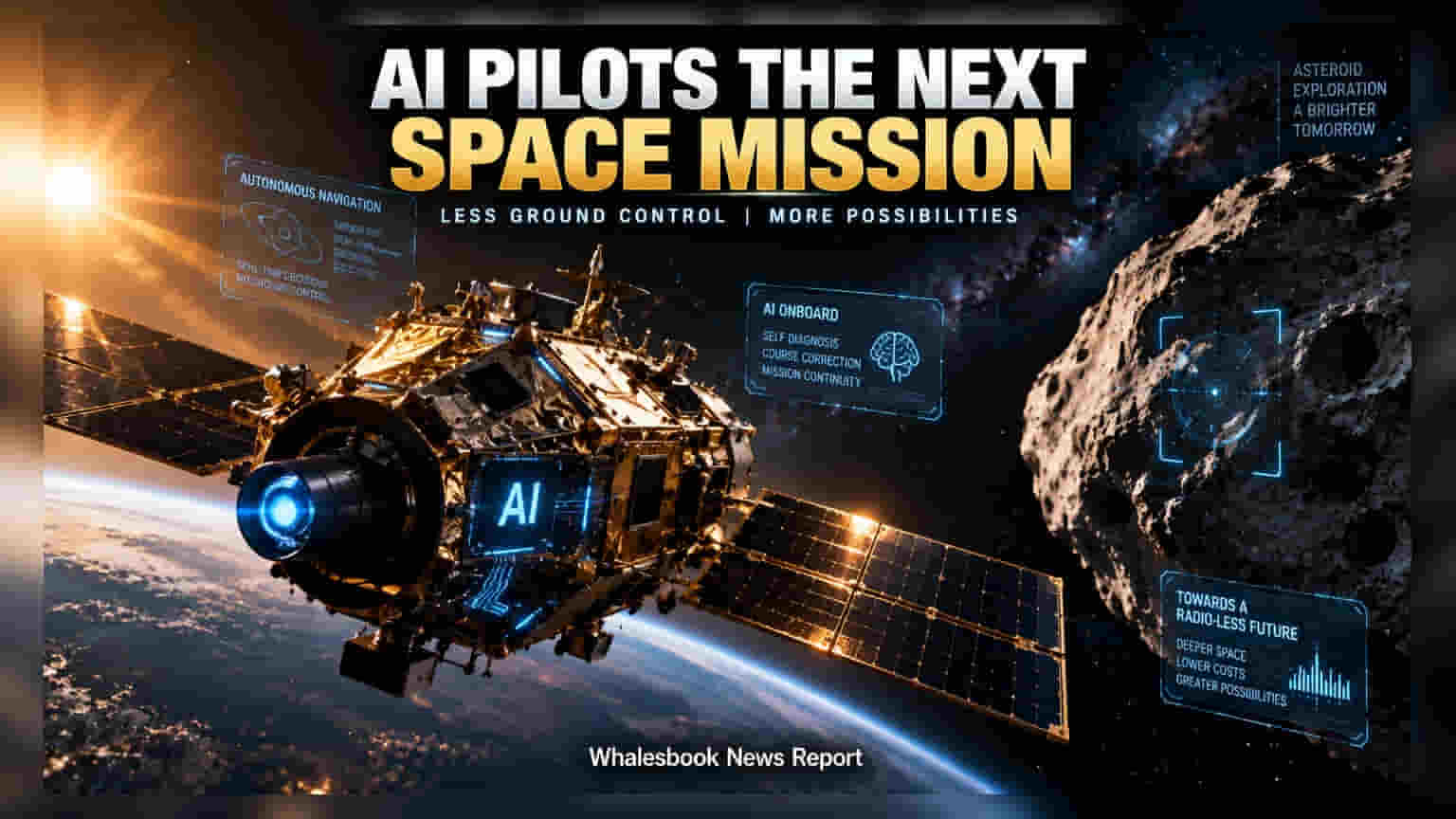
US-based space startup AstroForge is developing an AI control system called Solo to navigate spacecraft without reliance on human ground teams. Following previous mission communication failures, the company aims to reduce high operational costs by replacing Earth-based operators with onboard intelligence. A major autonomous mission test is planned for 2027.
Space exploration has traditionally been a labor-intensive industry, requiring teams of hundreds of operators to monitor every second of a mission. However, a California-based startup, AstroForge, is now working to change this model by replacing human ground control with a proprietary AI system known as Solo. The shift is driven by the high cost of maintaining a dedicated ground network, which the company estimates would cost over $200 million. By relying on onboard artificial intelligence, the startup hopes to cut these expenses significantly.
Overcoming Past Mission Challenges
The move toward autonomy follows setbacks for the company in its previous space efforts. In 2025, the company’s Odin spacecraft experienced mission-ending communication blackouts. Because deep space missions often have limited windows for radio transmission, the team struggled to regain control once the system failed. This vulnerability highlighted the risk of relying entirely on Earth-based support. For a startup, the inability to quickly intervene when systems fail is a major technical and financial hurdle, making autonomous, self-correcting spacecraft a logical, albeit risky, evolution.
How the Solo AI System Works
The Solo system is designed to act as an onboard pilot. Rather than using broad, general-purpose AI, the engineers are building what they call constrained autonomy. The software is trained on data from 2,500 onboard sensors, teaching the spacecraft to recognize and fix specific issues like power fluctuations or navigation errors without waiting for input from ground operators. By enabling the craft to perform autonomous resets and course corrections in real-time, the company aims to maintain operations even when radio contact is impossible.
The Path to 2027 Autonomy
AstroForge is validating this technology in phases to ensure safety. The first test will occur in shadow mode—where the AI runs in the background while human operators maintain primary control—aboard the DeepSpace-2 vehicle, which is expected to launch with Intuitive Machines by the end of 2026. The true test of the technology will arrive in 2027 with the Autonomy-1 mission. The company plans to attempt this flight without radio communication, effectively forcing the spacecraft to rely entirely on the onboard AI agent.
For the global space sector, including the growing ecosystem of private space firms in India, this strategy represents a significant shift in operational philosophy. While Indian agencies like ISRO continue to advance complex autonomous navigation systems for missions like Gaganyaan, the move by private players to go entirely radio-less highlights a high-stakes bet on software reliability. The success of this approach will depend on whether the AI can manage unexpected deep space anomalies as effectively as human experts, a risk that investors in the broader space economy are watching closely.