

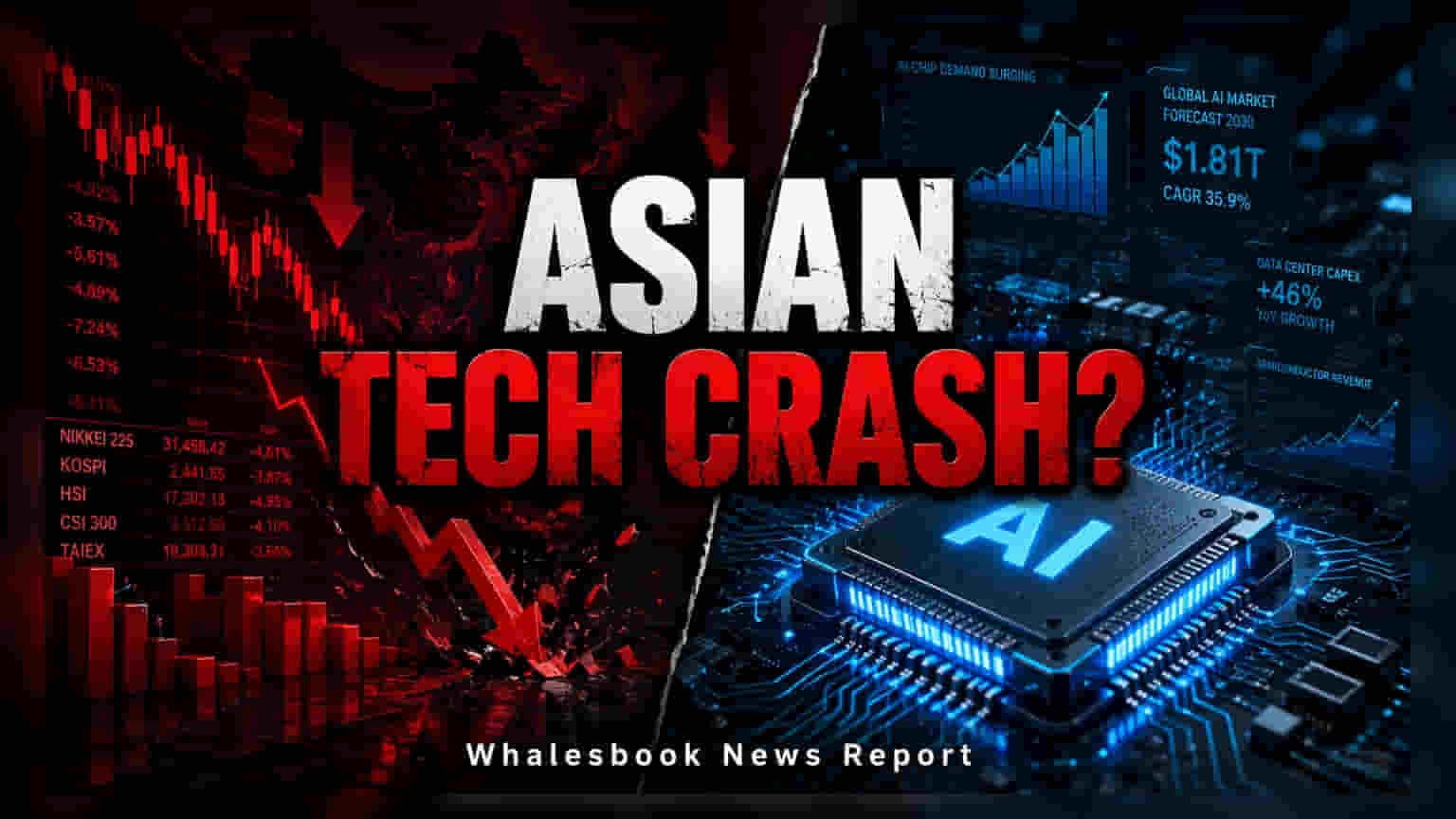
Asian markets like South Korea and Taiwan have seen a sharp pullback following a massive AI-driven surge. Meanwhile, India’s Nifty 50 continues to lag year-to-date, pressured by foreign selling and IT sector concerns. Investors are also tracking a recent divergence between the Nifty and BSE Sensex following the implementation of a new closing auction mechanism on the NSE.
The AI-fueled rally that dominated Asian markets in early 2026 is showing signs of cooling. Major semiconductor and technology hubs, particularly South Korea and Taiwan, have experienced significant price corrections in July after reaching year-to-date gains of approximately 50%. This sharp reversal affects global giants like TSMC, SK Hynix, and Samsung Electronics, which were at the center of the demand for AI-ready memory chips.
While these markets are consolidating after a rapid rise, India’s Nifty 50 index has followed a different path, spending much of 2026 in negative territory. India's underperformance is not due to a single issue but rather a combination of factors. Domestic valuations entered the year at high levels, making them less attractive to international investors when compared to other global markets. Furthermore, consistent selling by foreign institutional investors (FIIs) has placed downward pressure on large-cap stocks. Additionally, there is a lingering structural concern regarding India's massive IT services sector, with market participants questioning whether generative AI could eventually reduce the demand for traditional human-led software services.
A notable, recent development for Indian investors is the divergence between the Nifty 50 and the BSE Sensex. On August 3, 2026, the National Stock Exchange (NSE) introduced a new Closing Auction Session (CAS) framework. This change altered how the final prices of stocks are determined at the end of the trading day. Because the BSE did not implement an identical mechanism simultaneously, the two indices have shown unusual differences in their daily movements, creating confusion among retail investors about the broader market trend.
Looking ahead, global risks continue to weigh on sentiment. Geopolitical instability, particularly the conflict involving the US and Iran, remains a threat to energy prices and market stability. Simultaneously, global analysts are questioning the sustainability of massive AI capital spending by major corporations. If these investments do not translate into higher profits soon, it could lead to further caution in tech-heavy markets.
For investors, the recent volatility serves as a reminder to avoid chasing stocks simply because they have outperformed in the past. Market leadership tends to rotate, and historical data suggests that relying on short-term momentum can be risky. The most effective approach remains focusing on business fundamentals, maintaining a diversified portfolio across sectors and geographies, and monitoring how companies manage costs and earnings in a high-interest-rate environment.