 Whalesbook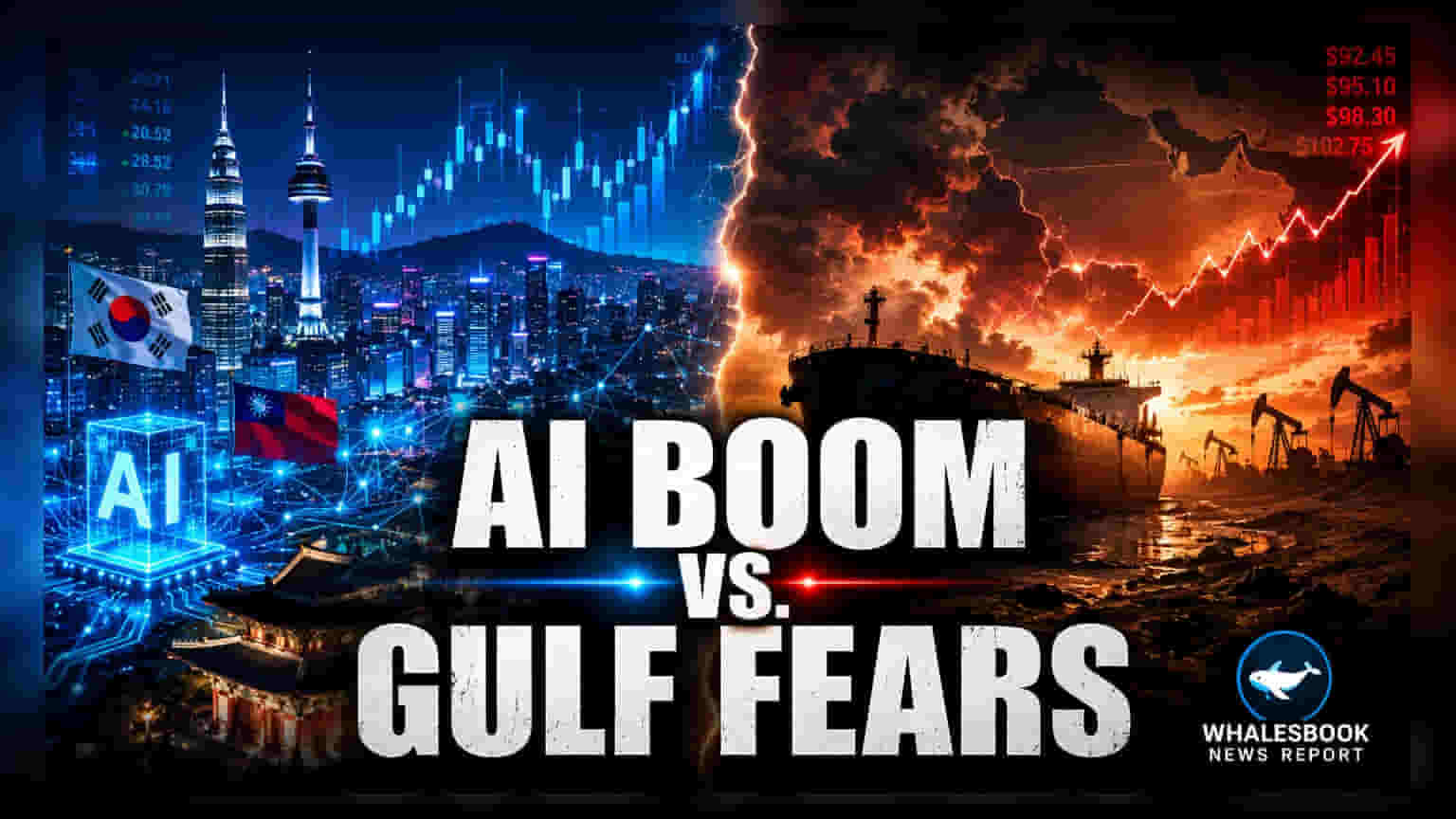


The Divergence Between Sentiment and Macro Reality
The prevailing optimism in Asian equity markets masks a widening disconnect between speculative technology valuations and tangible macro-economic risks. While the MSCI Asia-Pacific index ekes out gains, the underlying support is thin, relying heavily on semiconductor demand centered around the Computex event in Taiwan. This narrow leadership reflects a market that has priced in perfection for the artificial intelligence sector while simultaneously ignoring the escalating energy costs that typically act as a tax on global industrial output.
Energy Volatility and the Inflationary Feedback Loop
The surge in Brent and U.S. crude benchmarks serves as a blunt reminder that regional stability remains precarious. Rising oil prices function as a direct obstacle to central bank efforts to anchor inflation. When energy prices climb, they inevitably bleed into transportation and manufacturing costs, compressing profit margins across non-tech sectors. While current market participants appear willing to look past this pressure, historical precedents suggest that sustained crude prices above $90 per barrel frequently trigger defensive rotations out of growth equities and into hard assets or cash-equivalent instruments. The resilience of the U.S. dollar, particularly against energy-dependent currencies like the yen, indicates that global capital is already bracing for an extended period of cost-push inflation.
The Forensic Risk Assessment
A critical structural weakness currently permeating the equity markets is the extreme concentration of performance. In the United States, a handful of dominant tech entities account for the lion’s share of year-to-date S&P 500 gains. This lack of market breadth is a classic warning sign of fragility. Should the upcoming May payroll data exceed estimates, it would likely exacerbate fears of a Federal Reserve rate hike. The current market anticipation of a fifty-fifty chance for additional tightening by year-end appears dangerously optimistic if the labor market continues to exhibit resilience while energy costs remain elevated. Furthermore, the reliance on artificial intelligence as a singular narrative driver leaves portfolios highly vulnerable to any disappointment in capital expenditure guidance or regulatory crackdowns on data center infrastructure.
Future Trajectory and Policy Sensitivity
The coming weeks will test the sustainability of this liquidity-driven rally. With Federal Reserve officials slated to provide guidance, any hawkish rhetoric could rapidly dissolve the current bullish stance. Investors should closely monitor the sensitivity of 10-year Treasury yields to crude oil fluctuations, as any further ascent toward the 4.5% threshold would likely invert the risk-reward ratio for high-multiple technology shares. The absence of broad-based participation across sectors outside of AI suggests that once the current news cycle settles, the markets may face a significant re-rating if the promised productivity gains from technology do not translate into immediate, margin-expanding earnings.