 Whalesbook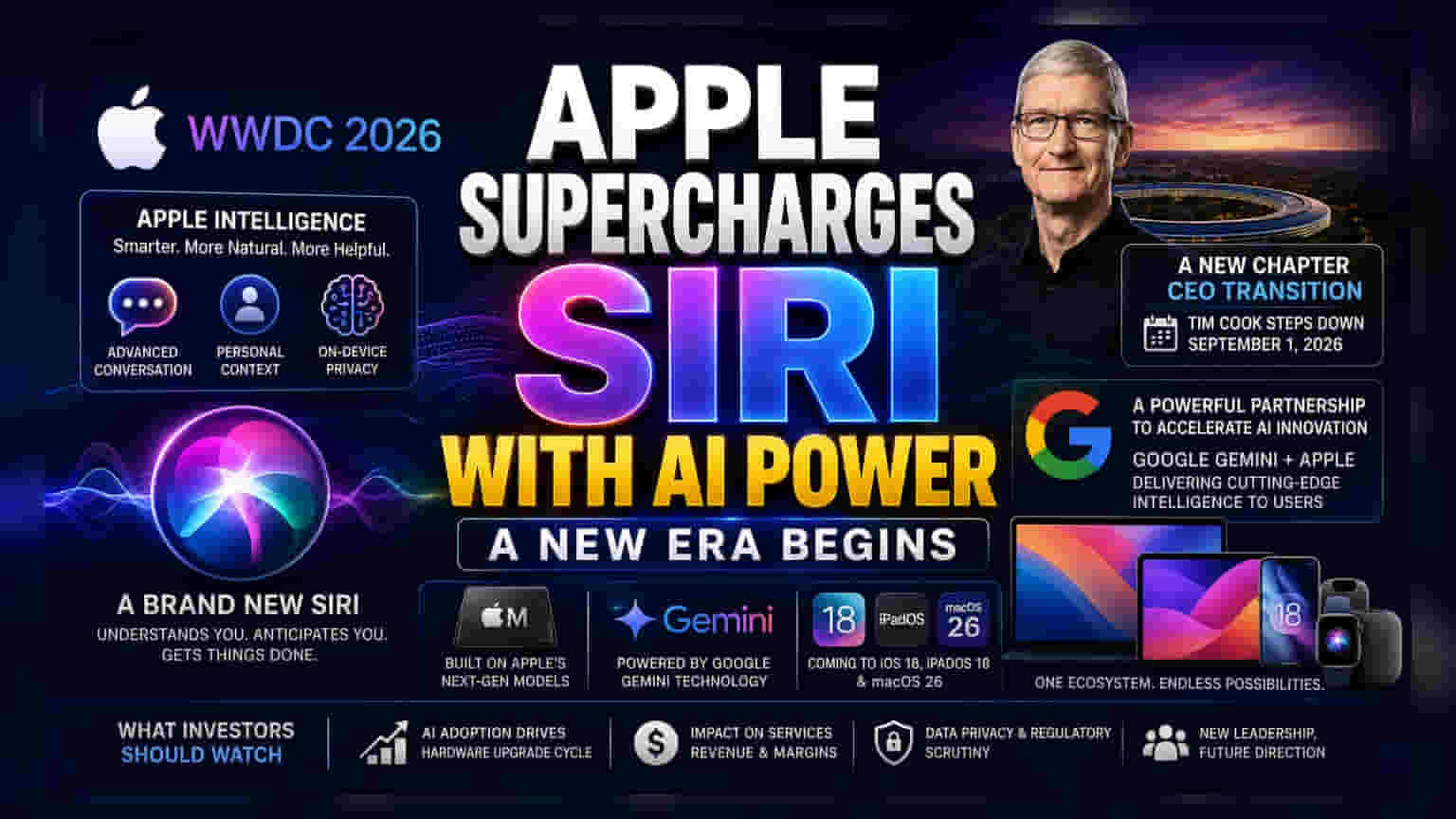


What Happened
Apple unveiled a major overhaul of its virtual assistant, Siri, at its Worldwide Developers Conference (WWDC) 2026. The new system, branded as "Apple Intelligence," introduces advanced conversational and contextual capabilities. In a notable shift for the company, the system is powered by a combination of Apple’s next-generation models and Google’s Gemini technology. This announcement comes during a period of transition, as CEO Tim Cook is scheduled to step down on September 1, 2026. The new features will be rolled out across the upcoming iOS, iPadOS, and macOS updates.
Why This Matters for Investors
For investors, the primary question is whether these AI advancements can drive a new hardware upgrade cycle. Apple has long relied on hardware sales as its main revenue engine, and the company is banking on advanced AI features to convince users to upgrade their iPhones and other devices. If the new Siri drives strong adoption, it could stabilize hardware revenue growth, which has faced pressure from longer replacement cycles among consumers. Furthermore, the integration of generative AI is expected to deepen user engagement within the Apple ecosystem, potentially boosting the company's lucrative services revenue.
The Strategic Shift
Historically, Apple has maintained a "walled garden" approach, preferring to build its own technologies in-house rather than relying on external partners. The decision to integrate Google’s Gemini technology marks a strategic shift. While this allows Apple to provide high-quality AI features without the multi-year wait to develop them from scratch, it introduces new dependencies. Investors will be watching how this partnership impacts Apple’s margins and its long-term strategy for controlling the user experience. There is also the broader question of how this partnership affects Apple’s bargaining power and its ability to monetize AI features versus relying on external providers.
CEO Transition and Uncertainty
This product launch is taking place in the final months of Tim Cook’s tenure as CEO. Large-scale strategic shifts like this one—moving toward AI-heavy integration and external partnerships—often signal the direction the company will take under new leadership. Investors typically monitor executive transitions closely for signs of stability or changes in business focus. The success of this AI rollout will be a significant part of the legacy Cook leaves behind and sets the tone for the next leadership team.
Potential Risks
While the AI upgrade aims to improve user experience, it comes with inherent risks. First, there is the risk of execution; if the new Siri features are buggy or fail to deliver on promises, it could hurt consumer sentiment and brand loyalty. Second, privacy and data security are core pillars of the Apple brand. Any regulatory scrutiny regarding how Apple handles user data while utilizing external AI models like Gemini could lead to legal or reputational challenges. Additionally, the company faces intense competition from other tech giants that are also aggressively integrating AI into their platforms, which may limit Apple’s ability to differentiate its services purely on AI capabilities.
What Investors Should Track
Moving forward, the key monitorables include the adoption rate of the new AI features following the upcoming software rollout, as this will influence future device sales. Investors should also watch for management commentary regarding the impact of the Google partnership on the company’s operating margins. Finally, tracking the regulatory environment, particularly any updates on how Apple handles data privacy with third-party AI models, will be essential for assessing long-term risk.