 Whalesbook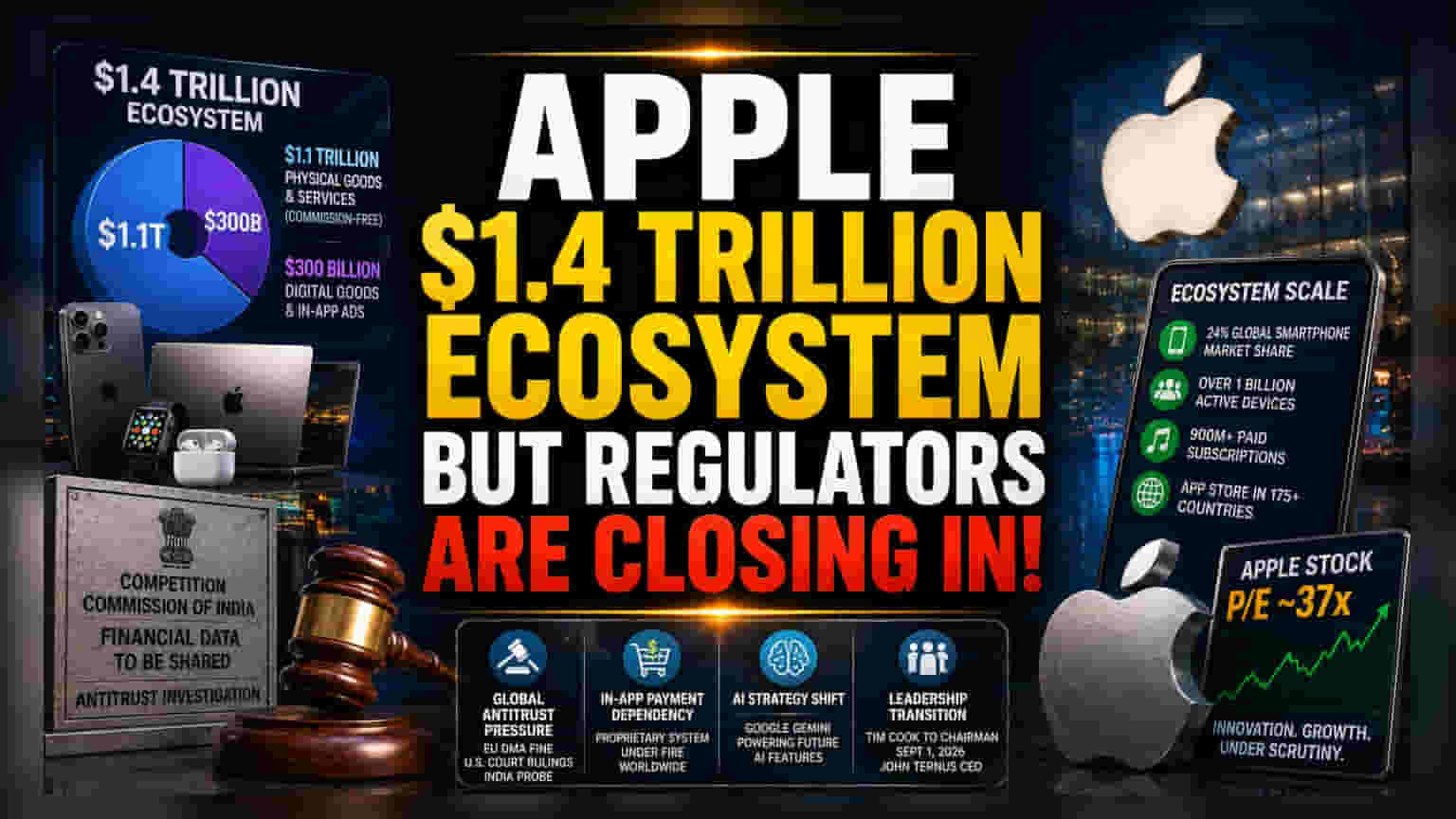


The Valuation Gap
Apple's reported $1.4 trillion ecosystem figure serves as a strategic counter-narrative, aiming to emphasize the platform's role as a vast engine for commerce rather than a rent-seeking toll-booth. While the company highlights that 90% of these transactions are commission-free, the reality is that the vast majority—$1.1 trillion—originate from physical goods and services, such as retail and travel, which fall outside Apple’s standard commission structure. The revenue segment that truly impacts Apple’s bottom line—digital goods and in-app advertising—constitutes a significantly smaller portion of the total, totaling $300 billion combined.
The Regulatory Crosshairs
This celebration of scale contrasts sharply with the mounting legal pressure surrounding Apple’s business model. In a decisive reversal, the company recently agreed to share India-specific financial data with the Competition Commission of India (CCI). This concession follows a multi-year investigation that identified the App Store as an "unavoidable trading partner" that allegedly abused its dominant position. Apple had previously attempted to stall the probe by challenging India’s broader antitrust penalty laws, which threaten to expose the company to fines based on global rather than domestic turnover—a potential liability reaching $38 billion.
The Forensic Bear Case
The company’s reliance on proprietary in-app payment systems remains a structural weakness globally. Beyond India, the European Union has already fined the company under the Digital Markets Act, and U.S. court rulings have forced concessions regarding external payment links. These regulatory headwinds are compounded by a shift in Apple's own AI strategy. With the upcoming WWDC 2026, the company is expected to transition toward a model powered by Google’s Gemini, following the departure of key internal talent from its own foundation-model team. This move suggests that Apple’s much-vaunted vertical integration is hitting technical and talent-related ceilings, forcing a dependency on historical rivals.
The Future Outlook
Market sentiment remains cautious as the company approaches a leadership transition; CEO Tim Cook is set to move to executive chairman on September 1, 2026, with John Ternus taking the helm. While Apple trades at a trailing P/E ratio of approximately 37x, investors are weighing the impact of its evolving AI roadmap against the persistent threat of worldwide antitrust enforcement. Future performance hinges on whether Apple can successfully pivot to a service-heavy, AI-integrated model while maintaining the profitability of its hardware-centric core in an increasingly hostile regulatory environment.