

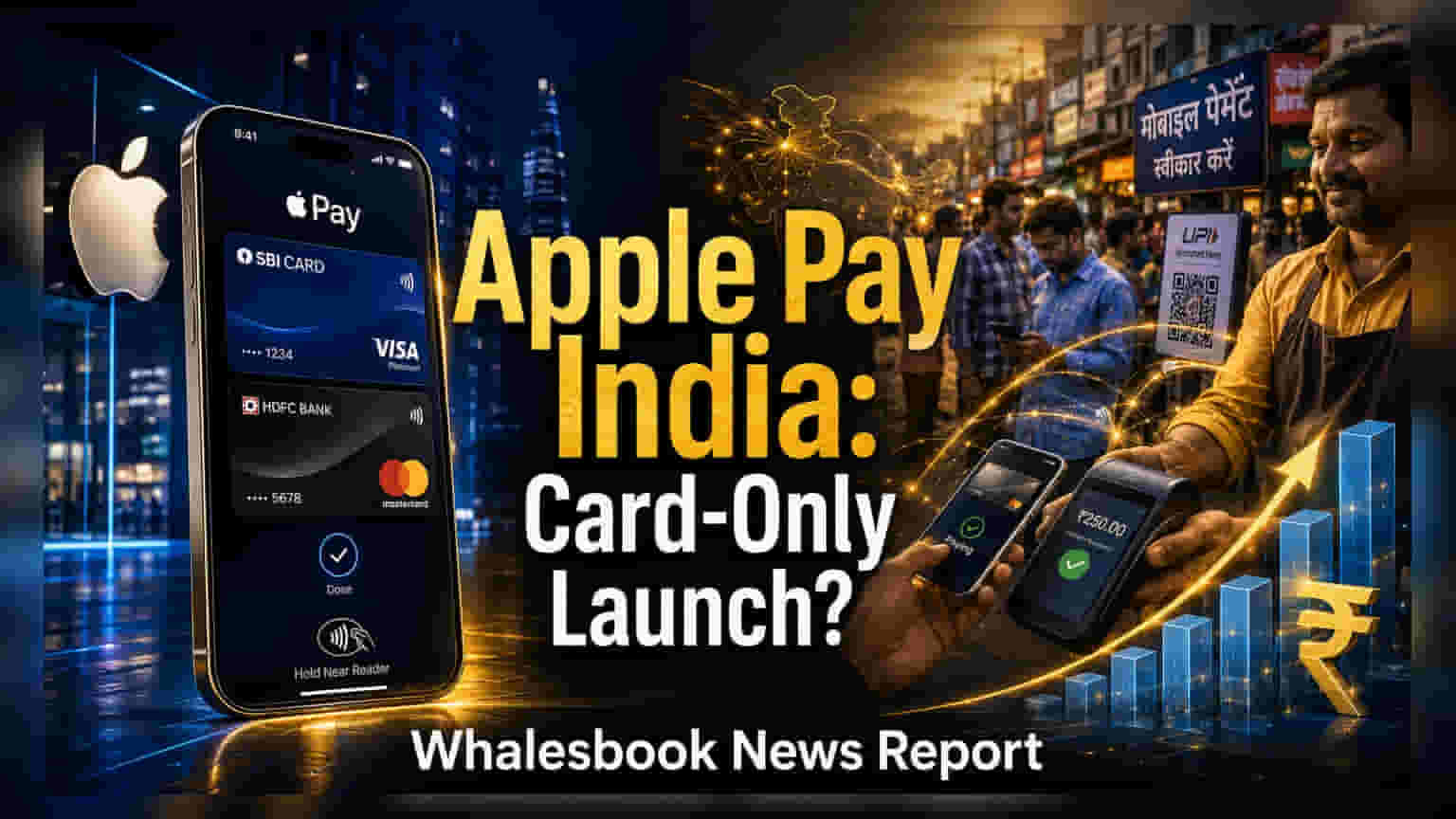
Apple is planning to introduce Apple Pay in India this October, focusing initially on tokenized credit and debit cards rather than the Unified Payments Interface (UPI). The strategy involves partnering with major lenders like HDFC Bank, ICICI Bank, and Axis Bank. Investors will track whether this premium-focused service can gain traction in a market currently dominated by widely adopted, zero-cost UPI transactions.
Apple is preparing to bring its digital payment service, Apple Pay, to India by October 2026. The initial rollout will focus on contactless card payments using tokenized credit and debit cards on the Visa and Mastercard networks. This move marks a significant entry for the company into the Indian financial ecosystem, though it will debut without support for the ubiquitous Unified Payments Interface (UPI).
Partner Banks and Business Model
The company is in advanced discussions with top Indian lenders, including HDFC Bank, ICICI Bank, and Axis Bank. These banks are critical for provisioning the card services required to make Apple Pay functional. For these financial institutions, partnering with Apple offers a chance to deepen engagement with high-spending premium customers who use iPhone and Apple Watch devices. However, the successful adoption of the service will depend on how seamlessly users can add their existing cards to the platform and what incentives banks may offer to encourage usage.
The UPI Challenge and Fee Structures
The absence of UPI at launch is a major factor for the Indian market, where instant, bank-to-bank transfers via QR codes have become the standard for both small and large transactions. A key friction point is the business model. UPI operates on a zero merchant discount rate (MDR) model, meaning it is free for merchants to accept payments. In contrast, Apple Pay typically employs a transaction fee model, often charging around 0.15% to 0.20% to card issuers. This creates a cost disparity that Apple must navigate as it attempts to position its service in an environment where free, efficient, and instant digital payments are already the norm.
Technical and Regulatory Hurdles
There are significant technical challenges to resolve before the service can fully integrate with the Indian payment stack. Apple is currently in discussions with the National Payments Corporation of India (NPCI) regarding integration. A major hurdle is the alignment of Apple's device-level biometric authentication, such as Face ID and Touch ID, with India's specific identity verification framework. Because India's digital payment architecture relies on localized, rigid security standards, achieving interoperability is a complex, multi-stage process that is still ongoing.
For investors and the broader market, the key monitorable will be the timeline for potential UPI integration and whether the company can successfully scale a card-only service in a market that relies so heavily on QR-based payments. Future updates on regulatory approvals from the NPCI and the specific terms of the agreements with partner banks will be important indicators of how the service will evolve in the competitive Indian fintech sector.