

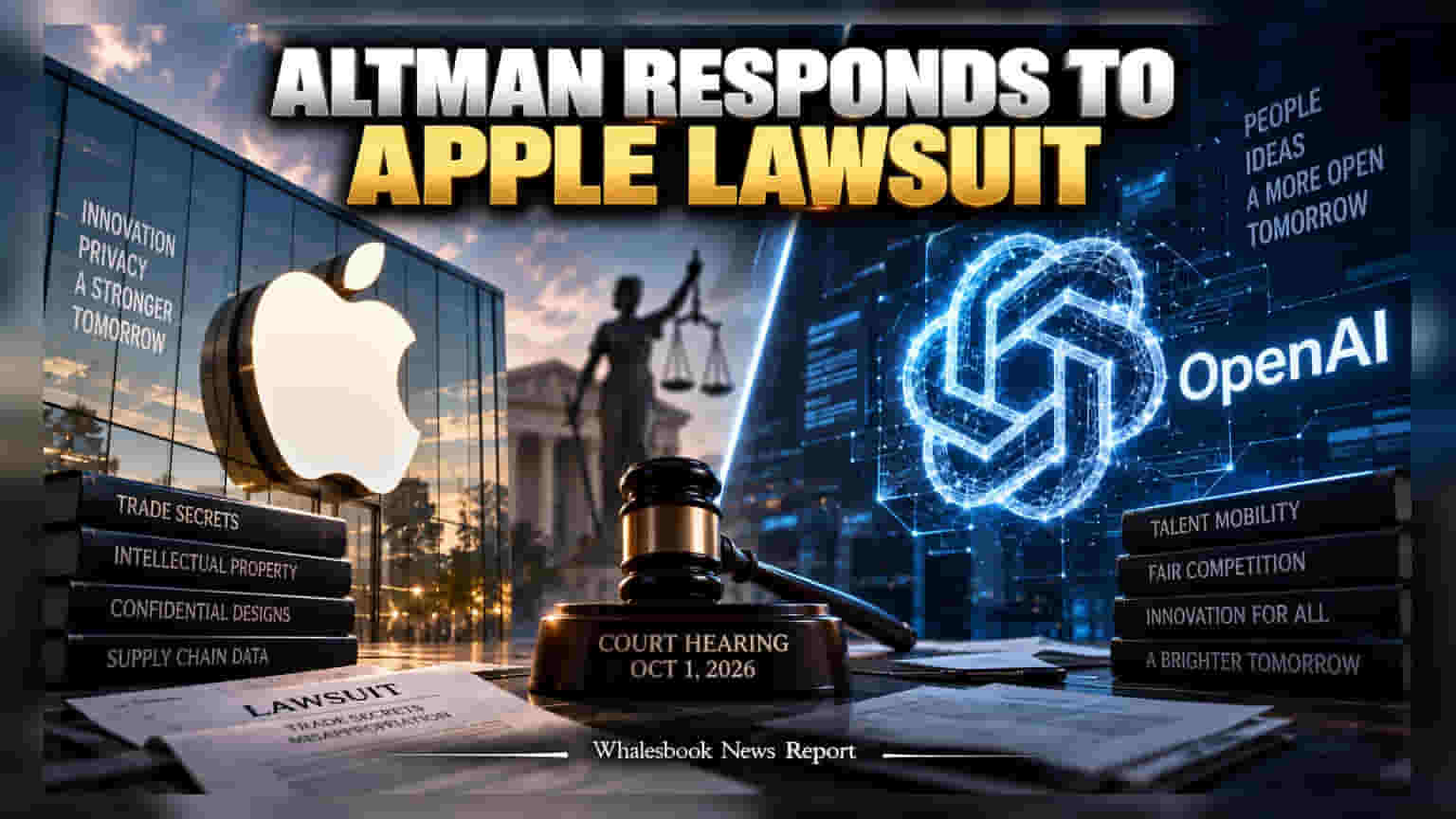
Apple has filed a lawsuit against OpenAI and former staff, alleging the theft of confidential circuit schematics. The dispute, which highlights rising competition in AI hardware, is heading for a critical discovery hearing on October 1, 2026.
The ongoing legal battle between tech giant Apple and AI developer OpenAI has intensified as both companies prepare for court proceedings scheduled for October 1, 2026. The conflict, which began in July 2026, centers on allegations that OpenAI and former Apple employees misappropriated confidential hardware design and supply-chain trade secrets.
Apple has leveled serious accusations against former employees Chang Liu and Tang Tan, claiming they downloaded sensitive circuit schematics while preparing to join OpenAI. The lawsuit further alleges that evidence related to these actions was destroyed. Apple contends that this intellectual property has been used to advance OpenAI’s internal hardware initiatives, posing a significant risk to the design integrity of its future products.
OpenAI, led by CEO Sam Altman, has strongly rejected these allegations. The company characterizes the lawsuit as a strategic attempt by Apple to hinder competition and discourage employee mobility between the two firms. OpenAI has noted that it has hired approximately 400 former Apple employees over the years, arguing that this reflects normal industry talent movement rather than institutional misconduct. Altman, while expressing personal disappointment in the legal action—citing his self-described status as an 'Apple fanboy'—has maintained that OpenAI does not engage in the theft of competitive trade secrets.
The case is significant for the broader technology industry because it highlights the growing friction over talent and intellectual property in the artificial intelligence sector. As companies race to develop proprietary AI hardware, the legal discovery process could potentially expose sensitive internal research, development, and recruitment processes for both organizations.
For industry observers and those tracking global tech trends, the focus is now on the upcoming court hearing regarding Apple's request for expedited discovery. The outcome of these proceedings may clarify whether the legal dispute will result in delays or injunctions affecting OpenAI's hardware product timelines or force a change in how major tech firms manage talent transitions in an increasingly competitive environment.